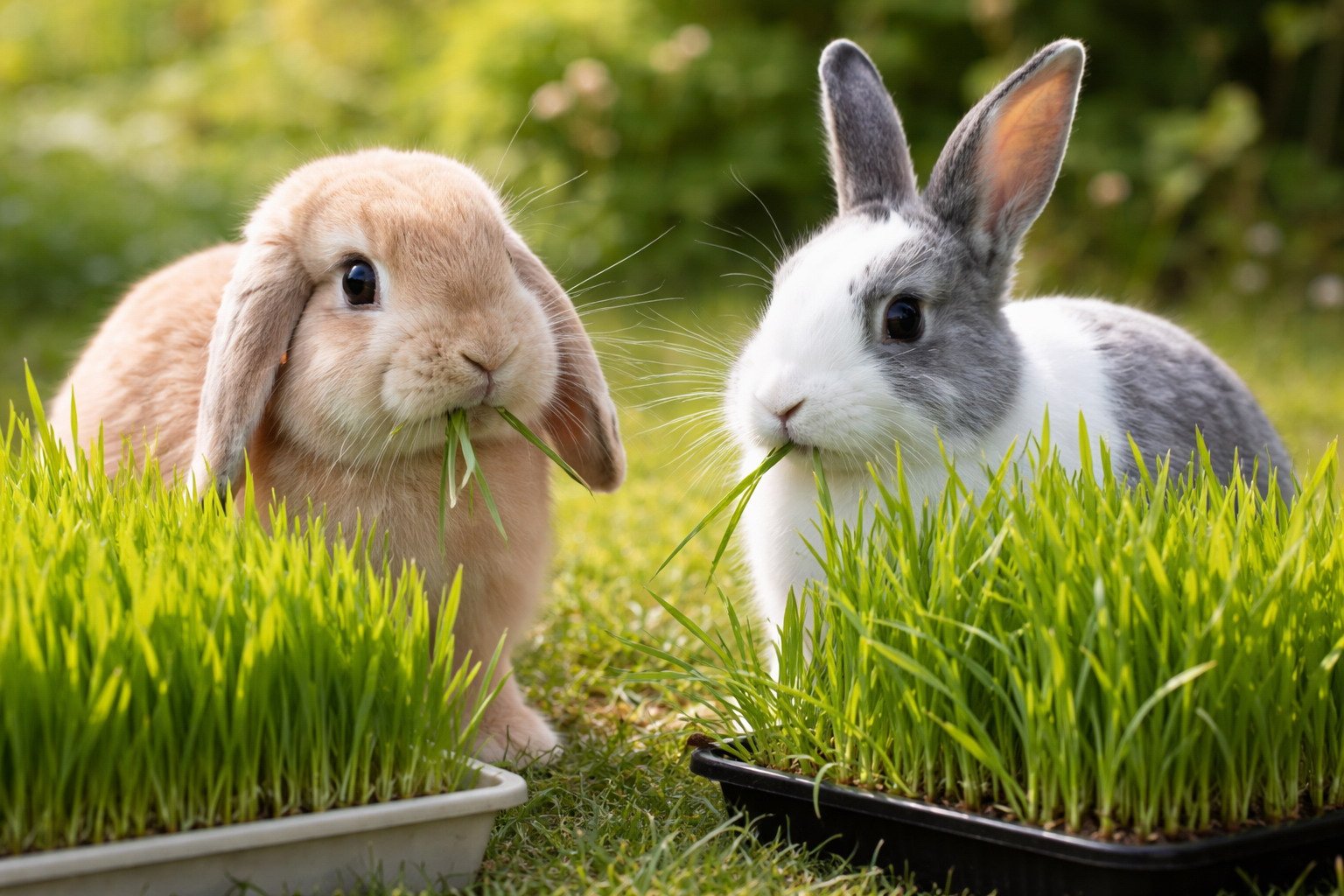
Fresh greens play an important role in a rabbit’s diet, yet many owners feel unsure when choosing between popular options like wheatgrass and catgrass. Is wheatgrass or catgrass better for rabbits in terms of digestion, safety, and long-term health? This question comes up frequently because both grasses look similar, are easy to grow, and are marketed as “pet-safe.”
This article explores the topic in depth, focusing strictly on rabbit health and nutrition. Every section is designed to help you make a confident, evidence-based decision without confusion or guesswork.
In This Article
Rabbit Digestive Needs
Rabbits are obligate herbivores with a digestive system built for constant grazing. Their gastrointestinal tract depends heavily on fiber to keep food moving smoothly and prevent serious health issues.
How a Rabbit’s Digestive System Works
A rabbit’s gut functions very differently from that of cats or dogs.
Key digestive facts about rabbits:
- Food moves through the system continuously
- Fiber stimulates gut contractions (peristalsis)
- A specialized organ called the cecum ferments plant material
- Rabbits practice cecotrophy, re-eating nutrient-rich cecotropes
Without enough fiber, digestion slows, leading to gastrointestinal stasis, a potentially life-threatening condition.
“A high-fiber diet is the single most important factor in maintaining rabbit gastrointestinal health.”
— House Rabbit Society
Why Fiber Matters More Than Anything Else
Fiber does more than aid digestion. It also:
- Wears down constantly growing teeth
- Reduces hair accumulation in the gut
- Encourages natural chewing behavior
- Maintains balanced gut bacteria
Hay should make up 80–90% of a rabbit’s daily diet, while fresh grasses act as a supportive supplement rather than a replacement.
Where Fresh Grasses Fit Into a Rabbit’s Diet
Fresh grasses like wheatgrass and catgrass:
- Add moisture to the diet
- Provide enrichment through natural grazing
- Offer mild nutritional variety
They should be fed in moderation, always alongside unlimited hay and fresh water.
What Is Wheatgrass and How Is It Grown?
Wheatgrass comes from the young shoots of the common wheat plant (Triticum aestivum). Harvested early, it remains soft, green, and nutrient-dense.
Nutritional Profile of Wheatgrass for Rabbits
Wheatgrass contains a mix of vitamins, minerals, and fiber that can benefit rabbits when fed correctly.
Wheatgrass nutritional highlights:
- Fiber: ~30–35% (dry matter)
- Vitamin A (beta-carotene)
- Vitamin C (small amounts)
- Magnesium and potassium
- High moisture content
| Nutrient Component | Wheatgrass Benefit for Rabbits |
| Insoluble fiber | Supports gut movement |
| Chlorophyll | Aids digestion and detox |
| Moisture | Helps hydration |
Texture and Digestibility
Wheatgrass blades are:
- Thin and tender
- Easy to chew for young or senior rabbits
- Less abrasive than mature grasses
This softness makes wheatgrass appealing, though it also means lower chewing resistance compared to hay.
How Wheatgrass Is Commonly Grown
Wheatgrass is usually grown indoors or outdoors using shallow trays.
Typical growing conditions:
- Harvested at 6–8 inches tall
- Ready within 7–10 days
- Requires indirect sunlight
- Often grown organically
Fresh, home-grown wheatgrass reduces the risk of pesticide exposure, which is essential for rabbit safety.
What Is Catgrass and What Does It Contain?
Catgrass is not a single plant. The term refers to a blend of young cereal grasses grown specifically for pets.
What Makes Up Catgrass?
Most catgrass mixes include:
- Oat grass
- Barley grass
- Rye grass
- Sometimes wheat grass
Each grass contributes slightly different textures and fiber levels.
Nutritional Composition of Catgrass for Rabbits
Catgrass is generally higher in structural fiber than wheatgrass due to thicker blades.
| Nutrient Aspect | Catgrass Characteristics |
| Fiber | Moderate to high |
| Blade thickness | Thicker, tougher |
| Sugar content | Low |
| Moisture | Moderate |
This composition aligns well with a rabbit’s need for chewing and gut stimulation.
Why Catgrass Is Marketed for Pets
Catgrass is popular because it:
- Encourages natural grazing
- Supports hair movement through the gut
- Is considered non-toxic
- Grows quickly and easily
Despite the name, catgrass is safe for rabbits and often better suited to their digestive physiology than softer grasses.
Is Wheatgrass or Catgrass Better for Rabbits Nutritionally?
Nutrition sits at the center of the debate around is wheatgrass or catgrass better for rabbits. Although both options are fresh grasses, their nutritional impact on rabbits differs in meaningful ways.
Fiber Content Comparison
Fiber drives rabbit health more than any other nutrient. Differences in fiber structure affect gut motility, tooth wear, and satiety.
| Nutritional Factor | Wheatgrass | Catgrass |
| Crude fiber (avg.) | 30–35% | 35–45% |
| Blade thickness | Thin | Thick |
| Chewing resistance | Low | Moderate |
| Sugar content | Slightly higher | Lower |
Catgrass generally provides more effective fiber because thicker blades encourage longer chewing time and stronger gut stimulation.
Vitamins and Minerals
Wheatgrass is often promoted as a “superfood,” yet rabbits do not benefit from concentrated nutrients in the same way humans do.
Wheatgrass strengths:
- Beta-carotene (Vitamin A precursor)
- Chlorophyll
- Potassium and magnesium
Catgrass strengths:
- Balanced mineral profile
- Lower natural sugar levels
- Better fiber-to-moisture ratio
Excess nutrients offer no added benefit to rabbits and may upset gut balance when fed too frequently.
Nutritional Verdict
From a purely nutritional standpoint:
- Catgrass aligns more closely with a rabbit’s natural grazing diet
- Wheatgrass works best as an occasional enrichment treat
- Hay remains the primary fiber source
Nutrition favors function over hype when it comes to rabbit diets.
Is Wheatgrass or Catgrass Better for Rabbits’ Digestive Health?
Digestive health determines whether a rabbit thrives or declines. Even minor dietary choices can influence gut stability.
Impact on Gastrointestinal Motility
Healthy digestion depends on constant fiber movement.
Catgrass supports digestion by:
- Stimulating longer chewing sessions
- Encouraging natural grazing patterns
- Improving stool consistency
Wheatgrass, while digestible, passes through the system more quickly due to softer blades.
Hairball and Cecal Function Support
Rabbits ingest fur during grooming year-round.
Digestive benefits comparison:
| Digestive Concern | Wheatgrass | Catgrass |
| Hair movement | Moderate | Strong |
| Cecum stimulation | Mild | High |
| Stool formation | Soft | Well-formed |
Veterinary nutritionists often recommend tougher grasses to support hair movement and prevent blockages.
“Structural fiber is essential for preventing gastrointestinal stasis in rabbits.”
— Exotic Animal Veterinary Association
Sensitivity and Gut Balance
Some rabbits experience soft stools when introduced to very tender greens.
Catgrass tends to be gentler on sensitive digestive systems due to:
- Lower sugar content
- Slower fermentation
- More stable gut bacteria response
Safety Considerations: Is Wheatgrass or Catgrass Better for Rabbits Long-Term?
Safety goes beyond toxicity. Long-term feeding habits determine overall wellness.
Overfeeding Risks
Fresh grass should complement hay, not compete with it.
Potential issues with excessive wheatgrass:
- Reduced hay intake
- Mild bloating
- Soft or misshapen droppings
Catgrass is less likely to cause these problems when fed in reasonable portions.
Pesticides, Mold, and Growing Conditions
Safety improves dramatically when grasses are grown at home.
Best safety practices:
- Use organic seeds only
- Avoid chemical fertilizers
- Harvest before mold forms at the soil line
- Rinse grass before feeding
Long-Term Feeding Recommendations
Veterinary consensus supports moderation.
General guideline:
- Small handful of fresh grass
- 2–4 times per week
- Always paired with unlimited hay
Between the two options, catgrass is safer for consistent, long-term use, while wheatgrass remains better suited as an occasional supplement.
Taste, Texture, and Rabbit Preference
Rabbits may share the same species traits, yet individual preferences can vary widely. Taste and texture strongly influence whether a rabbit eagerly eats fresh grass or ignores it completely.
Texture Differences That Matter
Texture plays a bigger role than flavor for rabbits.
Wheatgrass characteristics:
- Soft, thin blades
- Easy to bite and swallow
- Minimal resistance while chewing
Catgrass characteristics:
- Thicker, coarser blades
- Requires more chewing effort
- Mimics natural pasture grasses
Longer chewing time supports dental wear and saliva production, both essential for rabbit health.
Which Grass Do Rabbits Prefer?
Observations from rabbit owners and rescue centers show a consistent pattern.
| Rabbit Behavior | Wheatgrass | Catgrass |
| Initial interest | High | Moderate |
| Long-term interest | Declines | Sustained |
| Grazing behavior | Short sessions | Longer sessions |
Many rabbits show excitement toward wheatgrass at first, then lose interest. Catgrass tends to hold attention longer due to its satisfying chew.
“Rabbits instinctively choose foods that keep them chewing longer.”
— Exotic Animal Nutrition Review
Encouraging Natural Foraging Behavior
Offering grass in shallow trays allows rabbits to:
- Pull blades naturally
- Move while grazing
- Engage mentally and physically
Catgrass supports this instinctive behavior more effectively, reinforcing natural feeding patterns.
Feeding Guidelines: How to Offer Wheatgrass or Catgrass to Rabbits
Proper feeding matters just as much as grass selection. Even healthy foods can cause issues when introduced incorrectly.
Age-Appropriate Feeding Advice
Digestive systems mature gradually.
Recommended age guidelines:
- Under 12 weeks: hay only
- 12 weeks to 6 months: small grass introductions
- Adult rabbits: regular grass supplementation
Young rabbits benefit from extra caution due to sensitive gut flora.
Safe Serving Sizes
Portion control prevents digestive upset.
Ideal portion size:
- One small handful (about ½ cup loosely packed)
- Served fresh and clean
- Removed if uneaten after a few hours
Grass should never replace hay intake.
Introducing Grass Without Digestive Stress
Gradual introduction protects gut balance.
Best introduction method:
- Start with a few blades
- Increase quantity slowly over 7–10 days
- Monitor droppings daily
Firm, round droppings indicate good tolerance. Soft stools signal the need to reduce portions.
Practical Comparison: Is Wheatgrass or Catgrass Better for Rabbits at Home?
Daily practicality influences long-term success just as much as nutrition.
Ease of Growing Indoors
Both grasses grow quickly, yet maintenance differs slightly.
| Growing Factor | Wheatgrass | Catgrass |
| Germination time | 2–3 days | 3–4 days |
| Harvest time | 7–10 days | 10–14 days |
| Regrowth ability | Limited | Strong |
| Mold risk | Moderate | Lower |
Catgrass regrows more reliably, offering better value for home growers.
Cost and Availability
Pet stores often sell catgrass kits year-round. Wheatgrass seeds are widely available online and in garden centers.
Cost comparison:
- Wheatgrass seeds: lower upfront cost
- Catgrass kits: higher convenience
- Home-grown trays: most economical long-term option
Maintenance and Longevity
Catgrass trays last longer due to thicker roots and slower decay. Wheatgrass tends to yellow faster once mature.
For busy rabbit owners, catgrass provides greater durability and less waste.
Final Verdict: Is Wheatgrass or Catgrass Better for Rabbits?
After examining nutrition, digestion, safety, preference, and practicality, the answer to is wheatgrass or catgrass better for rabbits becomes much clearer.
Key Differences at a Glance
| Evaluation Area | Wheatgrass | Catgrass |
| Fiber effectiveness | Moderate | High |
| Digestive support | Mild | Strong |
| Long-term safety | Occasional use | Regular supplementation |
| Chewing & dental benefit | Limited | Excellent |
| Ease of maintenance | Short-lived | Long-lasting |
Which One Is Better Overall?
Catgrass is the better choice for most rabbits.
Its thicker blades, higher structural fiber, and closer resemblance to natural grazing grasses make it more suitable for regular feeding. Catgrass supports gut motility, dental health, and mental enrichment without disrupting hay intake.
Wheatgrass is not harmful, but it works best as:
- An occasional treat
- A short-term enrichment option
- A supplement for rabbits recovering appetite
Function matters more than popularity when feeding rabbits.
Summary and Expert-Backed Feeding Recommendation
Choosing the right fresh grass can positively influence your rabbit’s health when used correctly.
Best Practices to Remember
- Unlimited hay remains the dietary foundation
- Fresh grass is a supplement, not a replacement
- Catgrass fits better into long-term feeding routines
- Wheatgrass should be offered sparingly
- Always monitor droppings and appetite after changes
Practical Feeding Recommendation
Ideal routine for most healthy adult rabbits:
- Unlimited timothy or orchard hay
- Fresh leafy greens daily
- Catgrass 2–4 times per week
- Wheatgrass occasionally for variety
For rabbit owners seeking authoritative guidance on safe greens and grasses, the House Rabbit Society provides reliable, veterinarian-reviewed feeding advice:
https://rabbit.org/care/food-diet/
Final Thought
When asking is wheatgrass or catgrass better for rabbits, the evidence points toward catgrass as the more natural, practical, and digestion-friendly option. Thoughtful feeding choices, paired with observation and moderation, help rabbits live longer, healthier, and happier lives.