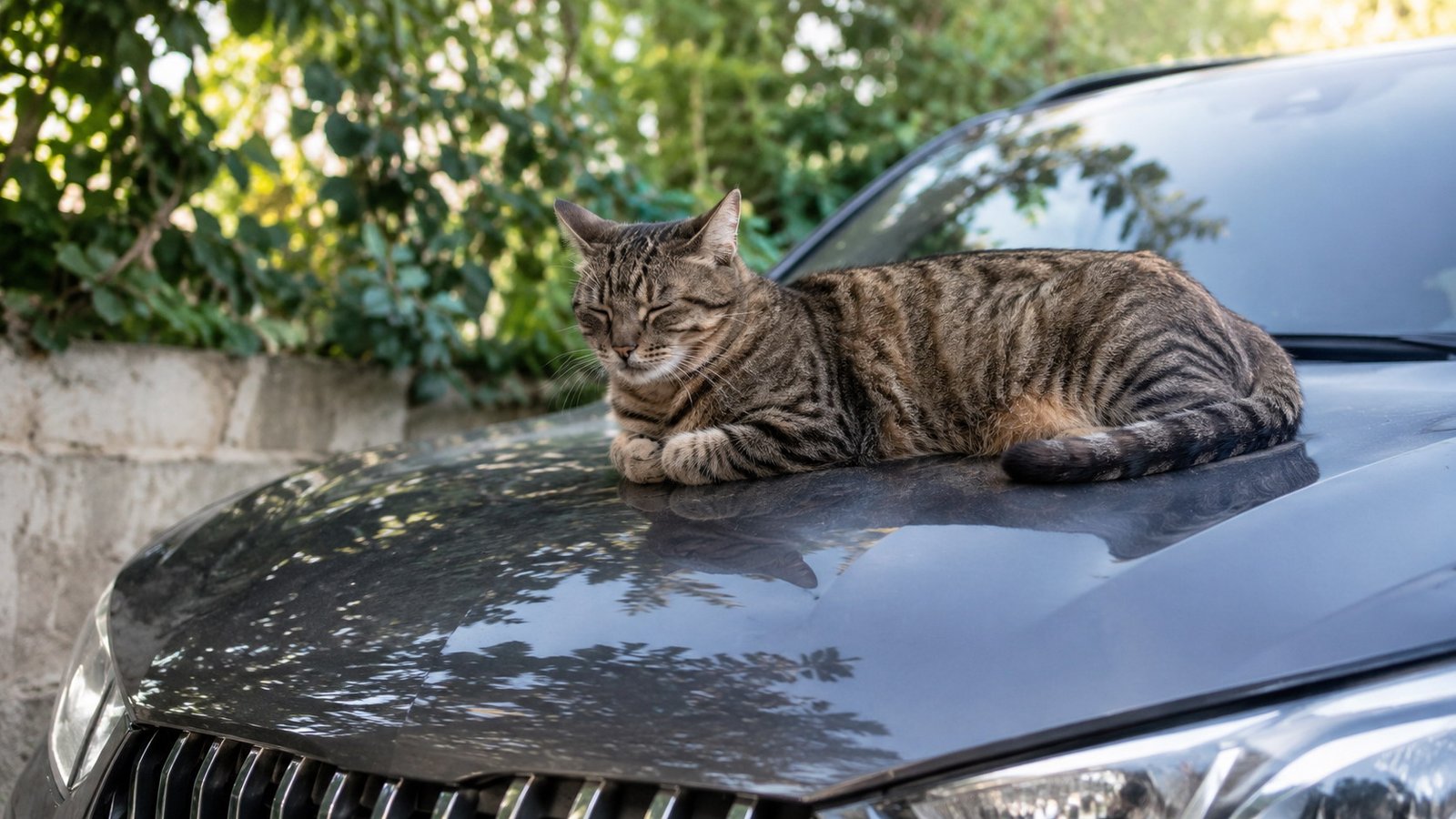
If you’re wondering how to keep cats off your car, the most effective approach is to make your vehicle less attractive as a resting spot while using safe, humane deterrents. Motion-activated devices, scent deterrents, covered parking, and environmental modifications can all discourage cats from climbing, sleeping, or scratching your vehicle.
Cats often sit on cars because the surface is warm, elevated, safe from predators, and offers a good vantage point. Understanding why they’re attracted to your car is the key to solving the problem without harming the animals.
This guide explains why cats climb on vehicles, the risks involved, and the best proven methods to keep cats away from your car permanently.
In This Article
Why Do Cats Sit on Cars?
Before trying to stop the behavior, it helps to understand what attracts cats to vehicles.
Common reasons include:
- Warm engines after driving
- Elevated resting spots
- Safe hiding areas
- Curiosity and territorial behavior
- Shelter from cold or wet weather
- Attraction to garages and driveways with little human activity
Outdoor and neighborhood cats often view parked cars as convenient resting areas, especially during cooler months when engine heat remains trapped under the hood.
Problems Caused by Cats on Cars
While cats usually aren’t trying to damage vehicles, their presence can create several issues.
Scratches on Paint
Cats may leave fine scratches while jumping on or off the vehicle, especially if they use their claws for traction.
Paw Prints and Dirt
Mud, dust, pollen, and debris from paws can quickly make a clean car look dirty.
Damage to Covers or Accessories
Cats may knead soft car covers, antenna covers, or convertible tops.
Risk to the Cat
One of the biggest concerns is that cats sometimes crawl into engine compartments for warmth. This can lead to serious injury when the vehicle is started.
Allergens and Odors
Cats may leave fur, dander, or occasionally urine markings near vehicles if they are establishing territory.
The Most Effective Ways to Keep Cats Off Your Car
1. Park Inside a Garage
The simplest solution is also the most effective.
A closed garage completely removes access to your vehicle.
Benefits:
- Protects against cats
- Prevents bird droppings
- Reduces weather damage
- Improves vehicle security
If a garage is available, it should be your first option.
2. Use a Car Cover
A quality car cover creates a barrier between the cat and your vehicle’s paint.
Advantages include:
- Prevents scratches
- Blocks paw prints
- Protects from UV exposure
- Reduces dust accumulation
Choose a cover designed specifically for your vehicle to minimize loose fabric that may attract kneading behavior.
3. Install Motion-Activated Sprinklers
Motion-activated sprinklers are among the most effective humane cat deterrents.
When movement is detected, the sprinkler briefly sprays water.
Why it works:
- Cats dislike unexpected water sprays.
- The experience teaches avoidance.
- No harm comes to the animal.
These devices work particularly well in driveways and open parking areas.
4. Use Motion-Activated Ultrasonic Deterrents
Ultrasonic deterrents emit high-frequency sounds when movement is detected.
Benefits:
- Humane
- Low maintenance
- Suitable for outdoor use
Some cats ignore ultrasonic devices, while others avoid them immediately. Results vary depending on the individual animal.
5. Remove Attractive Resting Areas Nearby
Cats often use surrounding structures before climbing onto a car.
Inspect your property for:
- Low walls
- Garden benches
- Storage boxes
- Garbage bins
- Outdoor furniture
Reducing these elevated perches may make your vehicle less appealing.
Safe Scents That Cats Dislike
Many cats avoid certain smells.
Citrus Scents
Cats commonly dislike:
- Orange peel
- Lemon peel
- Lime peel
Placing citrus peels near parking areas may discourage visits.
Vinegar
White vinegar has a strong odor that many cats avoid.
You can lightly spray diluted vinegar around the parking area, but avoid spraying directly onto vehicle paint.
Coffee Grounds
Used coffee grounds may help deter some cats when spread around landscaping near parking spaces.
Commercial Cat Repellents
Pet-safe commercial repellents are available for outdoor use.
Look for products specifically labeled:
- Non-toxic
- Pet-safe
- Outdoor use
Always follow manufacturer instructions carefully.
How to Protect Your Car’s Paint from Cat Scratches
If scratching is your primary concern, focus on physical protection.
Apply a Ceramic Coating
A ceramic coating does not prevent scratches entirely, but it can make the paint easier to clean and somewhat more resistant to minor surface marks.
Use Paint Protection Film (PPF)
Paint protection film is one of the best solutions for preserving vehicle finishes.
Benefits:
- Helps prevent light scratches
- Protects high-contact areas
- Long-lasting protection
Keep the Car Clean
Dust and grit on the paint can increase scratch visibility when cats walk across the surface.
Regular washing helps reduce this issue.
Prevent Cats from Hiding Under the Hood
This is an important but often overlooked concern.
Check Before Starting the Engine
Especially during cold weather:
- Tap the hood lightly.
- Knock on the side of the vehicle.
- Sound the horn briefly if necessary.
- Wait a few moments before starting.
This gives any hidden cat time to leave safely.
Install Engine Bay Deterrents
Some vehicle owners use:
- Engine compartment screens
- Garage parking
- Motion sensors
These measures reduce access to warm engine spaces.
What Not to Do
Many commonly suggested solutions can be harmful, ineffective, or both.
Avoid the following.
Do Not Use Poison
Poisoning cats is cruel, dangerous, and illegal in many areas.
It can also harm:
- Dogs
- Wildlife
- Children
Do Not Use Sticky Traps
Adhesive traps can cause severe injuries and distress.
Do Not Spray Cats with Chemicals
Harsh chemicals can harm animals and damage the environment.
Do Not Place Sharp Objects on the Car
Some people recommend spikes, nails, or other dangerous objects.
These can:
- Injure animals
- Damage your vehicle
- Create liability issues
Do Not Assume the Problem Will Disappear
Cats tend to return to locations they consider safe or comfortable. Consistent deterrence is usually necessary.
Comparison of Popular Cat Deterrent Methods
| Method | Effectiveness | Humane | Cost | Long-Term Value |
| Garage Parking | Very High | Yes | Low to High | Excellent |
| Car Cover | High | Yes | Moderate | Excellent |
| Motion Sprinkler | High | Yes | Moderate | Excellent |
| Ultrasonic Device | Moderate to High | Yes | Moderate | Good |
| Citrus Deterrents | Moderate | Yes | Low | Fair |
| Commercial Repellents | Moderate | Yes | Low to Moderate | Good |
| Paint Protection Film | Protects Paint Only | Yes | High | Excellent |
How to Stop Neighborhood Cats from Returning
Long-term success requires consistency.
Make the Area Less Attractive
Reduce access to:
- Shelter
- Food
- Water
- Comfortable resting spots
Avoid Feeding Outdoor Cats
Feeding encourages repeat visits and can attract additional animals.
Secure Garbage Containers
Food odors can draw cats into driveways and parking areas.
Work With Neighbors
If multiple households are feeding outdoor cats, coordinated efforts often produce better results.
Are Cats Attracted to Certain Cars?
Not usually.
Cats are generally attracted to conditions rather than specific vehicle brands.
Factors that matter more include:
- Warm engines
- Vehicle height
- Parking location
- Nearby shelter
- Sun exposure
A sports car, SUV, or sedan can all become favorite resting spots if the surrounding environment is appealing.
Seasonal Considerations
Winter
Cats are more likely to seek warmth from recently driven vehicles.
Extra precautions:
- Check under the hood
- Tap the vehicle before starting
- Use covered parking when possible
Summer
Cats may seek shade beneath vehicles.
Focus on:
- Motion deterrents
- Environmental modifications
- Removing nearby shelter opportunities
Rainy Seasons
Cars can provide partial protection from wet conditions, making them more attractive to outdoor cats.
Signs Your Deterrent Strategy Is Working
You may notice:
- Fewer paw prints
- Reduced cat sightings
- Less fur on the vehicle
- No fresh scratches
- Cats choosing alternative resting locations
Most deterrent methods require one to three weeks of consistent use before results become obvious.
Frequently Asked Questions
How do I keep cats off my car overnight?
The best overnight solutions include a garage, fitted car cover, motion-activated sprinkler, or motion-activated ultrasonic deterrent. Combining multiple methods usually provides the fastest results.
Will vinegar keep cats off my car?
Vinegar may discourage some cats because of its strong smell, but it works best around the parking area rather than directly on the vehicle.
Do cats scratch car paint intentionally?
Usually not. Most scratches occur when cats jump, climb, or lose traction while walking across the surface.
Why do cats sleep on warm car hoods?
Cats naturally seek warm, elevated, secure resting places. A recently driven vehicle provides all three.
Are ultrasonic cat repellents effective?
Many owners report success, although results vary. Some cats quickly avoid the area, while others become accustomed to the sound.
What is the most effective way to keep cats off a vehicle?
Garage parking combined with a car cover or motion-activated deterrent is generally the most reliable and humane solution.
Final Thoughts on How to Keep Cats Off Your Car
Learning how to keep cats off your car starts with understanding why they are attracted to it in the first place. Warmth, safety, elevation, and shelter make vehicles appealing to outdoor cats. The most effective solutions focus on removing those advantages while using humane deterrents that encourage cats to choose another location.
For most vehicle owners, a combination of covered parking, car covers, motion-activated deterrents, and environmental management provides the best long-term results. Consistency is the key. Once a cat learns that your vehicle is no longer a comfortable resting spot, it will usually move on to a more inviting location.