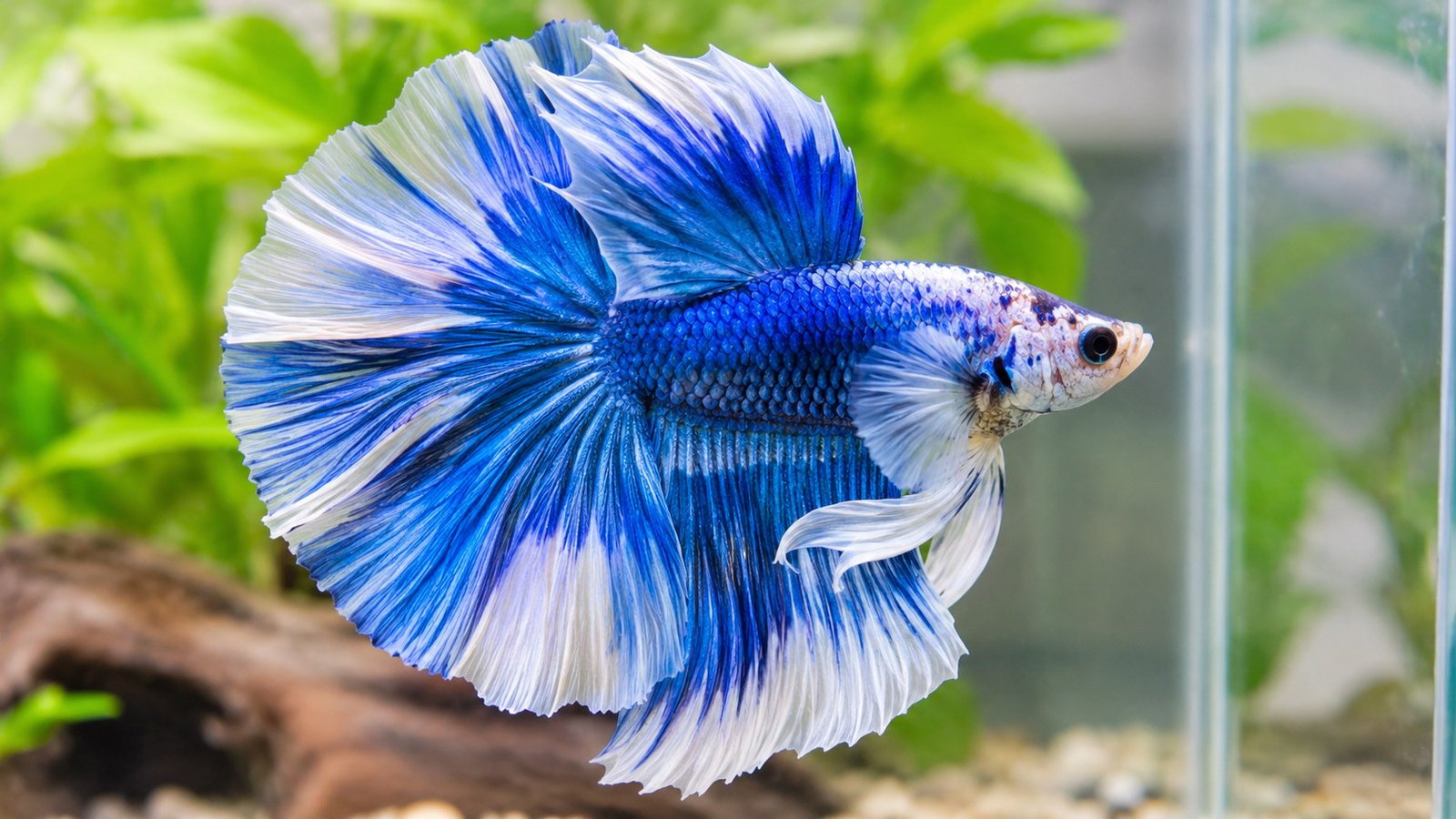
Halfmoon Betta fish are among the most beautiful freshwater aquarium fish, admired for their flowing fins, vibrant colors, and impressive tail shapes that spread into a near-perfect 180-degree fan. Their elegant appearance makes them a popular choice for aquarium enthusiasts, but keeping these fish healthy requires more than simply providing a small bowl of water.
Whether you’re considering buying your first Halfmoon Betta or already have one swimming in your aquarium, understanding its specific needs can make a significant difference in its health and lifespan. Proper water conditions, nutritious food, suitable tank decorations, and regular maintenance all contribute to a comfortable environment.
This post explains everything you need to know about Halfmoon Betta fish, including their physical characteristics, popular color varieties, aquarium requirements, feeding habits, common health concerns, and practical care tips. You’ll also learn how to recognize a healthy specimen and avoid common mistakes that can damage its delicate fins.
In This Article
What Is a Halfmoon Betta Fish?
The Halfmoon Betta fish is a selectively bred variety of Siamese fighting fish (Betta splendens). It is particularly famous for its large, flowing tail fin that spreads into a semicircular shape resembling a half-moon when fully extended.
Unlike ordinary Betta varieties with smaller or differently shaped tails, Halfmoon Bettas have a distinctive caudal fin that can reach an angle of approximately 180 degrees. This impressive appearance makes them especially attractive to collectors and ornamental fish enthusiasts.
Halfmoon Bettas are available in numerous colors and patterns, including red, blue, white, black, yellow, and multicolored combinations. Their long fins and graceful swimming movements give them an elegant appearance that stands out in a well-maintained aquarium.
What Makes a Betta Fish a Halfmoon?
The most recognizable feature of a Halfmoon Betta is its tail shape. When the fish spreads its caudal fin completely, the upper and lower edges form a broad semicircle with an angle close to 180 degrees.
This shape is not simply a decorative characteristic. It is also an important feature used by breeders and judges when evaluating Halfmoon Betta fish.
Several physical characteristics help identify this variety:
- Wide caudal fin: The tail spreads into a semicircular shape when fully flared.
- Long flowing fins: The dorsal and anal fins are generally well-developed and contribute to its elegant appearance.
- Symmetrical appearance: A desirable Halfmoon specimen has balanced fin proportions and a relatively even tail outline.
- Vibrant coloration: Selective breeding has produced a wide range of striking colors and patterns.
- Elongated body: Like other domestic Betta splendens, it has a streamlined body suited to swimming near the water’s surface.
Male Halfmoon Bettas typically have longer, more dramatic fins than females, although female specimens can also display impressive tail shapes.
One important detail: Not every Betta with a large tail is a true Halfmoon. The defining characteristic is the approximately 180-degree caudal fin spread, rather than simply having long or flowing fins.
How Halfmoon Bettas Differ From Other Betta Varieties
Halfmoon Bettas belong to the same species as other popular ornamental Betta varieties, but their tail structures make them visually different.
Understanding these differences can help you choose the right Betta for your aquarium.
| Betta variety | Main tail characteristic | Appearance |
| Halfmoon | Approximately 180-degree spread | Broad, semicircular tail |
| Super Delta | Less than 180-degree spread | Wide, triangular tail |
| Crowntail | Extended fin rays with reduced webbing | Spiky, crown-like appearance |
| Veiltail | Long, asymmetrical, downward-flowing tail | Soft, flowing appearance |
| Plakat | Short, compact fins | More streamlined, athletic appearance |
| Double Tail | Two distinct caudal lobes | Split-tail appearance |
The Halfmoon and Super Delta varieties are sometimes confused because both have wide, fan-shaped tails. However, a fully spread Halfmoon should reach approximately 180 degrees, while a Super Delta has a narrower spread.
Crowntail Bettas are easier to distinguish because their extended fin rays create a spiky appearance instead of the smooth, rounded outline associated with Halfmoons.
Are Halfmoon Betta Fish Naturally Occurring or Selectively Bred?
The Halfmoon Betta is a product of selective breeding rather than a naturally occurring wild color or fin variety.
Wild Betta splendens generally have shorter fins and less exaggerated tail shapes than many domestic ornamental varieties. Over generations, breeders selected fish with wider caudal fins and other desirable characteristics to develop the Halfmoon appearance.
Selective breeding has also created numerous color combinations, including solid shades, metallic patterns, marble markings, and butterfly coloration.
However, extreme fin development can sometimes create additional care challenges. Long, delicate fins may be more vulnerable to tearing, damage, and excessive water currents.
Responsible breeding should prioritize health, swimming ability, and good body condition rather than appearance alone.
Halfmoon Betta Fish Colors and Varieties Worth Knowing
One reason Halfmoon Betta fish are so popular is their incredible range of colors and patterns. From deep royal blue to bright metallic shades, these fish can display some of the most attractive color combinations found in freshwater aquariums.
Their appearance depends on genetics, selective breeding, and individual pigmentation. Some Halfmoons have a single solid color, while others display contrasting patterns across their bodies and fins.
Choosing a color is largely a matter of personal preference, but understanding the different varieties can help you find a fish that matches your aquarium’s appearance.
Popular Halfmoon Betta Fish Colors
Here are some of the most recognizable Halfmoon Betta color varieties.
Red Halfmoon Betta
Red Halfmoon Bettas are among the classic ornamental varieties. Their bodies and fins can display bright cherry red, deep crimson, or darker blood-red shades.
Some specimens have a consistent red coloration, while others show slightly darker or lighter areas around their fins.
Blue Halfmoon Betta
Blue Halfmoon Bettas are popular because of their brilliant coloration and elegant appearance. Common shades include royal blue, steel blue, and turquoise.
Their flowing tails can create beautiful visual effects when they swim under aquarium lighting.
White Halfmoon Betta
White Halfmoon Bettas have pale bodies and fins that can appear almost translucent under certain lighting conditions.
Some specimens display a clean, solid white appearance, while others have subtle cream or pearlescent tones.
Their delicate coloration looks particularly attractive against a dark aquarium background.
Black Halfmoon Betta
Black Halfmoon Bettas are admired for their dramatic appearance. Their dark bodies and flowing fins can range from deep black to slightly metallic or iridescent shades.
Some varieties have a nearly uniform black appearance, while others display subtle blue or copper highlights.
Yellow and Orange Halfmoon Betta
Yellow and orange Halfmoons bring a brighter appearance to freshwater aquariums.
Their colors may resemble sunshine yellow, golden yellow, pale orange, or intense orange. These varieties are especially attractive when their fins have consistent coloration.
Purple Halfmoon Betta
Purple Halfmoon Bettas are less commonly encountered than standard red and blue varieties.
Their coloration can range from lavender and violet to deeper purple shades. Some specimens also display metallic highlights that become more noticeable under suitable lighting.
Koi and Marble Halfmoon Betta
Koi and Marble Halfmoons have irregular color patterns that make individual fish look different from one another.
Common markings include combinations of red, white, black, orange, and blue. Marble-patterned Bettas may also change their coloration as they mature.
Multicolor Halfmoon Betta
Multicolor Halfmoons combine several shades across their bodies and fins. Some have contrasting tail edges, while others feature different colors on their dorsal, anal, and caudal fins.
Butterfly patterns are another attractive variation, often featuring a contrasting band of color along the outer edges of the fins.
Male vs. Female Halfmoon Betta Fish: What Are the Differences?
Male and female Halfmoon Bettas can both have attractive colors and distinctive tail shapes, but their physical appearance and behavior are often different.
Male Halfmoons generally have longer, more dramatic fins, making them particularly popular among ornamental fish enthusiasts.
Female Halfmoons usually have shorter fins and a more compact appearance. However, selective breeding has produced females with relatively broad and impressive tail shapes.
| Characteristic | Male Halfmoon Betta | Female Halfmoon Betta |
| Fin length | Usually longer | Usually shorter |
| Tail appearance | Large and flowing | Often smaller and less dramatic |
| Body shape | Generally more slender | Often slightly fuller |
| Coloration | Frequently vivid | Can also be very vibrant |
| Aggression | Often territorial toward other males | Can also show territorial behavior |
| Breeding role | Produces sperm and may build bubble nests | Produces eggs |
Female Bettas may develop a small white egg spot, called an ovipositor, near the underside of the body. This can help with identification, although other physical characteristics should also be considered.
Never assume that female Bettas are automatically peaceful enough to live together. Some females can be territorial and aggressive, particularly in small or poorly structured aquariums.
How to Recognize a Healthy, High-Quality Halfmoon Betta
A beautiful tail is not necessarily a sign of good health. When choosing a Halfmoon Betta, pay attention to its overall condition rather than focusing exclusively on color and fin size.
Look for these positive signs:
- Bright, reasonably consistent coloration.
- Clear eyes without cloudiness or swelling.
- Smooth body scales without visible injuries.
- Fins that are intact and free from significant tears or deterioration.
- Active swimming and an alert response to nearby movement.
- Regular breathing without persistent gasping.
- A healthy appetite when offered suitable food.
Avoid purchasing fish that remain motionless for extended periods, have visibly deteriorating fins, show unusual swelling, or struggle to maintain their balance.
Small fin imperfections do not automatically indicate disease, but extensive damage deserves attention.
Buying a healthy fish from a responsible breeder or reputable aquarium store is one of the best ways to start your Halfmoon Betta keeping experience.
Halfmoon Betta Fish Care: Creating the Right Aquarium Environment
Proper aquarium conditions are essential for keeping Halfmoon Betta fish healthy. Although Bettas can survive in relatively small amounts of water, they should not be kept in cramped bowls or unheated containers.
A suitable aquarium provides enough swimming space, stable water conditions, gentle filtration, and places where the fish can rest.
Halfmoon Bettas require particular attention because their large fins can make swimming more difficult in strong currents. A carefully arranged aquarium helps prevent unnecessary stress and fin damage.
Recommended Tank Size for Halfmoon Betta Fish
A 5-gallon aquarium is a practical minimum for a single Halfmoon Betta, while a 10-gallon tank offers additional swimming space and more stable water conditions.
Larger aquariums generally provide better water quality stability because waste products and temperature changes are less concentrated.
Consider these aquarium sizes:
| Tank size | Suitability | Recommendation |
| 1 gallon | Not recommended | Too little water for stable long-term conditions |
| 2.5 gallons | Less suitable | Requires more frequent maintenance and careful monitoring |
| 5 gallons | Good | Practical minimum for one Betta |
| 10 gallons | Excellent | More swimming space and room for plants |
| 15–20 gallons | Excellent | Suitable for a thoughtfully designed planted aquarium |
A larger aquarium is especially helpful if you want to create a natural-looking environment with live plants, hiding places, and gentle filtration.
Avoid using decorative fish bowls as permanent housing. Their small water volume makes it difficult to maintain consistent temperature and water quality.
Ideal Water Temperature and Parameters
Halfmoon Bettas are tropical freshwater fish that require warm, stable water conditions.
Their aquarium should generally maintain a temperature between 76°F and 82°F (24.5°C–27.8°C), with approximately 78°F–80°F (25.5°C–26.7°C) being a comfortable target for many healthy adult Bettas.
Sudden temperature changes can stress the fish and interfere with normal activity.
Here are the recommended water conditions:
| Water parameter | Recommended range |
| Temperature | 76°F–82°F (24.5°C–27.8°C) |
| pH | Approximately 6.5–7.5 |
| Ammonia | 0 ppm |
| Nitrite | 0 ppm |
| Nitrate | Ideally below 20 ppm |
Ammonia and nitrite should always remain at zero in an established aquarium. Elevated levels can damage a Betta’s gills and create serious health problems.
Nitrate should be kept low through regular partial water changes and appropriate aquarium maintenance.
Use a reliable liquid test kit to monitor water quality rather than relying on appearance alone. Clear aquarium water can still contain harmful levels of ammonia or nitrite.
Do Halfmoon Betta Fish Need a Heater?
Yes. Most Halfmoon Bettas benefit from a properly sized aquarium heater, especially when kept in rooms where temperatures fluctuate.
Cold water can slow their metabolism, reduce activity, and increase susceptibility to stress-related health problems.
Choose an adjustable heater appropriate for your aquarium size and pair it with a separate thermometer to monitor the actual water temperature.
Never rely on room temperature alone, particularly during cooler nights or seasonal weather changes.
Filtration Requirements for Delicate Halfmoon Fins
Filtration helps remove waste, supports beneficial bacteria, and maintains better water quality.
However, Halfmoon Bettas have large fins that can make swimming against strong currents tiring. Excessive water movement may also cause them to avoid certain areas of the aquarium.
Suitable filtration options include:
- Sponge filters.
- Gentle adjustable-flow aquarium filters.
- Low-flow internal filters with protective intake covers.
Sponge filters are particularly popular for Betta aquariums because they provide biological filtration while producing relatively gentle water movement.
Position the filter so the current does not constantly push the fish around the tank.
If your Halfmoon frequently struggles to swim, avoids the filter outlet, or rests continuously in sheltered corners, check whether the water flow is too strong.
Aquarium Lighting, Plants, and Safe Decorations
A well-designed aquarium should provide a balance between open swimming areas and sheltered resting places.
Halfmoon Bettas appreciate environments with plants, gentle shade, and suitable hiding spots. These features can make the aquarium feel more secure while providing opportunities for natural exploration.
Consider adding:
- Live plants: Java fern, Anubias, and Java moss are popular beginner-friendly options.
- Floating plants: Frogbit and other suitable floating plants can provide shade and cover.
- Smooth decorations: Choose aquarium-safe ornaments without sharp edges.
- Betta hammocks: These provide resting spots near the water surface.
- Natural hiding places: Small caves and planted areas help the fish feel secure.
Avoid rough plastic plants, sharp stones, and decorations with narrow openings that could trap the fish or tear its fins.
Lighting should follow a consistent day-night schedule. Around 8–10 hours of aquarium lighting per day is a reasonable starting point, depending on plant requirements.
Excessive lighting can encourage algae growth and create unnecessary stress.
How to Maintain Clean Water Without Creating Strong Currents
Good water quality is one of the most important factors in Halfmoon Betta care.
Even a properly equipped aquarium needs regular maintenance because uneaten food, fish waste, and decaying plant material gradually affect water conditions.
Follow these basic maintenance practices:
- Change approximately 20–30% of the aquarium water weekly, adjusting the schedule according to water test results and stocking conditions.
- Use a water conditioner to neutralize chlorine and chloramine in tap water.
- Remove uneaten food and visible waste.
- Clean the substrate gently using an aquarium siphon.
- Rinse filter media in removed aquarium water when necessary.
- Avoid replacing all filter media at once because it may remove beneficial bacteria.
- Check the heater and filter regularly to ensure they work correctly.
A fully cycled aquarium is essential before introducing a Betta. The nitrogen cycle allows beneficial bacteria to convert toxic ammonia into nitrite and then into less harmful nitrate.
If you are setting up a new aquarium, take the time to establish the biological filter before adding your fish.
For additional guidance on aquarium water quality and fish welfare, the Aquarium Co-Op guide to cycling a fish tank provides useful information about establishing a healthy aquarium environment.
The best Halfmoon Betta aquarium is not necessarily the most expensive or decorative one. It is the environment that consistently provides clean, warm, stable water, gentle filtration, and enough space for natural movement.
What Do Halfmoon Betta Fish Eat? Feeding for Color, Growth, and Health
A nutritious diet plays an important role in keeping Halfmoon Betta fish healthy, active, and colorful. These fish are carnivorous by nature, meaning they primarily require protein-rich foods rather than plant-based diets.
Feeding your Halfmoon Betta the right combination of quality pellets and occasional frozen or live foods can support healthy growth, maintain body condition, and help preserve its vibrant coloration.
However, feeding too much can create problems. Overfeeding may contribute to constipation, poor water quality, and other digestive issues, so portion control is just as important as food quality.
Best Foods for Halfmoon Betta Fish
Halfmoon Bettas benefit from a varied diet based on high-quality foods formulated specifically for Betta fish.
Here are some suitable options.
High-Quality Betta Pellets
Betta pellets are a convenient staple food for everyday feeding. Choose products that contain animal-based protein ingredients, such as fish meal, shrimp meal, or other suitable aquatic protein sources.
Look for pellets that:
- Are appropriately sized for your Betta’s mouth.
- Contain quality animal protein as a primary ingredient.
- Are formulated specifically for carnivorous Betta fish.
- Do not rely heavily on unnecessary fillers.
Pellets should form the foundation of a balanced feeding routine.
Frozen Bloodworms
Frozen bloodworms are a popular occasional treat for Bettas. They provide animal protein and can encourage fish with a healthy appetite to feed.
However, bloodworms should not become the only food in the diet. Use them as part of a varied feeding routine rather than a complete nutritional replacement.
Brine Shrimp
Brine shrimp are another suitable food option, especially when offered frozen or appropriately prepared.
They provide protein and variety while encouraging natural feeding behavior. Adult Bettas can eat appropriately sized brine shrimp without difficulty.
Daphnia
Daphnia are small aquatic crustaceans that can be offered as occasional food.
They provide variety and are commonly used in Betta feeding routines. Some fish keepers also use daphnia as part of a varied diet when managing mild digestive issues, although they are not a treatment for constipation or disease.
Other Suitable Live Foods
Some experienced fish keepers offer live foods such as appropriately sized mosquito larvae and other cultured aquatic invertebrates.
Live foods should come from reliable, clean sources. Avoid collecting unknown insects or aquatic organisms from outdoor environments because they may carry parasites, bacteria, or chemical contaminants.
How Often and How Much Should You Feed a Halfmoon Betta?
Most healthy adult Halfmoon Bettas do well with small meals once or twice daily.
The appropriate amount depends on the fish’s body size, food type, activity level, and individual appetite.
A practical feeding routine might look like this:
| Food type | Feeding frequency | Purpose |
| Betta pellets | Daily | Main source of nutrition |
| Frozen bloodworms | Occasionally | Variety and protein |
| Frozen brine shrimp | 1–2 times weekly | Dietary variety |
| Daphnia | Occasionally | Additional food variety |
| Suitable live foods | Occasionally | Natural feeding enrichment |
Start with a small portion and observe how quickly your fish eats.
Most meals should be consumed within a short period. Remove uneaten food promptly to prevent it from decomposing and affecting aquarium water quality.
Do not follow pellet counts blindly. Different brands produce different pellet sizes, so the correct portion for one product may be excessive for another.
Foods to Avoid and Common Feeding Mistakes
Although Halfmoon Bettas enjoy a variety of foods, not everything suitable for humans or other aquarium fish is appropriate for them.
Avoid feeding:
- Bread and crackers.
- Rice and other cooked human foods.
- Processed meat.
- Seasoned or salted seafood.
- Large food pieces that the fish cannot swallow.
- Unverified live foods collected from polluted water.
Common feeding mistakes include offering too much food, relying exclusively on treats, and leaving uneaten food in the aquarium.
Another mistake is immediately increasing food portions whenever a Betta appears interested in feeding. Bettas may continue responding to food even when they have already eaten enough.
Signs of Overfeeding, Constipation, and Poor Nutrition
Monitoring your Halfmoon Betta’s body condition helps you identify feeding problems before they become serious.
Watch for these signs:
| Problem | Possible signs |
| Overfeeding | Persistent bloating, uneaten food, deteriorating water quality |
| Constipation | Swollen abdomen, reduced appetite, abnormal waste production |
| Poor nutrition | Loss of body condition, reduced activity, faded coloration |
| Excessive feeding of treats | Unbalanced diet and inconsistent body condition |
A slightly rounded abdomen after eating is not necessarily a problem. Persistent swelling, however, deserves attention.
If your fish develops significant bloating, stops eating, or shows difficulty swimming, do not automatically assume constipation. These symptoms can also occur with infections and internal disorders.
Seek advice from an aquatic veterinarian if symptoms persist or worsen.
Common Halfmoon Betta Fish Health Problems and Warning Signs
Halfmoon Betta fish can live healthy lives when their aquarium conditions are properly maintained. However, their long, delicate fins and sensitivity to poor water quality can make certain problems particularly important to watch for.
Many health issues develop gradually, giving owners an opportunity to recognize early warning signs.
Paying attention to swimming behavior, appetite, fin condition, and body appearance can help you identify potential problems before they become severe.
Fin Rot: Symptoms, Causes, and Prevention
Fin rot is a common condition affecting ornamental Betta fish. It is generally associated with bacterial infection and often occurs when fish are stressed or exposed to poor water conditions.
Halfmoon Bettas deserve particular attention because their large fins can make early damage more noticeable.
Common signs include:
- Darkening or discoloration along the fin edges.
- Gradual fin deterioration.
- Ragged or uneven fin margins.
- Redness around damaged areas.
- Reduced fin length over time.
Poor water quality, injuries, and stress can contribute to the development of fin problems.
How to prevent fin rot:
- Maintain stable water parameters.
- Keep ammonia and nitrite at zero.
- Perform regular partial water changes.
- Remove decaying organic material.
- Avoid overcrowding.
- Quarantine new fish before introducing them into an established aquarium.
If fin deterioration continues despite improving water conditions, consult an aquatic veterinarian for diagnosis and appropriate treatment.
Fin Tearing and Damage From Sharp Decorations
The flowing tail of a Halfmoon Betta is beautiful, but it can also be vulnerable to physical damage.
Sharp plastic plants, rough ornaments, and narrow decorations may catch or tear delicate fins.
Strong filter currents can also make swimming difficult, potentially contributing to fin damage and stress.
Signs of physical fin injury include:
- Small splits along the tail.
- Missing sections of fin tissue.
- Uneven fin edges.
- Visible tears that appear suddenly.
- Changes in swimming behavior.
Inspect aquarium decorations carefully before placing them inside the tank.
A simple way to check an ornament is to run a piece of soft fabric or fine nylon material across its surface. If it catches easily, the decoration may also damage your Betta’s fins.
Replace unsafe decorations with smooth aquarium-safe alternatives.
Swim Bladder Problems and Abnormal Swimming
The swim bladder is an internal organ that helps fish control buoyancy.
When its function is disrupted, a Betta may have difficulty maintaining a normal swimming position.
Possible signs include:
- Floating uncontrollably near the surface.
- Sinking toward the bottom.
- Swimming sideways or upside down.
- Struggling to maintain balance.
- Spending unusual amounts of time resting.
Several conditions can cause these symptoms, including digestive problems, injury, infection, and other internal disorders.
Check the aquarium temperature and water quality first. Poor environmental conditions can contribute to abnormal swimming behavior.
Avoid immediately treating the fish with medication without understanding the underlying cause.
Persistent buoyancy problems, especially when accompanied by appetite loss or abdominal swelling, require assessment by an aquatic veterinarian.
Ich and Other Common Parasitic Infections
Ich, also known as white spot disease, is a parasitic infection caused by Ichthyophthirius multifiliis.
It commonly appears as small white spots resembling grains of salt on the fish’s body and fins.
Other possible signs include:
- Rubbing against decorations or substrate.
- Rapid breathing.
- Reduced appetite.
- Unusual swimming behavior.
- Clamped fins.
Ich can spread rapidly between susceptible fish, especially when aquarium conditions are poor.
Other parasites may cause similar symptoms, so accurate identification is important before starting treatment.
If you suspect a parasitic infection, consider isolating affected fish when appropriate and seek guidance on a suitable treatment protocol.
Always follow medication instructions carefully because some treatments may affect aquarium plants, invertebrates, or biological filtration.
Stress, Lethargy, and Loss of Appetite
Not every health problem produces obvious physical symptoms.
Sometimes the earliest indication that something is wrong is a change in behavior.
A healthy Halfmoon Betta is generally alert and responsive to its surroundings. It may explore the aquarium, swim toward feeding areas, and rest periodically.
Warning signs include:
- Spending most of the day hiding.
- Remaining motionless for unusually long periods.
- Refusing food repeatedly.
- Keeping fins tightly clamped.
- Gasping frequently at the water surface.
- Losing interest in its surroundings.
Possible causes include unsuitable temperatures, poor water quality, excessive currents, aggressive tank mates, and illness.
Check water parameters immediately if your Betta suddenly becomes lethargic or stops eating.
When to see a veterinarian: Seek professional help if your fish develops persistent breathing difficulties, significant swelling, visible ulcers, rapidly deteriorating fins, severe swimming abnormalities, or refuses food for an extended period.
Halfmoon Betta Fish Tank Mates: Which Fish Can Live Together?
Choosing tank mates for a Halfmoon Betta requires careful consideration.
Although some Bettas can live peacefully with other aquatic species, their territorial behavior means that compatibility is never guaranteed.
Male Bettas are particularly known for their aggression toward other male Bettas. Some individuals may also chase fish with colorful bodies or flowing fins because they perceive them as competitors.
The safest approach is to prioritize your Betta’s temperament, aquarium size, and the needs of every species involved.
Can Halfmoon Betta Fish Live With Other Fish?
Yes, some Halfmoon Bettas can live with peaceful community fish, but success depends on several factors.
A spacious, well-planted aquarium with multiple hiding places can reduce unwanted encounters and provide areas where fish can avoid one another.
However, a Betta that becomes aggressive toward tank mates should not be forced to share its environment.
A single Betta in a properly maintained aquarium is often the simplest and safest arrangement, especially for beginners.
Suitable Tank Mates for Halfmoon Bettas
Certain peaceful aquatic species may be compatible with individual Bettas under appropriate conditions.
Potential options include:
Corydoras Catfish
Corydoras are peaceful bottom-dwelling fish that spend much of their time searching for food near the substrate.
They generally occupy a different area of the aquarium from Bettas, which may reduce territorial encounters.
However, Corydoras are social fish and should be kept in an appropriately sized group. Choose a suitable aquarium size rather than adding only one or two individuals to a small Betta tank.
Harlequin Rasboras
Harlequin Rasboras are generally peaceful schooling fish that can work in some community aquariums.
Their active swimming behavior and different body shape may make them less likely to trigger territorial responses in certain Bettas.
They still require sufficient swimming space and a properly sized group.
Kuhli Loaches
Kuhli Loaches are peaceful bottom-dwelling fish that often hide among plants and decorations.
Their nocturnal behavior means they are frequently less active during the day.
They need suitable substrate, hiding places, and a sufficiently large aquarium.
Nerite Snails
Nerite snails are popular aquarium inhabitants because they help consume certain types of algae.
They have protective shells and generally do not compete with Bettas for swimming space.
However, some Bettas may repeatedly investigate or attack snails, so monitor their interactions.
Amano Shrimp
Amano shrimp can sometimes coexist with Bettas and are useful algae grazers.
Their relatively larger size compared with many dwarf shrimp may reduce the risk of predation, but individual Bettas may still attack them.
Provide plenty of plants and hiding places if attempting this combination.
Fish and Aquarium Inhabitants to Avoid
Not every peaceful-looking fish is suitable for a Betta community aquarium.
Avoid species that may attack fins, compete aggressively for food, or require very different environmental conditions.
| Species or group | Why to avoid |
| Other male Bettas | High risk of territorial fighting |
| Tiger Barbs | Known fin-nipping behavior |
| Some aggressive cichlids | Territorial behavior and potential aggression |
| Large predatory fish | Risk of injury or predation |
| Fancy guppies | Long, colorful fins may trigger aggression |
| Other aggressive fin nippers | Can damage delicate Halfmoon fins |
Female Bettas should also not automatically be considered safe companions for male Bettas.
Keeping multiple Bettas together requires careful planning and is not recommended as a casual community aquarium arrangement.
How to Introduce Tank Mates Safely
Introducing new fish should be done gradually.
Follow these precautions:
- Make sure the aquarium is large enough for all intended inhabitants.
- Quarantine new fish before introducing them.
- Provide plants and decorations that create separate territories.
- Introduce suitable tank mates only after researching their environmental requirements.
- Monitor interactions closely during the first several days.
- Keep a separate aquarium available if aggression develops.
Never ignore repeated chasing, fin biting, or injuries simply because the fish initially appeared compatible.
The well-being of your Halfmoon Betta should always come before creating a visually impressive community aquarium.
Halfmoon Betta Fish Lifespan, Breeding, and Expert Care Tips
Halfmoon Betta fish can make rewarding aquarium pets when their needs are consistently met.
Understanding their expected lifespan, breeding behavior, and everyday care requirements helps owners make better decisions throughout their fish’s life.
How Long Do Halfmoon Betta Fish Live?
Most domestic Halfmoon Betta fish live approximately 2–5 years, although individual lifespans vary.
Some fish may live longer with excellent care, while others may have shorter lives because of genetics, previous living conditions, disease, or stress.
Several factors influence lifespan:
- Water quality and aquarium maintenance.
- Consistent tropical temperatures.
- Balanced nutrition.
- Appropriate aquarium size.
- Low-stress surroundings.
- Genetic health and responsible breeding.
Buying a healthy fish from a reputable breeder can provide a good starting point, but daily care plays a major role in maintaining its quality of life.
How Halfmoon Bettas Reproduce
Betta splendens reproduce through a spawning process involving a bubble nest.
Male Bettas typically build bubble nests near the water surface using air bubbles coated with mucus.
When a receptive female is introduced, the pair may engage in courtship behavior before spawning.
During spawning, the male generally wraps his body around the female, allowing her to release eggs that are fertilized externally.
The male usually collects the eggs and places them inside the bubble nest.
He then guards the nest and helps return falling eggs until the fry hatch.
Basic Breeding Requirements
Breeding Halfmoon Bettas requires preparation, suitable equipment, and a good understanding of fish behavior.
A dedicated breeding aquarium is preferable to using an ordinary community tank.
Important requirements include:
- A stable, warm breeding environment.
- Clean, conditioned water.
- Gentle filtration or suitable aeration.
- A safe location for the bubble nest.
- Suitable hiding places for the female.
- Healthy, mature breeding fish.
- Appropriate food for newly hatched fry.
Breeding should only be attempted with healthy specimens that have desirable physical characteristics and no obvious signs of inherited defects.
It is also important to have a plan for raising and responsibly rehoming the offspring.
Caring for Betta Eggs and Newly Hatched Fry
After spawning, the male Betta usually guards the bubble nest.
Depending on temperature and conditions, eggs commonly hatch within approximately 24–48 hours.
The newly hatched fry initially survive using their yolk sacs. Once they become free-swimming, they need appropriately sized food.
Suitable first foods may include:
- Infusoria or other suitable microscopic foods.
- Commercial fry foods formulated for tiny fish.
- Newly hatched baby brine shrimp once the fry are large enough to consume them.
Fry require excellent water quality, stable temperatures, and careful feeding.
Uneaten food and waste should be removed without disturbing the young fish.
As the fry grow, they may eventually need separate housing because young Bettas can develop territorial behavior as they mature.
Practical Expert Tips for Maintaining Healthy Halfmoon Bettas
Small daily habits can make a meaningful difference in your fish’s long-term health.
Use these practical care tips:
- Check the temperature daily: Make sure the heater maintains a stable environment.
- Observe fin condition: Look for new tears, discoloration, or deteriorating edges.
- Maintain a feeding routine: Offer appropriate portions rather than feeding whenever the fish approaches the glass.
- Keep the aquarium covered: Bettas can jump, so use a secure lid while leaving appropriate air space above the water.
- Provide resting areas: Broad-leaved plants and Betta hammocks give long-finned fish places to rest near the surface.
- Avoid sudden changes: Gradually adjust water temperature and chemistry when necessary.
- Test the water regularly: Do not assume the aquarium is healthy simply because it looks clean.
Common Mistakes That Can Shorten a Halfmoon Betta’s Lifespan
Even experienced aquarium owners can make mistakes that affect their fish’s health.
Some of the most common problems include:
| Mistake | Why it matters | Better approach |
| Keeping the fish in a tiny bowl | Unstable water conditions | Use an appropriately sized aquarium |
| Skipping water testing | Harmful compounds may go unnoticed | Test ammonia, nitrite, and nitrate |
| Using strong filtration | Can make swimming difficult | Choose gentle filtration |
| Overfeeding | Can contribute to digestive problems and poor water quality | Offer controlled portions |
| Adding sharp decorations | May tear delicate fins | Choose smooth aquarium-safe ornaments |
| Keeping the water too cold | Can cause stress and reduced activity | Maintain stable tropical temperatures |
| Introducing incompatible tank mates | May cause aggression and injury | Research compatibility carefully |
One of the biggest misconceptions about Betta fish is that they are naturally suited to living in small containers.
Although they can breathe atmospheric air using a specialized labyrinth organ, this does not mean they can thrive without sufficient swimming space, clean water, and appropriate environmental conditions.
Frequently Asked Questions About Halfmoon Betta Fish
How much does a Halfmoon Betta fish cost?
The price of a Halfmoon Betta varies depending on its color, fin quality, age, genetics, breeder, and availability. Common varieties are generally more affordable, while unusual patterns and selectively bred specimens may cost considerably more. Remember to budget for the aquarium, heater, filter, food, and maintenance equipment.
Are Halfmoon Betta fish good for beginners?
Yes, Halfmoon Bettas can be suitable for beginners who are willing to maintain a properly equipped aquarium. Their basic care requirements are manageable, but their long fins require attention to water flow, decorations, and water quality. A cycled 5-gallon or larger aquarium is a good starting point.
How big do Halfmoon Betta fish get?
Adult Halfmoon Bettas typically reach approximately 2–3 inches (5–7.5 cm) in body length, excluding their fins. Their flowing tails can make them appear considerably larger than their actual body size.
Can Halfmoon Betta fish live in a 5-gallon tank?
Yes. A properly maintained 5-gallon aquarium is a practical minimum for one Halfmoon Betta. It should include gentle filtration, a heater, suitable decorations, and stable water conditions.
Do Halfmoon Betta fish need a heater?
Yes, in most indoor environments. Halfmoon Bettas are tropical fish that generally require water temperatures between 76°F and 82°F. An adjustable aquarium heater and thermometer help maintain stable conditions.
Why doesn’t my Halfmoon Betta spread its tail?
There are several possible reasons, including stress, illness, unfamiliar surroundings, or individual temperament. Some Bettas do not flare frequently, which is not necessarily a health problem. However, clamped fins, lethargy, and loss of appetite may indicate stress or illness.
Are Halfmoon Betta fish rare?
Halfmoon Bettas are not generally considered rare in the ornamental fish trade. However, certain unusual colors, patterns, and high-quality breeding lines may be harder to find than common varieties.
How can you tell if a Halfmoon Betta is happy?
A healthy, comfortable Betta generally displays active swimming, a good appetite, alert behavior, and intact fins. It may explore its surroundings and show interest in feeding time. These behaviors are useful indicators, although no single behavior proves that a fish is happy.
What is the difference between Halfmoon and Delta Betta fish?
The main difference is the tail spread. A Halfmoon Betta has a caudal fin that spreads approximately 180 degrees, while a Delta Betta has a narrower, triangular tail that does not reach the same angle.
How often should you clean a Halfmoon Betta tank?
For a typical 5-gallon or larger aquarium, a weekly partial water change of approximately 20–30% is a reasonable starting point. The exact schedule depends on stocking, filtration, feeding, and water test results. Avoid completely replacing all the aquarium water during routine maintenance.
Give Your Halfmoon Betta the Care It Deserves
Halfmoon Betta fish are beautiful freshwater pets, but their impressive fins and vibrant colors should never distract from their basic care requirements.
A healthy Halfmoon needs more than an attractive aquarium. Clean water, stable tropical temperatures, gentle filtration, nutritious food, and a safe environment are essential for maintaining its health and well-being.
Whether you choose a striking red Halfmoon, an elegant white variety, or a colorful Koi pattern, responsible care should always come first.
Start with a properly cycled aquarium, monitor water conditions regularly, and pay attention to changes in your fish’s appearance and behavior. These simple habits can help your Halfmoon Betta enjoy a healthier and more comfortable life.