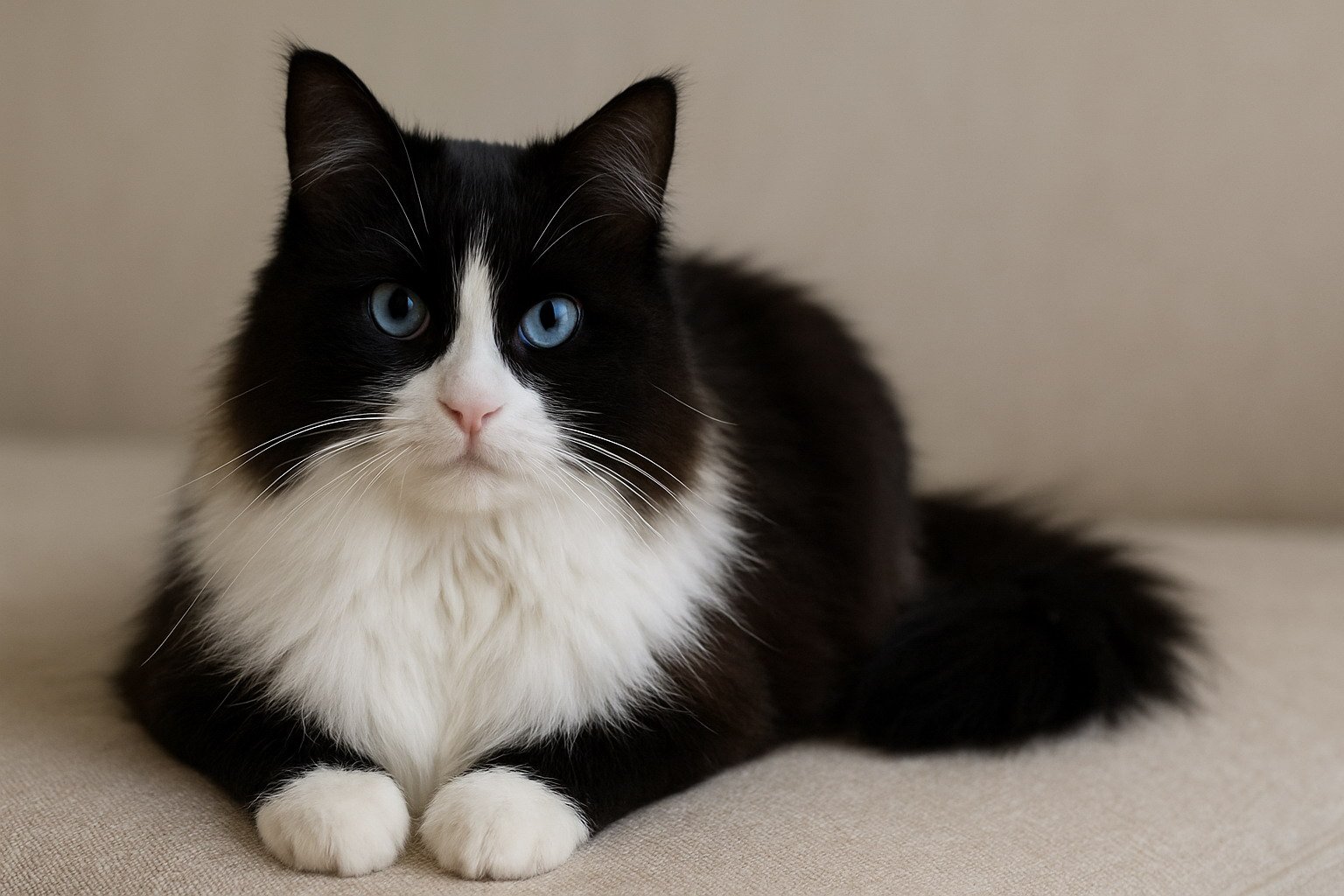
The black and white Ragdoll cat is one of the most intriguing coat variations associated with this beloved breed. Known for their plush fur, captivating blue eyes, and gentle demeanor, Ragdolls typically appear in seal, blue, chocolate, lilac, and other traditional colors. However, when a black and white Ragdoll cat appears, it sparks curiosity, debate, and sometimes controversy within the feline community.
This article dives deep into the genetics, origin, and physical characteristics of black and white Ragdoll cats.
In This Article
Black and White Ragdoll Cat
Ragdoll cats are famous for their relaxed personality and striking looks. The black and white coat pattern, often resembling a tuxedo or patched appearance, is uncommon and not traditionally recognized within official breed standards. Many registries, such as TICA and CFA, only consider genetically “pointed” color variations as purebred Ragdolls.
Despite this, black and white Ragdoll cats do exist—most commonly through crossbreeding, recessive genes, or deviations during breeding attempts. Enthusiasts adore this pattern for its panda-like markings, bold contrast, and almost show-stealer presence.
“While the classic Ragdoll wears muted tones, the black and white version dresses for the gala.”
Quick Facts
| Feature | Details |
| Coat type | Long, silky, prone to matting |
| Eye color | Often blue, but can be green or yellow in non-standard variants |
| Color eligibility | Rarely accepted in official registries |
| Temperament | Gentle, affectionate, laid-back |
| Rarity | Uncommon, often debated |
Origin and Genetics of Black and White Ragdoll Cats
How the Ragdoll Breed Began
The Ragdoll was developed in the 1960s by breeder Ann Baker in California, starting from a white domestic long-haired cat named Josephine. Early breed development focused on pointed patterns such as seal, blue, and chocolate. Standards were later tightly controlled to preserve these traits.
Can Ragdolls Be Black and White?
Genetically, traditional Ragdolls possess genes that restrict pigmentation to cooler parts of the body (face, ears, tail). However:
- Black and white coloration does not follow color-point genetics.
- When this coat appears, it’s typically due to:
- Introduction of non-pointed genetic lines through crossbreeding
- Recessive gene expression
- Rare mutation during breeding
- Introduction of non-pointed genetic lines through crossbreeding
Purebred vs Non-standard
| Type | Recognized by registries | Common black & white traits |
| Purebred pointed Ragdoll | Yes | Light-colored body, dark points |
| Black and white “Ragdoll-type” | No | Full black/white patches, tuxedo look |
| Mixed Ragdoll with bicolor genes | Sometimes | May have some Ragdoll temperament traits |
“Black and white Ragdolls are often referred to as Ragdoll lookalikes because they share temperament and physique with the breed but fall outside official color standards.”
Myth vs Reality
| Myth | Truth |
| Black and white Ragdolls are fake | Not necessarily fake, but not recognized as standard |
| They’re less affectionate | Coat color doesn’t affect personality |
| They’re more susceptible to disease | No correlation between color and health |
Physical Characteristics of a Black and White Ragdoll Cat
Although the coat sets them apart, black and white Ragdoll cats often retain the classic Ragdoll structure:
Common Physical Traits
- Semi-long fur with luxurious texture
- Large, muscular body (4.5–9 kg for males; 3–6.5 kg for females)
- Broad chest and fluffy tail
- Soft facial features with full cheeks
Typical Coat Patterns Found
- Tuxedo: Black body with white chest and paws
- Mitted: White paws, black mask and body
- Bicolor: Face with inverted “V,” balanced patches
Eye Color Insights
Purebred Ragdolls always have blue eyes. Black and white variations may display:
- Blue (rare, suggests purer lineage)
- Green, gold, or hazel (more common in mixed-line cats)
Case Study
“Milo,” a black and white Ragdoll-like cat adopted from a shelter in 2022, displayed typical Ragdoll friendliness but had green eyes and a tuxedo pattern. DNA testing showed 72% Ragdoll heritage, confirming coat color was due to recessive genes rather than crossbreeding.
Personality Traits of the Black and White Ragdoll Cat
Despite the rarity of their coat, the personality of a black and white Ragdoll cat is usually very similar to that of traditional Ragdolls. These cats are known for their calm, affectionate, and people-oriented nature. They often follow their owners from room to room and love interactive companionship rather than independent living.
Signature Temperament
- Affectionate: Frequently compared to dogs due to their loyalty.
- Gentle: Rarely aggressive, ideal around children and seniors.
- Calm and relaxed: Known for the “floppy” trait when picked up.
- Social and curious: Enjoy being involved in daily routines.
“If you want a cat that greets you at the door, lies next to you during movie nights, and doesn’t shy away from strangers, the black and white Ragdoll cat might be the perfect companion.”
Does Coat Color Affect Personality?
No scientific evidence directly links temperament to coat color in Ragdolls. Behavior is influenced more by early socialization and genetics rather than fur pigmentation.
Compatibility Analysis
| Family Type | Suitability |
| Families with kids | ⭐⭐⭐⭐⭐ |
| Elderly owners | ⭐⭐⭐⭐ |
| Working professionals | ⭐⭐ (needs attention or companionship) |
| Homes with other pets | ⭐⭐⭐⭐⭐ |
Many owners report that black and white Ragdoll-type cats are slightly more playful than pointed Ragdolls, likely due to more diverse genetic backgrounds.
Black and White Ragdoll Cat Grooming and Coat Care
Ragdolls are long-haired cats that require consistent grooming to maintain fur health and prevent matting, and the black and white version is no exception.
Grooming Routine
| Task | Frequency | Notes |
| Brushing | 3–4 times/week | Use wide-tooth comb and slicker brush |
| Full coat maintenance | Monthly | Professional grooming recommended |
| Bathing | Every 2–3 months | Use mild cat-specific shampoo |
| Nail trimming | Every 3–4 weeks | Cats with soft fur often dislike paw handling |
| Ear/eye cleaning | Weekly | Especially important in lighter face areas |
Best Grooming Tools
- Stainless steel comb
- Slicker brush for detangling
- Long-haired cat conditioner spray
- Pet-safe wet wipes for daily touch-ups
Shedding Insight
Ragdolls shed more during spring and autumn. Black and white fur will show loose hair more visibly, especially on light furniture.
Tip: Keep lint rollers in multiple rooms and use air purifiers to reduce floating fur particles.
Nutrition for Coat Health
- Foods high in omega-3 & omega-6 fatty acids
- Protein-rich diet (≥35% animal protein)
- Supplements: Salmon oil or biotin (after consulting a vet)
Health Considerations for Black and White Ragdoll Cats
Although coat color doesn’t influence health, some traits related to the breed should be closely monitored.
Common Health Issues
| Health Condition | Frequency | Prevention |
| Hypertrophic Cardiomyopathy (HCM) | High | Genetic screening before breeding |
| Polycystic Kidney Disease (PKD) | Medium | Annual ultrasound |
| Obesity | High | Portion-controlled diet |
| Dental disease | Medium | Dental treats and brushing |
| Hairballs | High (due to long fur) | Regular grooming & fiber-rich diet |
Black and white Ragdoll-type cats with non-pointed genetics may have slightly lower risk of HCM, as the pointed gene line is closely associated with the original breeding strain known for this disorder.
Average Lifespan
- Purebred Ragdoll: 12–17 years
- Black and white Ragdoll-type: 11–16 years (dependant on breeding background)
Vaccination & Vet Check-up Schedule
| Age | Medical Check |
| 8–16 weeks | Core vaccines (FVRCP, Rabies) |
| 6–12 months | Spay/neuter & booster shots |
| Annually | Full bloodwork, dental assessment |
| Every 6 months (senior) | Kidney and heart screening |
“One case study from a UK veterinary clinic showed that Ragdoll-type cats with mixed ancestry were less prone to cardiac issues but had a slightly higher risk of digestive sensitivity.”
Feeding and Nutrition for a Black and White Ragdoll Cat
Proper nutrition plays a crucial role in maintaining the health, fur quality, and overall wellbeing of a black and white Ragdoll cat. Due to their semi-long, luxurious coat and tendency toward a laid-back lifestyle, choosing the right diet is essential to prevent obesity, digestive issues, and excessive shedding.
Ideal Diet Composition
| Nutrient | Recommended Percentage | Benefits |
| Animal Protein | 35–45% | Supports muscle health & coat |
| Fat (healthy sources) | 15–25% | Energy & skin protection |
| Fiber | 3–5% | Prevents hairballs |
| Moisture | ≥ 70% (wet food) | Promotes kidney health |
| Omega-3 & 6 | – | Enhances coat shine & reduces hair loss |
Recommended Food Types
- High-quality wet food (low-carb, grain-free)
- Premium dry kibble with hairball control
- Occasional raw or cooked lean meat (consult vet)
- Avoid high-carb foods, fillers, or artificial flavors
“Ragdolls tend to eat out of boredom. Structured feeding times and a measured diet are better than free feeding.”
Suggested Portion Control (Based on 4–6 kg Adult Cat)
| Food Type | Daily Amount |
| Wet Food | 150–200 g |
| Dry Kibble | 40–60 g |
| Water | Freshly provided at all times |
Add salmon oil or krill oil 2–3 times per week to promote a sleek coat.
Living With a Black and White Ragdoll Cat: Environment & Enrichment
A black and white Ragdoll cat thrives in a calm, indoor setting, where they can lounge and interact with family members without excessive stress or noise. Although not hyperactive, they benefit from gentle enrichment to avoid boredom and weight gain.
Ideal Living Conditions
- Indoor-only (reduces risk of trauma and coat damage)
- Spacious environment with soft bedding
- Stable temperature (their long fur makes them sensitive to heat)
Enrichment Ideas
| Activity | Type | Benefit |
| Puzzle feeders | Mental | Slows feeding, stimulates brain |
| Feather wand play | Physical | Encourages hunting instinct |
| Soft climbing shelves | Moderate | Promotes mobility |
| Cat TV videos | Low | Ideal for indoor relaxation |
| Window perch | Environmental | Visual stimulation |
Behavioral Tips
- Ragdolls are known to be velcro cats—they form attachment and may show distress if left alone too often.
- Frequently enjoy quiet play, lap time, and sleeping next to their humans, rather than high-energy games.
“Owners often describe Ragdolls as living pillows—they just want to be where you are, preferably snuggled up beside you.”
How to Train a Black and White Ragdoll Cat
Training a black and white Ragdoll cat is usually smooth and rewarding due to their high intelligence and people-oriented personality. They respond well to positive reinforcement and gentle verbal encouragement.
Training Techniques
| Training Type | Method | Difficulty |
| Litter training | Introduce early, unscented litter | ⭐ |
| Basic tricks (sit, high-five) | Clicker training & treats | ⭐⭐ |
| Recall (name recognition) | Use calm repeat calling | ⭐⭐ |
| Leash training | Use soft harness, start indoors | ⭐⭐⭐ |
| Socialization | Regular handling & exposure | ⭐ |
Separation Anxiety Prevention
- Avoid long isolation periods
- Use interactive toys when alone
- Consider adopting a calm second pet (another Ragdoll or low-energy breed)
Quotes from Owners
“My black and white Ragdoll learned to open doors just by watching me. They’re clever—too clever at times.”
“Mine waits at the door when I come back from work. I swear he believes he’s a dog.”
Training Do’s and Don’ts
Do
- Reward with treats and soft praise
- Keep sessions short (5–10 mins)
- Use consistent commands
Don’t
- Punish or use harsh tones
- Use loud clickers or collars
- Expect high athletic performance — they’re relaxed by nature
Pros and Cons of Owning a Black and White Ragdoll Cat
Choosing a black and white Ragdoll cat comes with unique advantages and a few considerations that potential owners should weigh carefully. While they retain much of the classic Ragdoll temperament, their coat color can influence their breeding status, recognition, and availability.
Benefits
- Striking appearance — Their tuxedo-like markings and plush fur give them a distinctive, elegant look.
- Affectionate and calm — Shares the classic Ragdoll personality.
- Often more affordable — Compared to show-standard colorpoint Ragdolls.
- Great with kids and seniors — Low aggression, tolerant, delightfully cuddly.
- Less risk of overbreeding issues — Mixed genetic lines may have reduced likelihood of hereditary disorders.
Potential Challenges
- Not recognized as standard Ragdolls by TICA, CFA, or most breeding organizations.
- May lack blue eyes, which are considered a signature Ragdoll trait.
- Cannot be used for official breeding programs.
- Possible misrepresentation by unethical breeders.
- Requires regular grooming and fur maintenance, especially since black fur shows dandruff more prominently.
| Pros | Cons |
| Loving companion | Not accepted for show |
| Unique aesthetic | Rare, hard to find |
| Often affordable | May not be purebred |
| Suitable for indoor homes | Medium to high grooming needs |
How to Identify an Authentic Black and White Ragdoll Cat
Determining whether a black and white Ragdoll cat is truly part of the Ragdoll lineage requires attentive observation and, ideally, genetic testing.
Key Identification Features
- Large, muscular build (not slim like a domestic shorthair)
- Broad chest and semi-long, soft coat
- Gentle, laid-back personality
- May exhibit floppy behavior when carried
- Longer growth period (up to 3–4 years to reach full maturity)
- Wide-set ears and plush tail
Verification Methods
| Method | Accuracy | Cost |
| Pedigree certification | High | Varies by breeder |
| DNA genetic testing | Very high | $80–$150 |
| Physical trait observation | Moderate | Free |
“If the cat has green or gold eyes and black/white fur but behaves like a classic Ragdoll, it is likely a Ragdoll mix.”
Always ask the breeder:
- Proof of genetic lineage
- Health screening certificates (especially HCM)
- Honest disclosure about standard eligibility
Final Thoughts: Is the Black and White Ragdoll Cat Right for You?
A black and white Ragdoll cat is an ideal choice for someone seeking a loving, relaxed, and visually striking companion without the need for show eligibility or strict pedigree requirements. They embody everything people love about Ragdolls—affection, intelligence, and beauty—while often being more accessible and budget-friendly.
Ideal For:
✔ Families with children or seniors
✔ First-time or experienced cat owners
✔ People looking for a calm, affectionate indoor pet
✔ Those who prioritize companionship over breed registry status
Maybe Not Ideal For:
✘ Individuals seeking a championship show cat
✘ Breeding programs focused on traditional standards
✘ Homes unable to commit to regular coat care
“Even without official recognition, the heart of a Ragdoll is defined by its temperament—not just its color.”
For more detailed breed standards and genetic insights, you can explore The International Cat Association (TICA) website:
Visit TICA for official breed standards and updates
FAQs About Black and White Ragdoll Cats
Q1. Are black and white Ragdoll cats officially recognized by breed organizations?
No. Major registries like TICA and CFA only recognize colorpoint patterns. Black and white Ragdolls are considered non-standard.
Q2. Why are black and white Ragdoll cats rare?
Because the traditional Ragdoll genetics produce pointed colors. Black and white typically appear through mixed genetics.
Q3. Can a Ragdoll have a tuxedo pattern?
Yes, but tuxedo markings are not part of standard Ragdoll genetics and indicate mixed lineage.
Q4. Do black and white Ragdolls have blue eyes?
Some may if they come from heavily pointed lines, but most display green, gold, or hazel eyes.
Q5. How much does a black and white Ragdoll kitten cost?
Typically $400–$1,200, compared to $1,200–$3,500 for standard show-quality Ragdolls.
Q6. Are black and white Ragdoll cats hypoallergenic?
No. No breed is truly hypoallergenic. However, they shed moderately and need grooming to reduce allergens.
Q7. Can black and white Ragdolls be used for breeding?
Not in recognized breeding programs. They are usually sold as companion-only cats.
Q8. How can I tell if my black and white cat is part Ragdoll?
Look for physical traits and temperament, but DNA testing is the most accurate method.
Final Summary
A black and white Ragdoll cat is a unique, rare variation that blends the beloved temperament of the Ragdoll with a bold coat pattern. While not recognized for show or breeding standards, these cats excel as loving companions and family pets. With proper grooming, nutrition, and care, they can live long, healthy lives and bring unconditional affection to their households.
If you prioritize personality, companionship, and a striking appearance over registration paper perfection, a black and white Ragdoll may just be the ideal match.