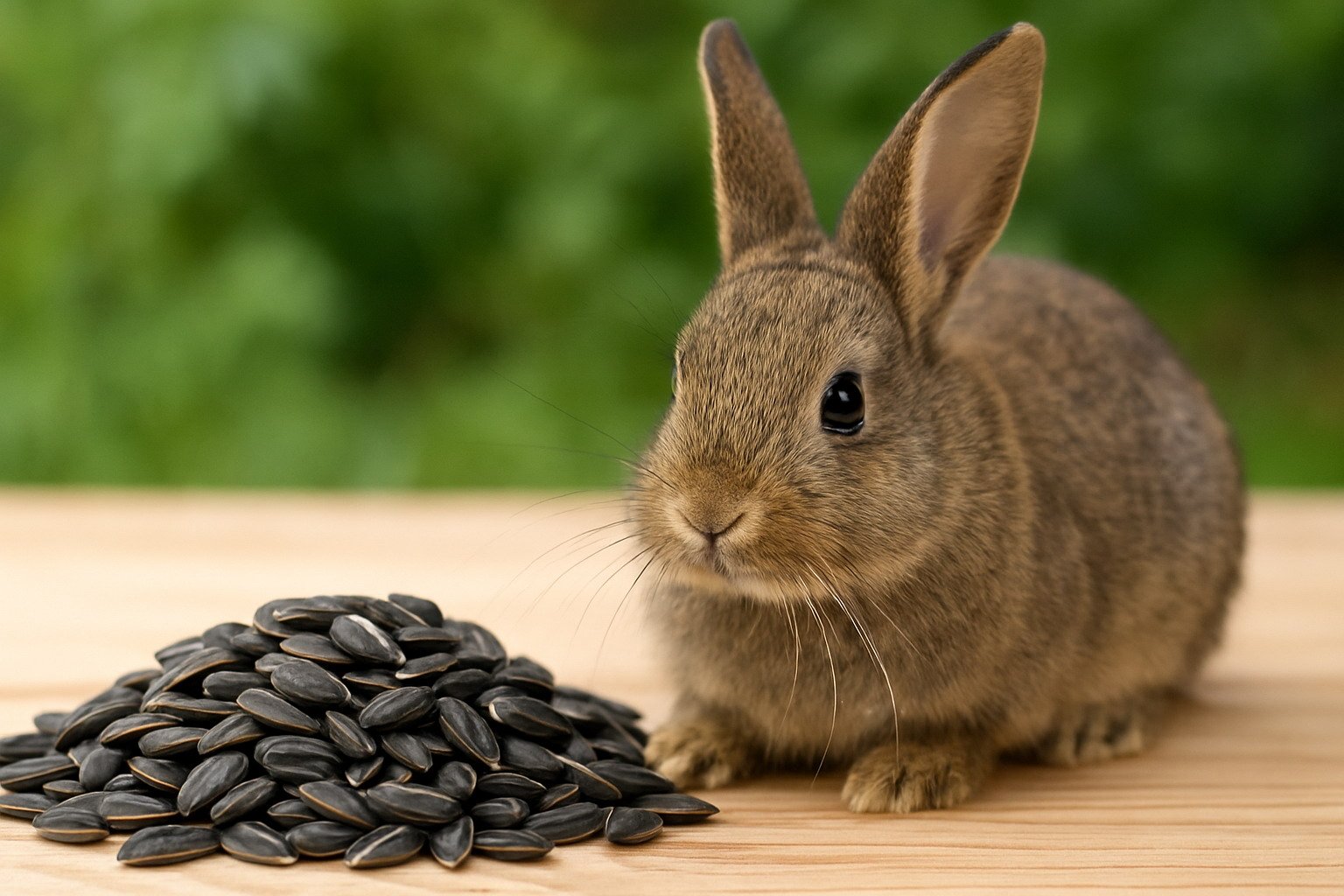
Providing the right diet is crucial to keeping rabbits healthy, energetic, and thriving. Black oil sunflower seeds for rabbits have gained attention among pet owners for their high fat content and potential coat-enhancing benefits. But are they truly safe for rabbits? Used sparingly, these seeds can support specific health needs, yet they require careful handling and should never replace a balanced hay-based diet.
In This Article
Black Oil Sunflower Seeds for Rabbits
Black oil sunflower seeds are small, black, thin-shelled seeds commonly used in bird feed and livestock diets. Their high-fat profile makes them energy-dense, leading some rabbit owners to consider them as supplements—especially for underweight or outdoor rabbits needing extra insulation.
However, feeding must be highly controlled. Rabbits are hindgut fermenters, designed to process fiber-rich foods like hay and fresh greens, not high-fat seeds. According to most veterinarians, black oil sunflower seeds for rabbits should only be used as occasional treats, not as a primary diet component.
“Sunflower seeds can support weight recovery in rabbits, but long-term or frequent feeding impacts gut health,”
— Dr. Marlene Gordon, Rabbit Nutrition Specialist
Quick Facts
| Nutrient | Black Oil Sunflower Seeds | Ideal Rabbit Diet |
| Fat | 40–50% | <3% |
| Fiber | 10–15% | >20% |
| Protein | 15–20% | 12–14% |
| Best For | Weight gain, coat health | Daily nutrition via hay and vegetables |
Nutritional Breakdown of Black Oil Sunflower Seeds for Rabbits
Knowing what’s inside these seeds helps determine whether they belong in a rabbit’s diet.
Nutritional Composition (per 100g)
| Component | Amount |
| Calories | ~580 kcal |
| Total Fat | 49 g |
| Saturated Fat | 4.5 g |
| Protein | 17 g |
| Fiber | 11 g |
| Calcium | 78 mg |
| Vitamin E | 35 mg |
While the protein and vitamin E content help muscle repair and enhance fur quality, the fat levels are excessive for a rabbit’s digestive system. Rabbits evolved to consume grass-like vegetation naturally averaging only 2–3% fat. Introducing high-fat foods too frequently may lead to obesity, liver strain, and digestive imbalances.
Pros and Cons Overview
| Benefits | Risks |
| Supports healthy coat | Can cause obesity |
| Effective for underweight or recovering rabbits | May lead to gut stasis |
| Provides quick energy | Choking if shells are not removed |
| Helps during cold temperatures | Risk of imbalanced calcium:phosphorus ratio |
Benefits of Black Oil Sunflower Seeds for Rabbits
When used in correct situations, black oil sunflower seeds for rabbits can provide targeted benefits.
Potential Advantages (When used sparingly)
- Weight gain support for rabbits recovering from illness or underfeeding
- Ideal winter supplement for outdoor rabbits needing extra warmth
- Promotes glossy coat thanks to vitamin E and healthy fats
- Energy boost for overly active or stressed rabbits
“My outdoor Flemish Giant was losing weight during winter. After vet approval, we added 2–3 sunflower seeds daily for four weeks. He gained 300 grams and his coat regained shine.”
— Case Study: Maria, rabbit owner from Canada
Best Used For:
- Thin or malnourished rabbits
- Those recovering from surgery or illness
- Show rabbits needing coat conditioning
- Adult rabbits kept in colder climates
✔ Expert Tip
Never give black oil sunflower seeds to baby rabbits under 12 weeks, overweight rabbits, or those with digestion/drainage issues.
Risks of Black Oil Sunflower Seeds for Rabbits: Digestive and Health Concerns
While there are select benefits, the risks of black oil sunflower seeds for rabbits must be taken seriously. Rabbits have highly sensitive digestive systems that can be disrupted by fatty or calorie-dense foods.
Major Risks
- Obesity and fatty liver disease – Excessive fat can overwhelm their liver.
- Gastrointestinal (GI) stasis – Undigested fats disrupt gut flora, slowing digestion.
- Imbalanced diet – Overreliance on seeds can reduce hay consumption.
- Choking hazard – Whole seeds with shells can be a physical risk.
“A rabbit’s digestion depends on fiber. High-fat seeds can block gut movement, sometimes leading to fatal GI stasis.”
— Dr. Hannah Richards, Exotic Animal Veterinarian
Risk Comparison Table
| Risk Level | Condition | Risk Level |
| ⭐⭐⭐⭐⭐ | Obesity from long-term feeding | Very High |
| ⭐⭐⭐⭐ | Digestive upset or diarrhea | High |
| ⭐⭐⭐ | Reduced hay consumption | Moderate |
| ⭐⭐ | Allergy or food intolerance | Low |
| ⭐ | Occasional use during recovery under supervision | Low |
Signs Your Rabbit Reacts Badly
- Loose or small droppings
- Reduced appetite
- Lethargy or bloating
- Weight gain within weeks
If any symptoms occur, stop feeding immediately and consult a veterinarian.
How Much Black Oil Sunflower Seeds for Rabbits Is Safe?
Moderation is critical when feeding black oil sunflower seeds to rabbits. Seeds should be treated as high-value occasional treats, not daily supplements.
Safe Feeding Guidelines
| Rabbit Weight | Maximum Seeds (unshelled) | Frequency |
| <1.5 kg (small breeds) | 1 seed | 2× per week |
| 1.5–3 kg (standard) | 2–3 seeds | 1–2× per week |
| >3 kg (giants) | 3–4 seeds | 2× per week |
📌 Only feed RAW, unsalted, unroasted black oil sunflower seeds.
Situations Where Feeding Might Be Allowed
- Recovering from surgery or serious illness
- Underweight due to stress, rescue, or poor previous feeding
- High performance/show rabbits needing coat conditioning
🛑 Avoid entirely if:
- Rabbit is overweight or sedentary
- Has digestive issues (gas, soft stools)
- Is under 12 weeks old
- Has a history of fatty liver concerns
Use veterinary approval before using seeds in recovery diets.
How to Properly Introduce Black Oil Sunflower Seeds for Rabbits
Introducing new foods slowly helps avoid digestive shock. Follow a step-by-step method for safety.
Step-by-Step Introduction
- Choose high-quality seeds (organic, raw, pesticide-free).
- Start with half a seed crushed and mixed in hay or pellets.
- Monitor droppings, appetite, and mood over 48 hours.
- Slowly increase to recommended dose only if no adverse reaction.
- If any negative signs appear, stop feeding immediately.
- Continue to ensure hay remains 80–85% of overall diet.
How to Feed Them
- Sprinkle over hay (never alone)
- Mix in with recovery pellets
- Use as a training treat but not daily
💡 Some owners remove the outer shell to reduce choking risk.
Real-Life Quick Case Example
“My rabbit was rescued severely underweight. The vet advised feeding one sunflower seed every three days along with pellet mash. Within two months, he gained 450g safely. Seeds were stopped after recovery.”
— Case Example: Daniel, UK Veterinary Foster Carer
Best Ways to Feed Black Oil Sunflower Seeds for Rabbits
When used strategically, black oil sunflower seeds for rabbits can complement their diet—but only if incorporated correctly. Rabbits thrive on consistency, so introduce seeds in ways that do not interfere with their primary fiber intake.
Recommended Feeding Methods
- Mixed into hay or pelleted feed to prevent selective feeding.
- Crushed and sprinkled to reduce choking risks.
- Offer as a high-value treat during training or grooming sessions.
- During winter or recovery periods, mix with recovery pellet mash or critical care diets.
Feeding Ideas for Specific Needs
| Rabbit Type | Feeding Method | Note |
| Underweight | Crushed in recovery pellets | Vet supervision |
| Outdoor/Cold climate | 1–2 seeds with hay | Limited duration |
| Show rabbits | Occasional treat for coat | Not during molting |
| Older rabbits | Only if underweight | Start with ½ seed |
“I use sunflower seeds only after grooming my show rabbit. It helps reinforce positive behavior, and the shine in his coat is noticeable during competitions.”
— Elena, Rabbit Breeder & Show Trainer
When Not to Feed Black Oil Sunflower Seeds for Rabbits
No matter the potential benefits, black oil sunflower seeds for rabbits are not suitable in all cases. Certain conditions make them risky rather than helpful.
Do NOT Feed If:
- The rabbit is overweight or obese
- Showing signs of GI stasis or digestive imbalance
- Under 12 weeks old
- Recovering from liver, kidney, or dental disease
- Already on a high-pellet diet
- Has limited exercise or lives in small enclosures
- Showing symptoms like:
- Bloating
- Small, dark, or misshapen droppings
- Loss of appetite
- Bloating
Red Flag Symptoms
| Symptom | Action |
| Soft or mucousy droppings | Stop seeds immediately |
| Reduced hay intake | Remove seed treats |
| Sudden weight increase | Monitor calories |
| Lethargy or sitting in hunched position | VET ASAP |
“In most cases of acute gut stasis I treat, the rabbit was given high-fat treats or excessive pellets. Seeds should only be used under professional guidance.”
— Dr. Laura Middleton, Experience in Exotic Pet Gastroenterology
Alternatives to Black Oil Sunflower Seeds for Rabbits
If you’re concerned about the potential risks or your rabbit falls into a restricted category, consider safer dietary alternatives to black oil sunflower seeds. These options offer the benefits (such as coat shine or mild weight support) with significantly lower fat content.
Safe Alternatives Based on Purpose
| Purpose | Alternative | Benefit |
| Coat Shine | Flaxseed (very limited amount) | Omega-3 support |
| Mild Weight Gain | Rolled oats (tiny amount) | Easier digestion |
| Fiber Boost | Dried herbs (chamomile, dandelion) | Natural appetite enhancer |
| Recovery Support | Critical Care formula | Vet-approved blend |
| Healthy Treat | Small apple slice or carrot | Low-fat reward |
Natural Coat Boosters (Low Fat)
- Fresh parsley, dill, or basil
- High-fiber hay blend (e.g., Timothy + Oat hay mix)
- A teaspoon of soaked rolled oats (once weekly)
“Swapping black oil sunflower seeds for soaked oats helped my rabbit gain weight steadily without any digestive issues.”
— Pet Owner Testimonial, Rabbit Adoptive Care Report
Veterinary Perspectives on Black Oil Sunflower Seeds for Rabbits
Most veterinary experts agree that black oil sunflower seeds for rabbits should only be given when medically necessary and under professional supervision. While some veterinarians recognize their usefulness for weight gain or coat recovery, they also stress that seeds are not recommended as part of routine feeding.
What Veterinarians Recommend
- Use only for adult rabbits with weight loss or fur recovery issues
- Never replace hay or healthy greens
- Use as short-term supplementation only
- Monitor droppings and body condition weekly
- Ideal maximum duration: 4–6 weeks, unless directed otherwise
“Sunflower seeds are high-energy treats that can temporarily support rabbits recovering from starvation or illness. Their use must end once ideal weight is restored.”
— Dr. Emily Jameson, Specialist in Rabbit Rehabilitation
Veterinary Cautions
| Professional Concern | Reason |
| Long-term feeding | Can lead to fatty liver |
| Lack of supervision | Owners often overfeed |
| Young rabbits | Digestive system not mature |
| Indoor rabbits | Lower calorie needs |
If your rabbit is ill, elderly, or has special nutritional requirements, always consult a rabbit-savvy veterinarian before introducing seeds.
Choosing Quality Black Oil Sunflower Seeds for Rabbits
Quality matters significantly when it comes to feeding black oil sunflower seeds to rabbits. Not all seeds are safe—some may be roasted, salted, or contaminated with pesticides.
How to Choose Safe Seeds
☑ Select raw, unroasted, unsalted seeds
☑ Organic and pesticide-free
☑ Human-grade preferred over bird feed
☑ Avoid moldy or oily-looking seeds
☑ Check for any artificial preservatives
Storage Guidelines
| Storage Method | Best Practice |
| Container | Airtight glass jar |
| Location | Cool, dry, dark place |
| Shelf Life | Up to 6 months |
| Check Weekly | For signs of mold or pests |
Seed Type Comparison
| Seed Type | Safe for Rabbits? | Notes |
| Black Oil Sunflower Seeds | ✔ Yes (limited) | Thin shell, more fat |
| Striped Sunflower Seeds | ✖ No | Shell too hard |
| Roasted/Flavored | ✖ No | Contains salt/oil |
| Organic Raw | ✔ Best choice | Minimal contamination |
Only a few carefully selected seeds are suitable for rabbits. Avoid bulk bird-feed mixes.
Real-Life Experiences: Black Oil Sunflower Seeds for Rabbits in Practical Use
Many rabbit caregivers use black oil sunflower seeds for rabbits as part of recovery diets or during extreme temperature changes. However, nearly all report that benefits only appear when seeds are used sparingly and temporarily.
Case Study Highlights
| Case | Situation | Feeding Schedule | Outcome |
| Rescue Rabbit (2 kg) | Malnourished, poor coat | 2 seeds every 3 days for 5 weeks | Gained 0.47 kg; coat restored |
| Outdoor Rabbit | Winter temperature dips | 1 seed daily for 1 month | Improved energy; then stopped |
| Indoor Show Rabbit | Preparing for competition | 2 seeds weekly | Shiny coat; no health issues |
“We only used seeds during winter. As soon as temperatures rose, we removed them to prevent unnecessary weight gain.”
— Lawson Family, Rabbit Owners (Netherlands)
Mistakes Reported by Owners
❌ Overfeeding seeds daily
❌ Giving seeds to overweight rabbits
❌ Ignoring reduced hay intake
❌ Using seeds without medical supervision
How Black Oil Sunflower Seeds for Rabbits Affect Behavior and Energy Levels
When used correctly, black oil sunflower seeds for rabbits can boost energy due to their high-calorie content. This can be helpful in short-term situations, but overuse may cause hyperactivity or lethargy, depending on how the rabbit processes the excess fat.
Behavioral Effects
- Slight increase in alertness and movement — beneficial for rabbits recovering from weakness.
- May trigger excitement when used as treats (great for training).
- In some cases, can cause sluggishness due to digestive burden.
- Rare cases of seed-seeking behavior, where the rabbit ignores hay.
| Energy Impact | Description | Risk |
| Increased energy | Temporary boost | Low |
| Excitement | If used as reward | Low |
| Fatigue/sluggishness | If overfed | High |
| Behavior changes | Reduced hay intake | Moderate |
“My rabbit started waiting at the food bowl instead of chewing hay. Once we reduced sunflower seeds, his foraging behavior returned to normal.”
— Pet Owner Report, Rabbit Care Forum
Summary of Benefits vs Risks of Black Oil Sunflower Seeds for Rabbits
Black oil sunflower seeds for rabbits can be beneficial when used strategically, but the risks are significant if feeding is not strictly controlled. They should never replace hay, vegetables, or pellets, but may be used temporarily to support coat conditioning or weight gain.
Quick Summary Table
| Aspect | Benefit | Risk |
| Weight gain | Yes (for malnourished rabbits) | Obesity if overfed |
| Coat shine | Improved with vitamin E | Can overwhelm liver |
| Energy support | Helps during recovery | Causes lethargy with excess |
| Digestibility | Only in micro amounts | GI stasis if misused |
| Feeding duration | 4–6 weeks max | Long-term harmful |
📌 Ideal Use Case:
Adult rabbit, underweight or recovering from illness, fed 1–3 seeds a few times weekly under veterinary supervision.
FAQs About Black Oil Sunflower Seeds for Rabbits
Can rabbits eat black oil sunflower seeds daily?
No. Daily feeding can lead to obesity and liver damage. Maximum 1–3 seeds once or twice per week.
Are sunflower seed shells safe for rabbits?
It’s safer to feed crushed seeds without shells to avoid choking and reduce digestive strain.
Do black oil sunflower seeds make rabbits fat?
Yes, they can. They are 50% fat, so overfeeding quickly leads to excessive weight gain.
Can baby rabbits eat sunflower seeds?
No. Rabbits under 12 weeks old should not receive seeds.
Are black seeds better than striped seeds?
Yes. Black oil sunflower seeds have thinner shells, making them easier to digest. Striped sunflower seeds should not be fed at all.
What’s the best way to give sunflower seeds to rabbits?
Crush 1–2 raw, unsalted seeds and mix with hay or pellets. Only use short-term.
Can sunflower seeds cause digestive problems in rabbits?
Yes. They often trigger GI stasis if given in excess or without proper fiber intake.
Is there a safe alternative to improve coat quality?
Yes—fresh herbs like dill, soaked oats (tiny amount), or flaxseed (very limited).
Final Recommendation
Black oil sunflower seeds for rabbits can be used as a short-term dietary tool, not as a daily treat. Ideal for boosting weight or improving coat health—but only under veterinary guidance. Monitor your rabbit’s digestive health closely, and prioritize hay, greens, and high-fiber nutrition above all.
“Rabbits prosper best on grass-based diets. Seeds are only supportive supplements—not staples.”
— Rabbit Welfare Association UK
For more information on rabbit dietary requirements and health guidance, visit the Rabbit Welfare Association & Fund (RWAF) — https://rabbitwelfare.co.uk.