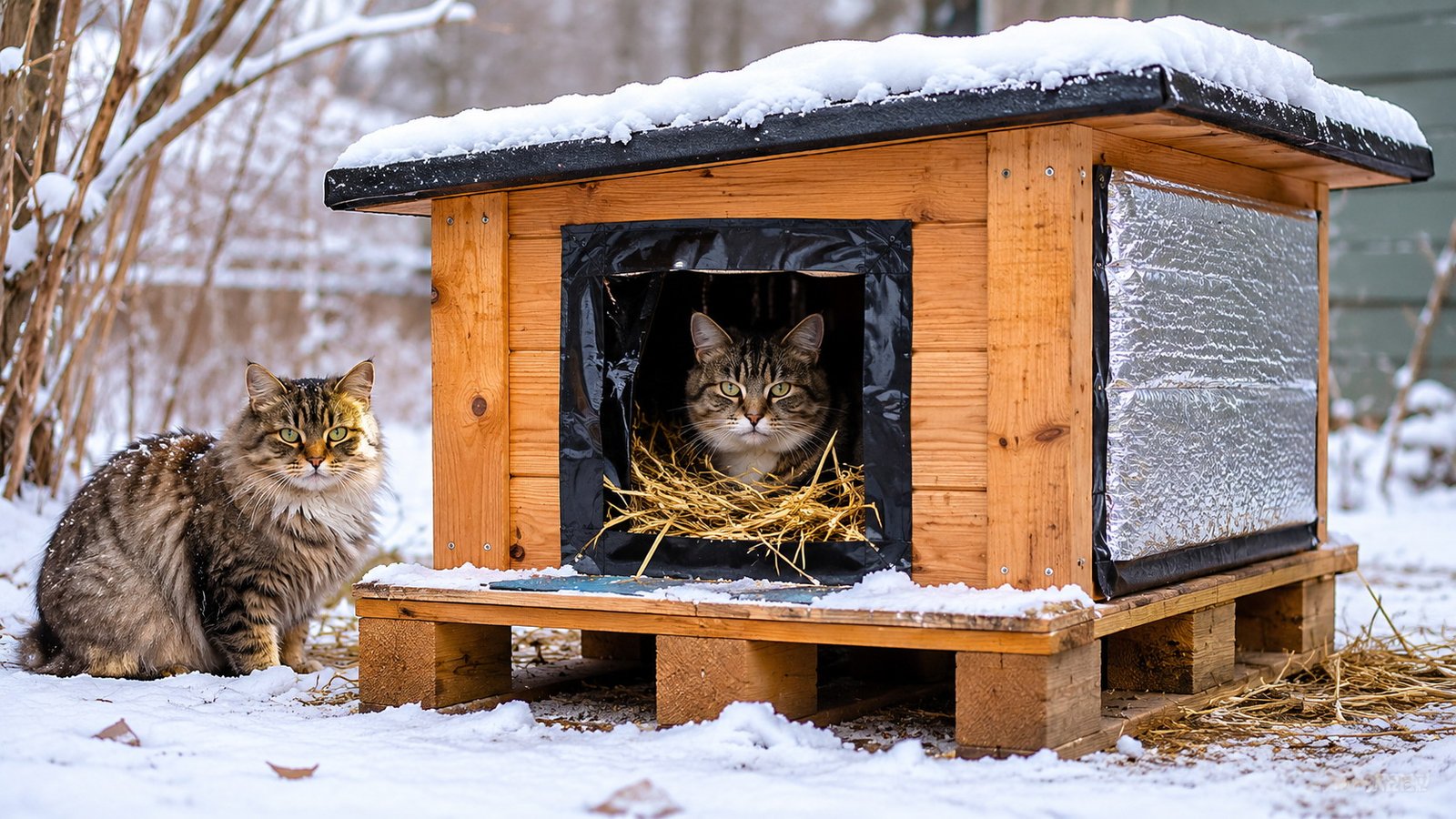
Feral cats face serious risks during winter. Freezing temperatures, snow, rain, and wind can quickly become life-threatening, especially for kittens, elderly cats, or cats with health problems. A properly designed winter shelter gives outdoor cats a dry, insulated space where they can conserve body heat and survive harsh weather.
The best cat houses for feral cats in winter are small, insulated, waterproof, elevated off the ground, and filled with heat-reflective bedding like straw. Whether you buy a ready-made shelter or build one yourself, the right setup can dramatically improve a cat’s chances of staying healthy through cold months.
This guide explains how winter cat shelters work, what features matter most, common mistakes to avoid, and how to create a safe cold-weather refuge for community cats.
In This Article
What Is a Winter Cat House for Feral Cats?
A winter cat house for feral cats is a weather-resistant outdoor shelter designed to protect cats from cold temperatures, moisture, wind, and snow.
Unlike indoor cat houses or decorative pet homes, feral cat shelters focus on survival and heat retention rather than appearance.
These shelters are commonly used for:
- Feral cat colonies
- Stray cats
- Barn cats
- Community cats
- Outdoor neighborhood cats
A good winter shelter creates a small insulated pocket where a cat’s body heat stays trapped inside the structure.
Why Winter Shelters Matter for Feral Cats
Feral cats can survive cold weather better than many people realize, but they still face significant dangers during winter.
Winter Risks for Outdoor Cats
Cold-weather threats include:
- Hypothermia
- Frostbite on ears, paws, and tails
- Wet fur from rain or snow
- Frozen water sources
- Wind chill exposure
- Reduced food availability
- Illness from prolonged damp conditions
Even thick-coated cats struggle when temperatures drop below freezing for extended periods.
How Shelters Help Cats Stay Warm
A properly designed shelter works by:
- Blocking wind and moisture
- Trapping body heat
- Keeping bedding dry
- Reducing exposure to snow and ice
- Providing a safe resting area
Small shelters are often warmer than large ones because less interior air needs heating.
Essential Features of the Best Cat Houses for Feral Cats in Winter
Not all outdoor cat houses are suitable for winter. Some decorative pet houses actually become dangerous because they trap moisture or allow cold drafts.
Here are the most important features to look for.
1. Insulation
Insulation is the single most important feature.
Common insulation materials include:
- Foam board insulation
- Styrofoam panels
- Reflective insulation
- Double-wall plastic construction
Insulation slows heat loss and helps maintain a warmer interior temperature.
2. Small Interior Space
Bigger is not better.
A compact shelter:
- Holds heat more efficiently
- Feels safer to cats
- Prevents cold air circulation
A shelter designed for 1–3 cats often works better than oversized houses.
3. Waterproof Construction
Moisture is extremely dangerous in winter.
The shelter should have:
- Waterproof roof
- Sealed seams
- Raised floor
- Covered doorway
- Sloped roof for drainage
Wet bedding can quickly lead to hypothermia.
4. Elevated Floor
The shelter should sit several inches above the ground.
Benefits include:
- Preventing snow seepage
- Reducing heat loss to frozen ground
- Improving airflow underneath
- Keeping rainwater out
Wood pallets, bricks, or cinder blocks work well as bases.
5. Proper Door Size
A small doorway helps trap warmth.
Ideal entrance size:
- About 5–7 inches wide
Smaller openings:
- Reduce wind drafts
- Keep larger predators out
- Help maintain interior warmth
Some shelters also use door flaps for added insulation.
6. Wind Protection
Placement matters almost as much as construction.
Position shelters:
- Away from direct wind
- Near walls or fences
- Under covered areas when possible
Facing the entrance away from prevailing winds improves warmth significantly.
Best Bedding for Feral Cat Winter Shelters
The best bedding for outdoor cat shelters is straw.
Why Straw Works Best
Straw:
- Repels moisture
- Retains warmth
- Allows cats to burrow
- Stays relatively dry
Cats can nest into straw to create insulated pockets.
Avoid Hay and Blankets
Many people accidentally use poor bedding materials.
Avoid:
- Towels
- Blankets
- Newspaper
- Hay
These materials absorb moisture and freeze easily.
Straw vs Hay
| Material | Good for Winter Shelters? | Reason |
| Straw | Yes | Dry, insulating, moisture-resistant |
| Hay | No | Retains moisture and mold |
| Blankets | No | Become damp and cold |
| Towels | No | Freeze when wet |
DIY Cat Houses for Feral Cats in Winter
Homemade shelters can work extremely well and are often inexpensive.
Many experienced feral cat caregivers use simple plastic storage bins with insulation.
How to Build a Simple DIY Winter Cat Shelter
Materials Needed
- Large plastic storage tote
- Smaller interior tote
- Foam insulation board
- Straw
- Utility knife
- Waterproof tape
Step-by-Step Instructions
Step 1: Cut Entrance Holes
Cut matching door holes in both totes.
Keep the opening small enough to retain heat.
Step 2: Add Insulation
Place foam insulation between the two containers.
Insulate:
- Walls
- Floor
- Lid
Step 3: Seal Gaps
Use waterproof tape to block drafts and moisture leaks.
Step 4: Add Straw Bedding
Fill the bottom with several inches of straw.
Do not overfill.
Step 5: Elevate the Shelter
Place the shelter on:
- Pallets
- Bricks
- Wood blocks
Step 6: Position Carefully
Choose a quiet area protected from:
- Wind
- Heavy rain
- Deep snow
- Human disturbance
Best Materials for Outdoor Winter Cat Shelters
Different materials offer different advantages.
| Material | Advantages | Drawbacks |
| Plastic totes | Affordable, waterproof, lightweight | Needs insulation added |
| Wood | Durable, customizable | Heavier, may absorb moisture |
| Foam coolers | Excellent insulation | Less durable outdoors |
| Heated shelters | Very warm | Requires electricity |
| Insulated commercial shelters | Convenient and effective | More expensive |
Heated vs Non-Heated Cat Houses
Many people wonder whether heated cat shelters are necessary.
Heated Shelters
Pros:
- Excellent in extremely cold climates
- Helpful for elderly or sick cats
- Keeps interior above freezing
Cons:
- Requires safe outdoor electricity
- More expensive
- Needs weather-safe cords
Non-Heated Shelters
Pros:
- Simple and reliable
- No electricity needed
- Lower cost
Cons:
- Depend entirely on insulation quality
In many climates, a well-insulated non-heated shelter works very well.
Where to Place a Winter Shelter for Feral Cats
Location strongly affects shelter effectiveness.
Ideal Placement Tips
Place shelters:
- Near feeding stations
- Against buildings or fences
- Under porches or decks
- In quiet areas
- Away from foot traffic
Avoid Dangerous Locations
Do not place shelters:
- Near busy roads
- In flood-prone spots
- In open windy areas
- Directly on frozen ground
How Many Cats Can Share a Shelter?
Cats sometimes share shelters during cold weather, especially bonded colony members.
Small shelters usually work best for:
- 1–3 cats
Larger colonies should have:
- Multiple shelters
- Several escape routes
- Enough space to avoid territorial conflict
Some feral cats prefer sleeping alone even during winter.
Common Mistakes People Make With Feral Cat Winter Shelters
Using Blankets Instead of Straw
This is one of the most common errors.
Fabric absorbs moisture and loses insulation value quickly.
Making Shelters Too Large
Oversized shelters lose heat faster.
Smaller spaces stay warmer.
Using Metal Structures
Metal conducts cold rapidly and can become dangerously freezing.
Forgetting Ventilation
Shelters still need minimal airflow to reduce condensation buildup.
Placing Shelters in Open Areas
Strong wind exposure dramatically lowers interior warmth.
Do Feral Cats Need Heated Pads?
Outdoor heated cat pads can help in severe cold, but they must be designed specifically for pets and outdoor use.
Safe heated pads should:
- Be weatherproof
- Use chew-resistant cords
- Have automatic temperature regulation
Never use:
- Human heating pads
- Electric blankets
- Indoor-only warming products
These can become fire hazards or cause burns.
How Cold Is Too Cold for Feral Cats?
There is no exact universal temperature threshold because survival depends on:
- Wind chill
- Moisture
- Age
- Health
- Coat thickness
- Shelter availability
However, temperatures below freezing become much more dangerous without proper shelter.
Kittens, thin cats, and senior cats are especially vulnerable.
Best Practices for Caring for Feral Cats in Winter
Provide Extra Calories
Cats burn more energy staying warm.
Increase food portions during winter.
Offer Fresh Water Daily
Water freezes quickly in cold weather.
Heated water bowls can help prevent ice formation.
Check Shelters Regularly
Inspect for:
- Wet bedding
- Snow buildup
- Damage
- Drafts
Replace damp straw immediately.
Use Multiple Shelters
Some cats may refuse to share.
Having several shelters reduces territorial stress.
Quick Summary: What Makes the Best Winter Cat Shelter?
| Feature | Why It Matters |
| Insulation | Retains body heat |
| Waterproof design | Prevents hypothermia |
| Small interior | Stays warmer |
| Straw bedding | Resists moisture |
| Elevated base | Keeps floor dry |
| Wind protection | Reduces heat loss |
| Small doorway | Blocks drafts |
Are Commercial Outdoor Cat Houses Worth It?
Commercial shelters can be excellent if they are designed specifically for winter use.
Good commercial shelters usually include:
- Built-in insulation
- Weatherproof materials
- Raised flooring
- Easy cleaning access
They save time and may last longer than DIY versions.
However, some decorative outdoor pet houses are not insulated enough for freezing conditions, so always check specifications carefully.
Frequently Asked Questions
What is the warmest bedding for feral cat shelters?
Straw is generally considered the best bedding because it insulates well while resisting moisture.
Can feral cats survive winter without shelters?
Some cats survive mild winters without shelters, but exposure significantly increases the risk of illness, frostbite, and death.
Should feral cat shelters have two doors?
Many caregivers prefer two exits because cats feel safer with an escape route. However, extra openings can reduce heat retention if not designed carefully.
How often should straw bedding be replaced?
Replace straw whenever it becomes damp, dirty, or compressed. During wet winters, frequent checks are important.
Can you use a dog house for feral cats?
Only if it is properly insulated and modified with smaller entrances. Large uninsulated dog houses are often too drafty for cats.
Final Thoughts on Cat Houses for Feral Cats in Winter
Cat houses for feral cats in winter can make a major difference in outdoor cats’ safety and survival. The best shelters are simple, dry, insulated, and protected from wind and moisture. Even an inexpensive DIY shelter made from insulated plastic bins can provide lifesaving warmth during freezing weather.
The most effective setups focus on heat retention, waterproofing, straw bedding, and thoughtful placement. Whether you care for one stray cat or an entire colony, providing winter shelter is one of the most impactful ways to help outdoor cats stay safe during cold months.