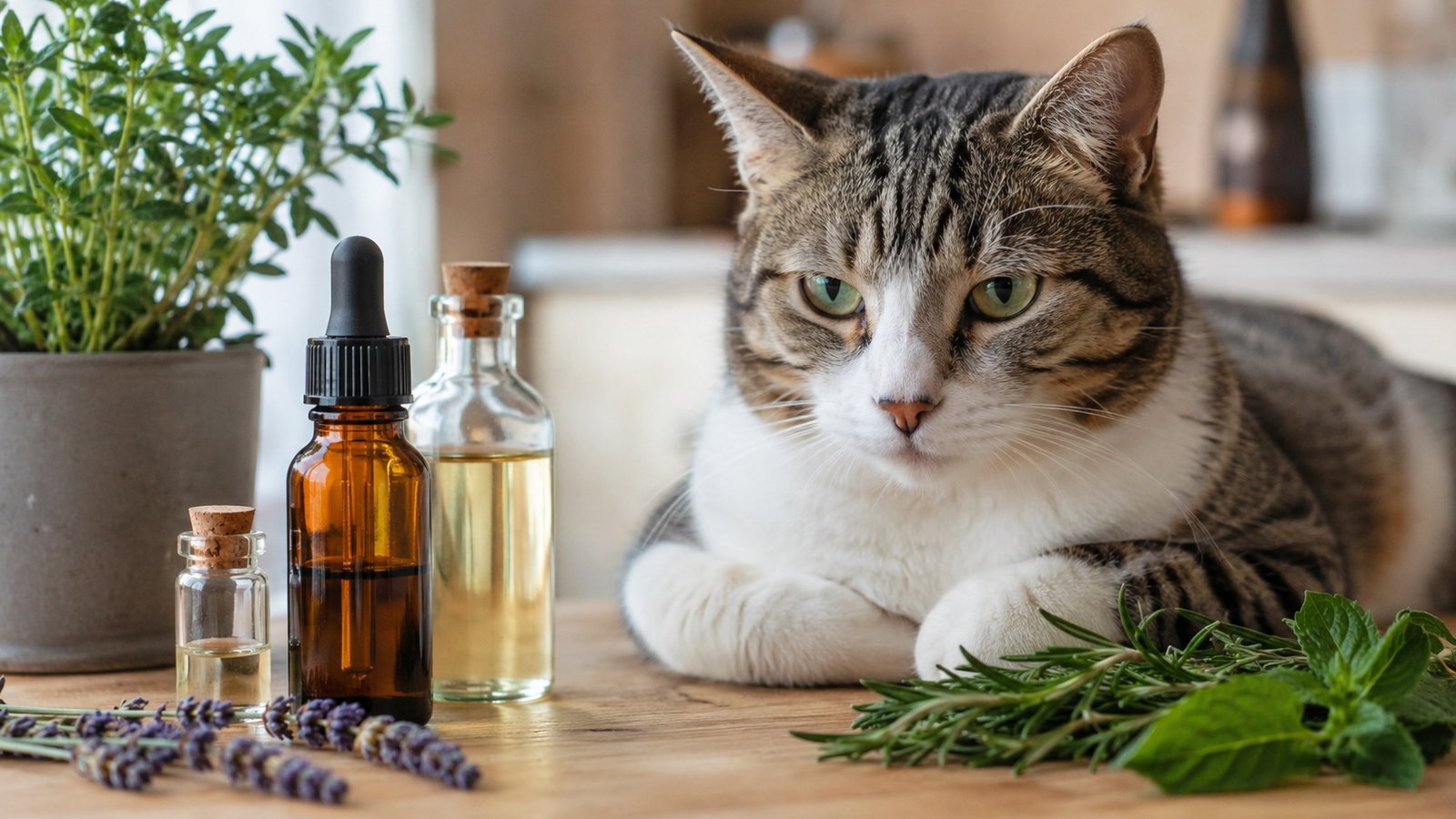
Fleas are one of the most frustrating problems cat owners face. They cause itching, skin irritation, hair loss, allergic reactions, and in severe cases, anemia or tapeworm infections. Many people look for natural solutions first, which leads to a common question: Can essential oils get rid of fleas on cats safely?
The short answer is: some essential oils may help repel fleas, but many are dangerous for cats and should never be used directly on them. Cats process essential oils differently than humans and dogs, making certain oils toxic even in small amounts.
This guide explains which essential oils are considered safer, which ones are dangerous, how to use them properly, and when traditional flea treatments are the better option.
In This Article
Quick Answer: Are Essential Oils Safe for Fleas on Cats?
Some diluted essential oils may help repel fleas in the cat’s environment, but essential oils should never replace veterinarian-approved flea treatment for an active infestation.
A few oils are occasionally used with extreme caution around cats, including:
- Cedarwood oil
- Frankincense oil
- Rosemary oil (environmental use only)
- Lavender oil (highly diluted and used cautiously)
However, many popular flea-repelling oils are toxic to cats, including:
- Tea tree oil
- Peppermint oil
- Eucalyptus oil
- Cinnamon oil
- Clove oil
- Citrus oils
- Pennyroyal oil
If you use essential oils incorrectly, cats can suffer poisoning through skin absorption, inhalation, or grooming.
Why Cats Are Sensitive to Essential Oils
Cats lack certain liver enzymes needed to break down compounds found in essential oils, especially phenols and terpenes. These compounds can build up in the body and become toxic.
Even oils marketed as “natural” or “pet-safe” can cause problems if they are:
- Undiluted
- Applied too frequently
- Used in enclosed spaces
- Ingested during grooming
- Diffused continuously
Kittens, senior cats, pregnant cats, and cats with liver or respiratory issues are especially vulnerable.
How Fleas Affect Cats
Understanding flea behavior helps explain why oils alone rarely solve the problem.
Common Signs of Fleas on Cats
- Excessive scratching
- Biting or licking the skin
- Hair loss
- Tiny black specks (“flea dirt”)
- Scabs around the neck or tail
- Restlessness
- Pale gums in severe infestations
Where Fleas Actually Live
Adult fleas on your cat are only part of the infestation.
A typical flea problem also includes:
| Flea Stage | Where It Lives |
| Eggs | Carpets, bedding, furniture |
| Larvae | Dark cracks, upholstery |
| Pupae | Carpet fibers, floor gaps |
| Adults | On pets |
This is why environmental cleaning matters as much as treating the cat itself.
Essential Oils Commonly Used Against Fleas
Cedarwood Oil
Cedarwood oil is one of the more commonly discussed natural flea repellents because its scent may discourage fleas and some other insects.
Potential Benefits
- May help repel fleas in bedding or carpets
- Strong woody scent insects dislike
- Often included in natural flea sprays
Important Safety Notes
- Never apply concentrated cedarwood oil directly to cats
- Use only heavily diluted products designed for feline environments
- Avoid aerosolizing the oil near cats
Environmental use is generally considered safer than topical use.
Lavender Oil
Lavender is widely promoted as a calming oil and mild insect repellent. Some pet owners use it cautiously in household flea sprays.
Potential Benefits
- May mildly repel fleas
- Can reduce odor in pet bedding
- Calming scent for some humans
Risks
Lavender still contains compounds cats may struggle to metabolize. Overexposure can cause:
- Drooling
- Vomiting
- Lethargy
- Breathing issues
If used at all, it should only be in extremely diluted environmental applications with good ventilation.
Rosemary Oil
Rosemary appears in some natural flea products because insects dislike its strong herbal scent.
Best Use
- Light environmental sprays
- Carpet or bedding treatments away from the cat until dry
Avoid
- Direct application on cats
- Heavy diffusion indoors
Frankincense Oil
Frankincense is sometimes used in holistic pet care because it is considered gentler than many essential oils.
Evidence for flea control is limited, but some owners use it in diluted environmental sprays.
Still, “gentler” does not mean risk-free.
Essential Oils That Are Dangerous for Cats
Several oils often recommended online for flea control can be toxic to cats.
Tea Tree Oil
Tea tree oil is one of the most dangerous oils commonly misused on pets.
Even small amounts can cause:
- Tremors
- Weakness
- Drooling
- Liver damage
- Seizures
Cats should never be treated with concentrated tea tree oil.
Peppermint Oil
Peppermint oil may repel insects, but it can irritate a cat’s respiratory system and nervous system.
Diffusers containing peppermint oil are a common source of accidental exposure.
Eucalyptus Oil
Eucalyptus contains compounds toxic to cats and should not be applied topically or heavily diffused indoors.
Citrus Oils
Lemon, orange, grapefruit, and other citrus oils are unsafe for cats because they contain compounds cats cannot metabolize effectively.
Pennyroyal Oil
Pennyroyal has historically been used for flea control, but it is highly toxic to both cats and dogs.
It should never be used around pets.
Can You Use Essential Oil Diffusers Around Cats?
This is one of the biggest areas of confusion.
The Problem With Diffusers
Diffusers release microscopic oil particles into the air. Cats inhale these particles, and oils can also settle onto fur, where they are ingested during grooming.
Poorly ventilated rooms increase the risk.
If You Use a Diffuser
Follow these precautions:
- Keep the room well ventilated
- Give the cat a way to leave the room
- Use only short diffusion sessions
- Never diffuse toxic oils
- Stop immediately if your cat shows symptoms
Signs of Essential Oil Toxicity in Cats
Watch for:
- Drooling
- Vomiting
- Difficulty breathing
- Tremors
- Weakness
- Pawing at the mouth
- Wobbling
- Lethargy
If symptoms appear, contact a veterinarian immediately.
How to Use Essential Oils More Safely Around Cats
If you choose to use essential oils for environmental flea management, caution is critical.
Step-by-Step Environmental Use Guide
1. Never Apply Undiluted Oils to Cats
Pure essential oils are highly concentrated and can burn skin or cause poisoning.
2. Focus on the Environment Instead of the Cat
Safer areas for cautious use include:
- Pet bedding
- Carpets
- Furniture
- Vacuum canisters
3. Use Extremely Diluted Solutions
Commercial pet-safe formulas are generally safer than homemade mixtures because concentrations are controlled.
4. Keep Cats Away Until Surfaces Dry
Wet oils can transfer to fur and paws.
5. Use Ventilation
Fresh airflow reduces inhalation exposure.
Natural Flea Control Methods That Are Safer Than Essential Oils
Many natural flea-control methods carry less risk than essential oils.
Frequent Vacuuming
Vacuuming removes:
- Flea eggs
- Larvae
- Adult fleas
Pay special attention to:
- Baseboards
- Upholstery
- Cat sleeping areas
- Rugs
Dispose of vacuum contents immediately.
Washing Bedding
Wash pet bedding weekly in hot water during an infestation.
Flea Combs
A flea comb helps physically remove:
- Adult fleas
- Flea dirt
- Eggs
Dip the comb into warm soapy water after each pass.
Environmental Treatments
Some pet-safe environmental flea products use:
- Insect growth regulators (IGRs)
- Food-grade diatomaceous earth
- Mechanical control methods
These are usually more effective than essential oils alone.
Why Essential Oils Usually Aren’t Enough for Severe Flea Infestations
Essential oils may repel some fleas temporarily, but they rarely eliminate all flea life stages.
A serious infestation usually requires:
- Treating the cat
- Treating the home
- Breaking the flea life cycle
- Repeating treatment over several weeks
Without this full approach, fleas typically return.
Vet-Approved Flea Treatments vs Essential Oils
Here’s how they compare.
| Feature | Essential Oils | Vet-Approved Flea Treatments |
| Kills adult fleas | Sometimes limited | Yes |
| Kills eggs/larvae | Usually no | Often yes |
| Scientifically tested | Limited | Extensive |
| Safety data for cats | Inconsistent | Established |
| Risk of toxicity | Moderate to high | Lower when used correctly |
| Long-term control | Weak | Strong |
Modern flea preventatives are generally safer and more reliable than experimenting with concentrated oils.
Common Mistakes Cat Owners Make
Using Dog Products on Cats
Some dog flea products contain ingredients dangerous for cats.
Never assume products are interchangeable.
Applying Essential Oils Directly to Fur
This dramatically increases poisoning risk because cats groom themselves constantly.
Overusing Diffusers
Continuous exposure can irritate the lungs and nervous system.
Assuming “Natural” Means Safe
Natural substances can still be toxic. Essential oils are highly concentrated plant chemicals.
Ignoring Environmental Treatment
Treating only the cat leaves eggs and larvae behind.
Best Practices for Managing Fleas Naturally
If you prefer a more natural approach, combine multiple safer methods.
Recommended Approach
- Use a flea comb daily
- Vacuum frequently
- Wash bedding weekly
- Use veterinarian-approved flea prevention
- Limit essential oils to cautious environmental use only
- Monitor your cat closely for reactions
This balanced strategy is safer and more effective than relying on oils alone.
Are Homemade Essential Oil Flea Sprays Safe for Cats?
Homemade sprays are risky because dilution errors are common.
Problems include:
- Incorrect oil concentrations
- Toxic oil combinations
- Lack of stability testing
- Uneven distribution
- Increased grooming exposure
Commercial pet-safe environmental sprays are usually safer than DIY mixtures.
When to See a Veterinarian
Contact a veterinarian if your cat:
- Has severe itching
- Develops skin wounds
- Loses weight
- Seems weak or lethargic
- Has trouble breathing
- Shows signs of poisoning
- Has persistent fleas despite treatment
Heavy flea infestations can become serious quickly, especially in kittens.
Frequently Asked Questions
What essential oil kills fleas on cats instantly?
No essential oil safely kills fleas instantly on cats. Some oils may repel fleas temporarily, but veterinarian-approved flea treatments are far more effective and safer.
Is lavender oil safe for cats with fleas?
Lavender oil can still be risky for cats, especially in concentrated forms. If used at all, it should only be heavily diluted and limited to environmental applications.
Can I diffuse peppermint oil around my cat?
Peppermint oil is generally not recommended around cats because it may cause respiratory and neurological irritation.
Are natural flea remedies effective?
Some natural methods help reduce fleas, especially cleaning, flea combs, and environmental management. However, severe infestations usually require veterinary flea treatment.
What’s the safest way to get rid of fleas on cats?
The safest approach combines veterinarian-approved flea prevention with environmental cleaning such as vacuuming, washing bedding, and flea combing.
Quick Summary
Here’s the key takeaway about essential oils to get rid of fleas on cats:
- Some essential oils may help repel fleas in the environment
- Many oils are toxic to cats
- Essential oils should never replace proper flea treatment
- Direct application on cats is risky
- Tea tree, peppermint, eucalyptus, citrus, and pennyroyal oils are especially dangerous
- Environmental cleaning is critical for flea control
- Veterinarian-approved flea preventatives remain the safest and most effective solution
Final Thoughts on Essential Oils to Get Rid of Fleas on Cats
Essential oils are often marketed as natural flea remedies, but “natural” does not automatically mean safe for cats. While a few oils may help repel fleas in the environment when used carefully, the margin for error is small.
Cats are uniquely sensitive to essential oils, and improper use can lead to serious toxicity. For most flea problems, a combination of environmental cleaning, flea combing, and veterinarian-approved preventatives is far more reliable and safer than relying on oils alone.
If you want to use essential oils to get rid of fleas on cats, focus on cautious environmental use rather than applying oils directly to your pet, and always prioritize your cat’s safety over aggressive natural treatments.