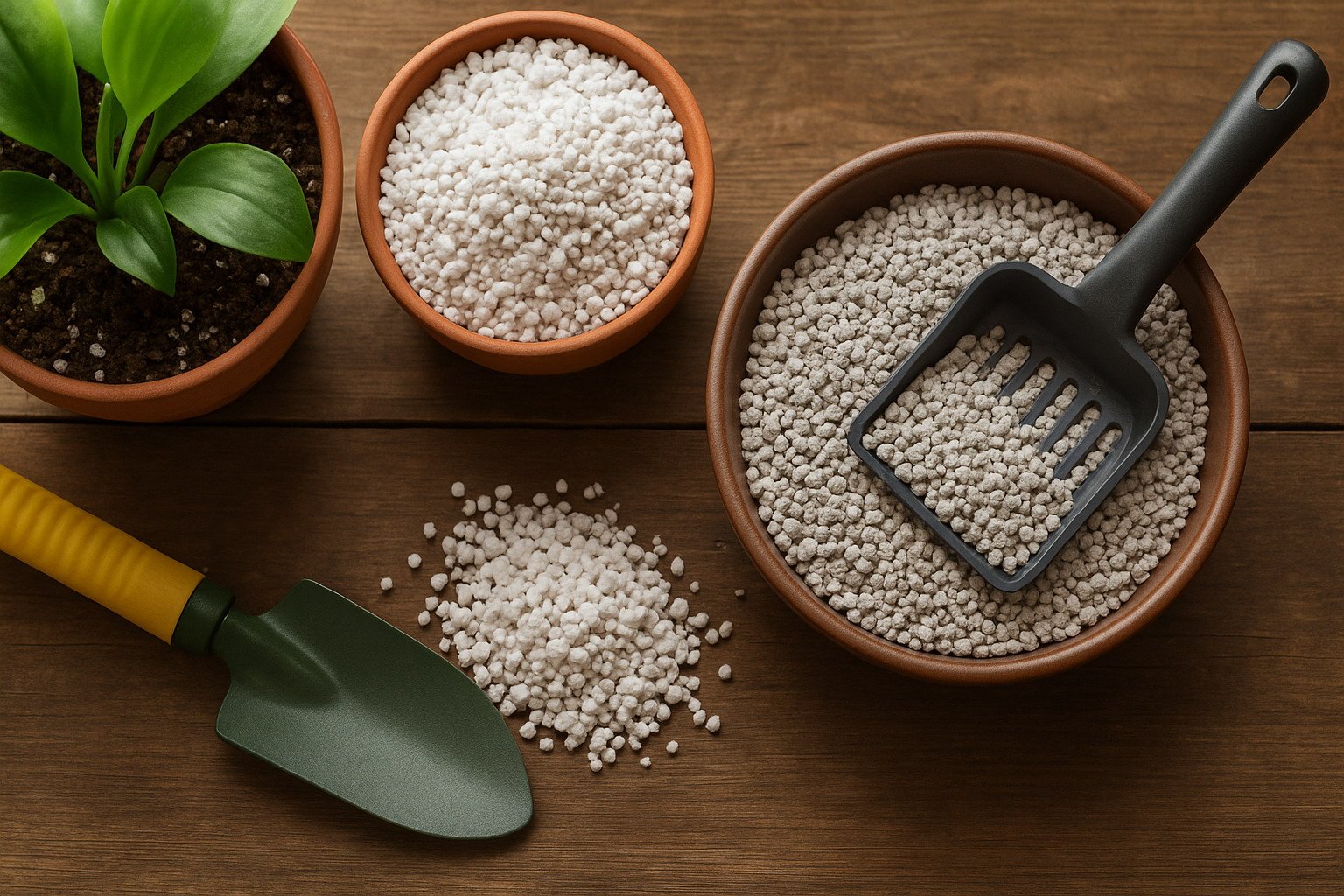
When your bag of perlite runs empty and your seedlings are waiting, it’s tempting to grab something—anything—that might do the job. That’s when the question pops up: can you use cat litter as perlite? It sounds strange at first, but many gardeners have asked the same thing while searching for a low-cost or locally available substitute.
In this guide, we’ll dig deep (pun intended) into what perlite actually does, what cat litter is made of, and whether this common household product can truly take the place of perlite in your garden. By the end, you’ll know exactly when it’s safe to experiment and when it’s best to skip the litter box entirely.
In This Article
Understanding Perlite: What It Does in Soil
Perlite is one of those quiet heroes of the plant world—rarely noticed but absolutely essential. It’s made from volcanic glass that’s been heated to extreme temperatures until it pops like popcorn, creating those familiar white, lightweight particles found in most potting mixes.
So why do gardeners love it so much? Because perlite provides a perfect balance of air and water in the soil.
Here’s what makes perlite so valuable:
- Improves Aeration: It creates space between soil particles, allowing roots to breathe.
- Enhances Drainage: It prevents waterlogging, especially for succulents and cacti.
- Retains Moisture: While it helps with drainage, it also holds just enough water to keep roots hydrated.
- Lightweight and Sterile: It doesn’t rot, compact, or attract pests.
Perlite is especially useful in seed starting, hydroponic systems, and container gardening. It’s also pH neutral and chemically inert, which means it won’t interfere with nutrient uptake or soil chemistry.
In short, perlite isn’t just filler—it’s structure, breathability, and balance in one small puffed rock.
What Is Cat Litter Made Of?
Before pouring cat litter into your plant pots, it’s important to understand what’s actually inside that bag. Not all cat litter is created equal, and some can seriously harm your plants if used incorrectly.
Here are the main types of cat litter and what they’re made from:
| Type of Cat Litter | Main Material | Characteristics | Gardening Suitability |
| Clumping Clay Litter | Sodium bentonite clay | Expands and clumps on contact with moisture | ❌ Not suitable – retains too much water |
| Non-Clumping Clay Litter | Natural clay (often montmorillonite) | Absorbent but doesn’t clump | ⚠️ Possible in limited amounts |
| Silica Gel Litter | Silica crystals | Excellent odor control, high absorbency | ❌ Not biodegradable, may alter soil texture |
| Recycled Paper Litter | Compressed paper pellets | Eco-friendly and lightweight | ⚠️ Can decompose, but poor aeration |
| Wood or Corn Litter | Natural fibers | Biodegradable and odor-neutralizing | ✅ Safer option if chemical-free |
The Problem with Additives
Many commercial cat litters are packed with fragrances, dyes, and deodorizing chemicals designed to mask odors. While great for your home, these additives can be toxic to plant roots and beneficial microbes in the soil.
In addition, clumping litters contain sodium bentonite—a type of clay that expands when wet. This can turn your potting soil into cement, suffocating roots and preventing drainage.
Expert Tip: Always check the ingredient list on the cat litter bag. If it’s scented, clumping, or contains “deodorizing crystals,” it’s not suitable for gardening use.
Can You Use Cat Litter as Perlite in Gardening?
So, back to our main question — can you use cat litter as perlite?
The short answer: sometimes, but only under very specific conditions.
If you use unscented, non-clumping, natural clay or diatomaceous earth cat litter, it can mimic some of the properties of perlite. It’s porous, absorbs moisture, and can slightly improve aeration in the soil. However, even the best cat litter substitutes come with trade-offs.
When Cat Litter Might Work
- When you use additive-free, natural clay litter.
- In small amounts, mixed with organic matter or compost.
- For non-edible plants, like succulents or decorative indoor plants.
- In regions where perlite is expensive or hard to find.
When It Definitely Won’t Work
- If the litter is clumping or scented.
- If you’re growing edible plants or herbs.
- If it turns to sludge after watering (a sign of too much absorption).
- If it affects soil pH or causes root burn.
In most cases, perlite remains the safer and more reliable choice. But if you’re in a pinch and choose the right type of litter, it can serve as a short-term experiment.
“Just because something looks like perlite doesn’t mean it behaves like perlite.” — Experienced gardeners know that drainage, not appearance, is what matters most.
Can You Use Cat Litter as Perlite in Gardening? The Detailed Comparison
Even though cat litter and perlite might look similar in texture, their composition, performance, and safety differ in big ways. Understanding these differences will help you decide whether it’s worth substituting one for the other.
Let’s take a closer look:
| Feature | Perlite | Cat Litter |
| Material | Expanded volcanic glass | Usually clay, silica, or organic matter |
| Weight | Very light | Often heavy and dense |
| Drainage | Excellent — water flows easily through it | Varies; some retain too much water |
| Aeration | High — keeps soil loose | Moderate to poor, depending on litter type |
| pH | Neutral (6.5–7.5) | Can be slightly acidic or alkaline |
| Durability | Long-lasting and reusable | Breaks down over time, may compact |
| Toxicity | Non-toxic, inert | May contain chemicals, fragrances, or additives |
| Cost | Moderate | Varies, often cheaper but risky |
| Eco-friendliness | Naturally sourced and inert | Some types are biodegradable; others aren’t |
Verdict:
Perlite wins on almost every technical front—especially when it comes to drainage, neutrality, and longevity.
However, natural clay cat litter (without additives) can function as a temporary or partial replacement if handled properly.
The Best Type of Cat Litter to Use as Perlite (If You Must)
If you’re determined to try it out, choosing the right kind of cat litter is crucial. Not all products will work — and the wrong type can suffocate your plants or even kill them.
Here’s what to look for:
Qualities of Safe Cat Litter for Gardening
- Unscented and additive-free: Avoid anything with perfumes, deodorants, or coloring agents.
- Non-clumping: Clumping litters contain sodium bentonite clay that traps water.
- Made of natural clay or diatomaceous earth: These are porous and mimic perlite’s texture.
- Dust-free or low-dust: Excessive dust can clog soil pores and affect air circulation.
- pH neutral: Avoid litters that list lime, baking soda, or pH modifiers.
Example of Acceptable Litter Types
- 100% natural clay litter (not clumping)
- Diatomaceous earth litter
- Unscented wood pellet litter (though less effective, it’s eco-safe)
Testing Before Use
To make sure your litter won’t harm plants:
- Put a handful of the litter in a cup of water.
- Let it sit for 24 hours.
- If it becomes mushy, forms clumps, or emits odor—it’s not suitable.
- If it stays firm and gritty, you can proceed with a small soil test.
Pro Tip: Always test new soil mixes on a single plant before applying them across your garden. Observe growth, drainage, and smell after watering for a week.
How to Prepare Cat Litter for Use in Soil
If you’ve found a suitable type of cat litter, proper preparation makes all the difference. Raw litter can contain fine dust or residue that affects soil texture, so taking a few extra steps ensures a safer, cleaner mix.
Step-by-Step Preparation Guide
- Rinse thoroughly:
Place the litter in a sieve or colander and rinse under running water until the water runs clear. This removes excess dust and soluble chemicals. - Dry completely:
Spread the rinsed litter on a tray or newspaper and let it air-dry for 24–48 hours. This prevents compacting when mixed into soil. - Crush larger chunks:
If pieces are too large or uneven, gently crush them using a rolling pin or hammer inside a cloth bag. You’re aiming for a coarse, grainy texture—similar to perlite. - Mix into soil gradually:
Start by replacing no more than 25–30% of the perlite in your soil mix. Overdoing it may lead to water retention issues. - Monitor plant health:
Keep an eye on drainage and root growth over the next few weeks. Adjust the ratio or revert to perlite if plants show signs of stress.
Example Soil Mix Using Cat Litter
Here’s a sample blend for testing purposes:
| Ingredient | Proportion |
| Potting soil | 60% |
| Washed cat litter (non-clumping) | 20% |
| Compost or coco coir | 15% |
| Sand or grit | 5% |
This combination maintains decent drainage and aeration for most non-delicate houseplants.
Common Mistakes to Avoid
- Using clumping litter — it will turn your soil into a sticky mass.
- Adding too much litter — a little goes a long way.
- Forgetting to rinse — unwashed litter can alter soil chemistry.
- Using litter from used cat trays — never reuse soiled litter, even composted.
“The goal isn’t to replace perlite entirely,” says horticulturist Lisa Beaumont, “but to stretch your soil resources safely when you’re in a pinch.”
When You Should NOT Use Cat Litter as Perlite
Even though it’s possible to substitute cat litter for perlite in some situations, there are many cases where doing so can do more harm than good. It’s important to recognize when cat litter should never be mixed into soil — no matter how convenient it seems.
Situations to Avoid Using Cat Litter as Perlite
- If the litter is clumping:
Clumping types expand when wet, creating heavy, sticky soil that suffocates roots. It completely defeats perlite’s purpose of improving drainage. - When it contains scents or additives:
Fragrances, deodorizing crystals, and antibacterial agents can harm beneficial soil microbes and disrupt plant growth. - For edible plants:
Cat litter, even if new and clean, can contain minerals or compounds unsuitable for vegetables, herbs, or fruit-bearing plants. - If it alters soil structure:
Some litters absorb water excessively, turning soil muddy and dense—especially dangerous for succulents, orchids, and cacti. - Used cat litter:
Never recycle used cat litter in your garden. It may carry harmful bacteria like Toxoplasma gondii and ammonia from waste, which are toxic to plants and unsafe for humans.
⚠️ Important Note: Cat litter is designed for odor control and absorption, not for plant aeration. Its purpose is to hold moisture—exactly the opposite of what perlite does.
Signs You Should Remove Cat Litter from Soil
- The potting mix feels heavy or sticky after watering.
- Drainage holes clog or water pools on top of the soil.
- Leaves start yellowing from root rot or poor oxygen flow.
- A foul smell or white residue appears on the soil surface.
If you notice any of these warning signs, remove the litter-infused soil immediately, rinse the plant roots, and repot using a fresh perlite-based mix.
Better Alternatives to Cat Litter Instead of Perlite
If you’re looking for affordable or sustainable perlite alternatives, you’ll be glad to know there are several excellent options that offer similar benefits without the risks.
Here are some safer, plant-friendly substitutes:
Vermiculite
A natural mineral that expands like perlite but holds more moisture. Great for seed starting and moisture-loving plants.
Pros: Lightweight, sterile, and improves water retention.
Cons: Not ideal for succulents or cacti that prefer dry conditions.
Pumice
A volcanic rock that provides aeration similar to perlite but with more weight and durability.
Pros: Long-lasting, natural, and doesn’t float to the surface.
Cons: Slightly heavier and sometimes pricier.
Coco Coir
Made from coconut husks, coco coir is renewable and eco-friendly. It holds water while maintaining airflow in the soil.
Pros: Sustainable, easy to find, improves soil structure.
Cons: May need calcium-magnesium supplementation.
Rice Hulls
A by-product of rice processing, rice hulls are biodegradable and provide both aeration and drainage.
Pros: Cheap, compostable, great for container gardens.
Cons: Breaks down over time and may attract pests in outdoor settings.
Expanded Clay Pebbles (LECA)
Popular in hydroponics, these lightweight balls create excellent drainage and air pockets.
Pros: Reusable, clean, long-lasting.
Cons: More expensive upfront, requires soaking before use.
Crushed Brick or Gravel
For outdoor beds or large planters, these can substitute perlite in small amounts.
Pros: Provides solid aeration and drainage.
Cons: Heavy and less suitable for delicate roots.
| Alternative Material | Best For | Drainage | Eco-Friendliness |
| Vermiculite | Seedlings, indoor plants | Moderate | High |
| Pumice | Cacti, succulents | Excellent | Medium |
| Coco Coir | Houseplants, vegetables | Moderate | Excellent |
| Rice Hulls | Container gardens | Good | Excellent |
| Clay Pebbles (LECA) | Hydroponic setups | Excellent | High |
| Crushed Brick | Outdoor pots | Fair | Medium |
Gardening insight: “You don’t always need perlite,” says soil scientist Dr. Karen Holt. “The key is balancing drainage, moisture, and air for the specific plants you’re growing.”
Environmental Impact: Cat Litter vs Perlite
Beyond plant health, sustainability matters too. Gardeners today are more conscious about how their materials affect the environment.
Perlite’s Environmental Footprint
- Extraction: Mined from volcanic deposits, which can disturb ecosystems if not managed responsibly.
- Processing: Requires high heat (around 1600°F) to expand the material, consuming energy.
- Longevity: Extremely durable and reusable, meaning less frequent replacement.
Cat Litter’s Environmental Footprint
It depends on the type:
- Clay-based litters (especially sodium bentonite) involve strip mining, which is environmentally damaging.
- Silica litters are non-biodegradable and take centuries to break down.
- Biodegradable litters (paper, corn, or wood) are far more eco-friendly but less effective as perlite replacements.
Eco Verdict
| Material | Eco Rating (1–5) | Reusable? | Biodegradable? |
| Perlite | ⭐⭐⭐ | Yes | No |
| Clay Cat Litter | ⭐ | No | No |
| Biodegradable Cat Litter | ⭐⭐⭐⭐ | No | Yes |
If you’re seeking the greenest choice, go for biodegradable litter or renewable materials like coco coir or rice hulls. They offer environmental benefits without harming your plants or soil life.
For more on sustainable gardening materials, check out this resource from the U.S. Environmental Protection Agency.
Real-Life Results: What Gardeners Say About Using Cat Litter as Perlite
Real gardeners have experimented with cat litter as a perlite substitute — and their experiences reveal both the potential and the pitfalls of this unconventional method.
Positive Experiences
Some gardeners using natural, non-clumping clay litter reported decent results when mixed in small quantities with potting soil. The litter added weight and improved structure in loose soils, especially for large houseplants that can topple in light mixes.
A few hydroponic enthusiasts also experimented with diatomaceous earth-based litter, finding it useful for moisture regulation in hydro setups.
“I tried natural clay litter in my aloe mix during lockdown when perlite was unavailable,” says one gardener on Reddit’s r/houseplants. “It worked fine for a while — as long as I rinsed it and used less than 20% of the mix.”
Negative Outcomes
However, the majority of users experienced problems after a few months:
- Soil compaction due to litter breakdown.
- Root rot in plants sensitive to excess moisture.
- Residue buildup on the surface of the soil.
- Difficulty reusing or repotting because of litter disintegration.
The consensus among most gardening communities is clear — cat litter can temporarily replace perlite, but it’s not a long-term solution.
Expert Opinion: Should You Use Cat Litter as Perlite?
So what do horticulturists and soil experts say?
According to Dr. Emily Rhodes, soil scientist at the University of Vermont,
“Cat litter is engineered for absorption and odor control — not plant aeration. Even natural litters tend to compact over time, reducing oxygen flow in the root zone.”
Lisa Beaumont, a horticultural consultant, adds:
“If perlite isn’t available, use something like pumice or rice hulls instead. They provide the same benefits without the chemical risks.”
Key Takeaway from Experts
- Use cat litter only in emergencies, and only the non-clumping, unscented, natural clay type.
- For healthy plant growth, true perlite or proven substitutes like pumice and vermiculite remain the best choice.
- Always prioritize root health and drainage over convenience.
FAQs About Using Cat Litter as Perlite
1. Can cat litter damage my plants?
Yes. Many cat litters contain chemicals, clumping agents, and fragrances that can damage roots or disrupt soil biology.
2. What type of cat litter works best in soil?
Only unscented, non-clumping natural clay or diatomaceous earth litter — and even then, only in small amounts.
3. Is cat litter safe for indoor potted plants?
Generally no. Indoor plants in containers rely heavily on proper drainage, which cat litter can easily block.
4. How much cat litter should I mix into soil?
If testing, start with no more than 20–25% of the total mix. Observe plant response for several weeks before expanding use.
5. Can used cat litter be recycled for gardening?
Absolutely not. Used cat litter can contain harmful bacteria and ammonia, posing health risks to both plants and people.
6. What’s the safest alternative if I can’t find perlite?
Try pumice, vermiculite, coco coir, or rice hulls — all of which provide similar aeration and drainage properties safely.
Final Thoughts: Can You Use Cat Litter as Perlite?
So, can you use cat litter as perlite? The answer depends on what kind of litter you’re using and how you use it.
- ✅ Possible with natural, unscented, non-clumping clay litter — but only in small doses and short-term situations.
- ❌ Unsafe with clumping, scented, silica, or chemical-based litters — these harm roots and compact soil.
While cat litter may seem like a clever hack, it’s ultimately a compromise that often brings more problems than benefits. Perlite, pumice, or other natural aeration materials are far safer and more reliable for sustaining healthy, well-drained soil.
Gardening is all about experimentation, but also about understanding what works for your plants’ long-term health. Choose wisely, stay observant, and your plants will reward you with steady, vibrant growth.
“Healthy soil is like a living community — it needs air, balance, and care, not shortcuts.”
For further reading on sustainable soil amendments, you can explore The Royal Horticultural Society’s guide on growing media.