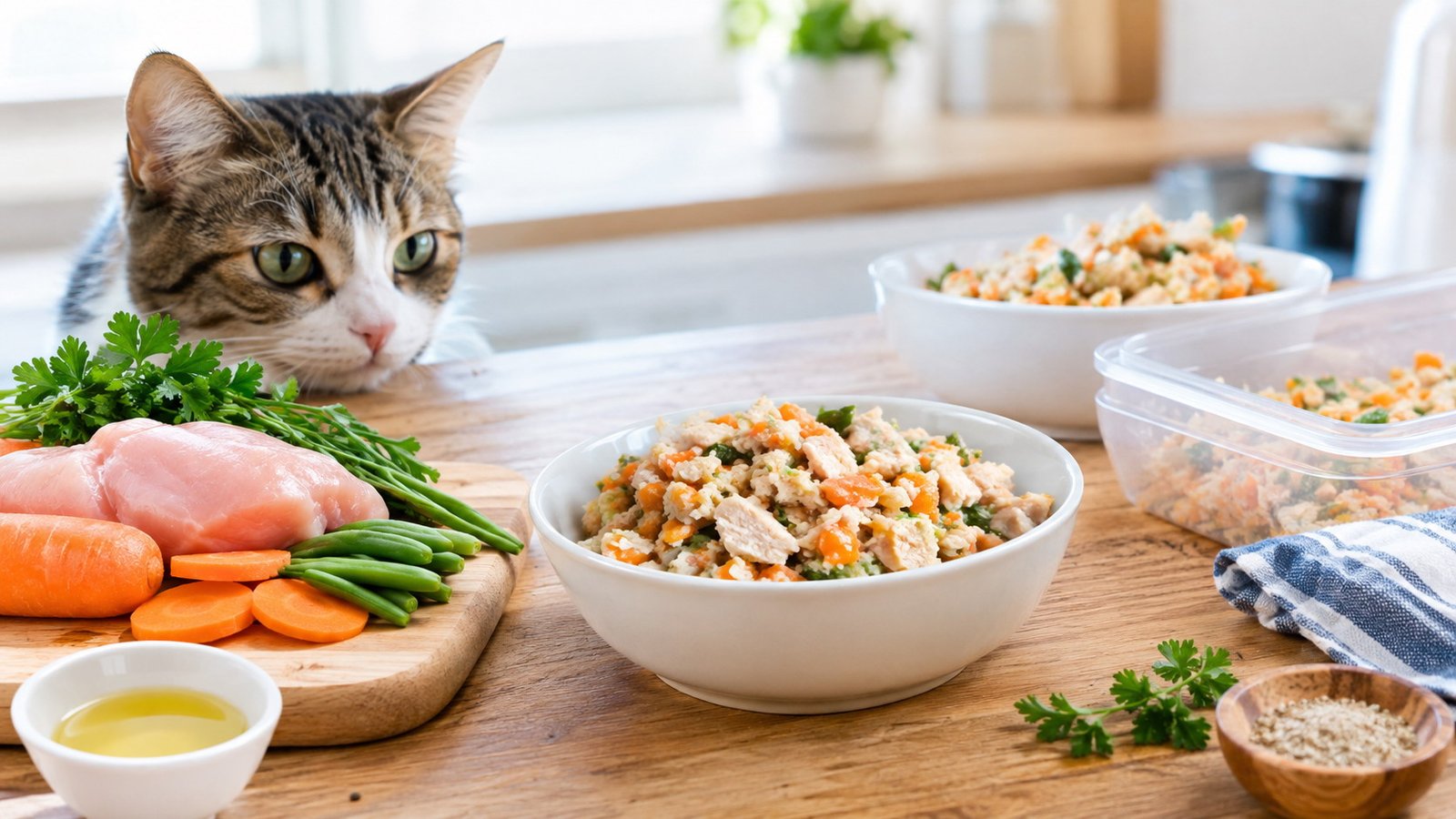
Making your cat’s food at home can seem appealing, especially when you want more control over the ingredients in their bowl. Homemade cat food recipes for beginners can be simple to prepare, but feeding homemade food regularly requires more than combining meat and a few pantry ingredients.
This guide explains how to approach homemade cat food safely, which ingredients matter most, what nutritional mistakes to avoid, and how simple homemade recipes differ from a complete feline diet. You’ll also learn when homemade food may be appropriate, when it should only be an occasional treat or topper, and why veterinary guidance matters before making a major dietary change.
In This Article
Homemade Cat Food Recipes for Beginners: What You Need to Know First
Cats are obligate carnivores, meaning their bodies are adapted to obtain essential nutrients primarily from animal-based foods. That makes feline nutrition quite different from human nutrition or even dog nutrition.
A bowl containing cooked chicken may look healthy, but plain meat alone does not provide everything a cat needs for long-term health. Cats require specific amounts of nutrients such as taurine, calcium, phosphorus, certain fatty acids, vitamins, and minerals.
That distinction is one of the most important things beginners should understand.
Homemade Food Is Not Automatically a Complete Diet
There is a big difference between:
- A small amount of cooked chicken used as a topper
- A homemade treat given occasionally
- A temporary meal prepared for a specific situation
- A homemade diet intended to provide all of a cat’s daily nutrition
The first three may have a place in some cats’ diets. The fourth requires careful nutritional formulation.
Feeding an unbalanced homemade diet as the main food for weeks or months can cause nutritional deficiencies or excesses, even when the cat appears to enjoy the food and initially seems healthy.
Cats can be particularly vulnerable to deficiencies because some nutrients they require are not needed by humans in the same form or amount.
Why Beginners Should Start With Nutrition, Not Recipes
The safest approach is to think about nutrition before choosing ingredients.
A recipe that says “chicken + liver + vegetables” does not automatically become balanced. Ingredient proportions, preparation methods, supplements, calorie content, and the cat’s life stage all matter.
For a cat whose homemade food will make up a substantial portion of its diet, a veterinarian or veterinary nutritionist can help determine whether the recipe meets the animal’s specific nutritional requirements.
The Cornell Feline Health Center is also a useful educational resource for learning more about feline nutrition and general cat health.
Homemade Food Can Be Useful as a Topper
Beginners don’t necessarily need to start by preparing every meal from scratch.
A small portion of appropriately prepared, unseasoned meat can sometimes be used as a food topper or occasional treat, provided it fits within the cat’s overall diet and does not displace nutritionally complete food.
This approach lets you introduce homemade foods gradually while keeping the cat’s primary nutrition covered by an appropriate complete diet.
Is Homemade Cat Food Safe for Cats?
Homemade cat food can be safe when it is properly prepared and nutritionally appropriate. The biggest concern is not simply whether an ingredient is “healthy”; it is whether the entire diet provides the right nutrients in the right amounts.
Food safety is another important consideration. Raw meat, improper storage, cross-contamination, and certain toxic ingredients can create avoidable risks.
Nutrients Cats Need From Their Diet
A properly formulated feline diet needs to supply several essential nutritional components.
| Nutrient | Why Cats Need It |
| Animal protein | Supports muscles, tissues, enzymes, and other body functions |
| Taurine | Essential for normal heart, eye, and reproductive function |
| Calcium | Important for bones, teeth, muscles, and nerve function |
| Phosphorus | Supports bones, energy metabolism, and cellular functions |
| Essential fatty acids | Support skin, coat, and normal body functions |
| Vitamins | Support metabolism, immune function, vision, and other processes |
| Minerals | Help maintain bones, nerves, muscles, and other body systems |
| Water | Supports hydration and normal organ function |
The exact requirements are more complicated than this table suggests. Balance matters just as much as the presence of individual nutrients.
Taurine Is Especially Important
Taurine deserves special attention when discussing homemade cat food.
Cats have a limited ability to produce taurine compared with many other animals, so they need to obtain sufficient taurine from their diet. Inadequate taurine intake can contribute to serious health problems.
Cooking, ingredient selection, storage, and the overall formulation of a diet can all affect nutrient availability.
That is why simply adding a little meat or organ meat to a recipe isn’t a reliable way to guarantee adequate taurine.
Calcium and Phosphorus Need to Be Balanced
Bone health isn’t just about adding calcium.
Cats need appropriate amounts and proportions of calcium and phosphorus. Meat contains substantial phosphorus but generally does not provide enough calcium to balance a meat-only diet.
Never assume that adding a random calcium supplement will fix an unbalanced recipe. The amount and form of supplementation should be based on a properly formulated diet.
Homemade Food vs. a Complete Commercial Diet
A commercially prepared cat food that is labeled as complete and balanced has an important advantage: its formulation is designed to provide the nutrients cats need when fed as directed.
Homemade food gives you greater control over individual ingredients, but that control also means you take responsibility for nutritional balance.
For many beginners, the practical choice is to keep a nutritionally complete diet as the foundation while using suitable homemade foods only when appropriate.
Essential Ingredients for Beginner Homemade Cat Food Recipes
Choosing ingredients for homemade cat food isn’t simply about finding foods that cats like. Each ingredient should have a purpose, and the complete recipe needs to be evaluated as a whole.
Animal Protein: The Foundation
Animal-based protein is central to feline nutrition.
Common ingredients used in homemade cat food recipes include:
- Chicken
- Turkey
- Beef
- Certain properly prepared fish
- Other suitable animal proteins
Choose plain, unseasoned meat when preparing simple homemade food for a cat.
Remove skin, bones, and excess fat when the recipe calls for lean meat. Avoid meat that has been marinated, heavily salted, seasoned, smoked, or prepared with sauces.
Garlic, onion, excessive salt, and many common human-food seasonings have no place in a cat’s homemade meal.
Chicken and Turkey Are Beginner-Friendly Options
Chicken and turkey are popular starting ingredients because they’re widely available and easy to cook.
Cook the meat thoroughly, allow it to cool, and remove all bones before serving. Shredded or finely chopped meat can work well for cats that prefer smaller pieces.
Keep in mind that plain cooked chicken or turkey is not nutritionally complete by itself. Think of it as an ingredient or occasional food rather than a complete long-term diet unless the entire recipe has been properly formulated.
Organ Meat: Useful but Easy to Overdo
Organs such as liver can provide valuable nutrients, which is why they may appear in properly formulated homemade diets.
Liver, however, is not an ingredient where “more is better.”
Feeding excessive amounts can contribute to excessive intake of certain nutrients, particularly vitamin A. Beginners should therefore avoid improvising organ-meat proportions.
Follow the quantities in a professionally formulated recipe rather than guessing how much liver to add.
Healthy Fats and Moisture
Cats need dietary fat as a source of energy and essential fatty acids.
The amount of fat should still be appropriate for the individual cat. A recipe containing excessive fatty meat may not be suitable for every cat, particularly if the animal has specific health or dietary needs.
Moisture is another advantage of many homemade foods. Cats naturally have a relatively low thirst drive compared with some other animals, so water-rich foods can contribute to overall fluid intake.
Fresh drinking water should remain available at all times.
Calcium and Supplements Require Precision
This is where many beginner recipes go wrong.
A homemade diet designed to replace a complete commercial cat food may require specific supplements to provide nutrients that aren’t reliably supplied by ordinary grocery-store ingredients.
Depending on the formulation, these may include nutrients such as:
- Taurine
- Calcium
- Certain vitamins
- Trace minerals
- Essential fatty acids
Do not create a supplement mixture by guessing quantities from several internet recipes. Too little of an essential nutrient can cause deficiency, while excessive supplementation can also be harmful.
A recipe intended to be your cat’s primary diet should come from a reliable veterinary source or be formulated specifically for your cat by a qualified veterinary nutrition professional.
For beginners, this is one of the most important distinctions between making homemade food and formulating a homemade diet.
5 Simple Homemade Cat Food Recipes for Beginners
Once you understand the nutritional limitations of homemade diets, preparing simple cat-friendly foods becomes much easier. The recipes below focus on plain, appropriately cooked animal ingredients and are best viewed as beginner-friendly options for occasional feeding or toppers unless they have been professionally formulated to be complete and balanced.
Simple Cooked Chicken Cat Food
Chicken is one of the easiest ingredients to work with when you’re new to preparing homemade food for cats.
Ingredients:
- Plain boneless chicken breast or thigh
- A small amount of clean water
Preparation:
- Cook the chicken thoroughly without salt, garlic, onion, butter, oil, or seasoning.
- Allow it to cool to a safe handling temperature.
- Remove any bones, cartilage, and excess skin.
- Shred or finely chop the meat into bite-sized pieces.
- Add a little water if your cat prefers a softer, moister texture.
Serve a small amount alongside your cat’s normal complete food rather than assuming chicken alone meets all nutritional requirements.
Important: Chicken by itself is deficient in several nutrients required for long-term feline nutrition, so it should not become the sole diet unless the complete recipe has been properly formulated and supplemented.
Turkey and Chicken Cat Food
Combining two lean poultry proteins can give your cat some variety while keeping preparation straightforward.
Ingredients:
- Plain cooked turkey
- Plain cooked chicken
- Water as needed for texture
Preparation:
- Cook both meats thoroughly.
- Remove all bones and unwanted pieces.
- Finely chop or shred the meat.
- Mix the proteins together.
- Add a little water if necessary.
Start with a small serving the first time you offer the combination. Cats can be creatures of habit, so introducing a new texture or flavor gradually may help prevent food refusal or digestive upset.
Cooked Beef Cat Food
Beef can provide another animal-protein option for cats that tolerate it well.
Choose a relatively lean cut and prepare it without sauces or seasonings.
Basic preparation:
- Cook the beef thoroughly.
- Drain excess fat when appropriate.
- Let it cool.
- Remove bones and any hard pieces.
- Finely chop the meat.
- Serve a small amount with your cat’s regular food.
Avoid heavily processed beef products such as sausages, cured meats, corned beef, and seasoned ground beef. These foods can contain excessive sodium, spices, preservatives, or other ingredients that aren’t appropriate for cats.
Chicken and Liver Cat Food
Liver is nutritionally concentrated and can be included in some properly formulated feline diets. The important word is some.
Adding a large quantity of liver simply because it contains beneficial nutrients can create an imbalance.
For a beginner, the safest approach is to use liver only when a reliable, nutritionally formulated recipe specifies the appropriate quantity.
Never use liver as a substitute for a complete vitamin and mineral formulation.
Simple Fish-Based Cat Food
Many cats love fish, making it tempting to use fish frequently in homemade meals.
Plain, thoroughly cooked fish can be offered occasionally when appropriate. Remove every bone carefully before serving.
Avoid:
- Smoked fish
- Salted fish
- Canned fish packed with excessive sodium
- Fish cooked with garlic or onion
- Raw fish from questionable sources
- Fish prepared with sauces or spicy seasonings
Fish should also not automatically become the foundation of a cat’s entire homemade diet. Variety does not solve the nutritional-balancing problem.
A Quick Beginner Recipe Checklist
Before serving any homemade food, ask:
- Is the meat plain and appropriately cooked?
- Have all bones been removed?
- Did I avoid onion, garlic, salt, sauces, and seasonings?
- Is this food being used appropriately as a treat, topper, or part of a formulated diet?
- If this is intended as the main diet, has the complete recipe been nutritionally formulated?
That last question is particularly important. A recipe can contain healthy ingredients and still be nutritionally incomplete.
How to Make Homemade Cat Food Step by Step
Preparing homemade cat food doesn’t have to be complicated. The challenge is making sure the food is safe to handle and, when intended as a primary diet, nutritionally complete.
Step 1: Choose Appropriate Ingredients
Start with fresh, good-quality ingredients from a reliable source.
For basic homemade foods, plain animal proteins such as chicken, turkey, or beef are practical choices.
Don’t choose ingredients solely because they’re considered healthy for humans. Cats have different nutritional requirements, and some foods that people regularly eat aren’t appropriate for cats.
Step 2: Cook the Meat Safely
Cook meat thoroughly using a simple preparation method.
Good options include:
- Baking
- Boiling
- Poaching
- Steaming
Avoid frying meat in large amounts of oil or preparing it with sauces and seasonings.
Never add onion or garlic for flavor. Cats are particularly sensitive to these ingredients.
Step 3: Remove Bones and Dangerous Pieces
This step deserves special attention.
Never assume that small bones are safe simply because your cat can chew them. Cooked bones can splinter and cause serious injuries or gastrointestinal problems.
Carefully inspect the meat after cooking and remove bones, sharp fragments, and other hard pieces.
Step 4: Prepare the Texture Your Cat Likes
Some cats prefer finely minced food, while others enjoy shredded meat or small chunks.
You can adjust the texture by:
- Shredding cooked meat
- Finely chopping it
- Mashing it
- Adding a small amount of water
Texture can make a surprisingly big difference. A cat that refuses chunky food may readily accept the same ingredients when they’re finely shredded.
Step 5: Add Only Appropriate Supplements
This is the point where homemade diets become more technical.
If you’re preparing a complete homemade diet, supplements should be added according to the exact formulation you’re following.
Don’t randomly add taurine, calcium, multivitamins, or other nutrients based on a general recommendation.
More supplementation does not necessarily mean better nutrition. Both deficiencies and excessive nutrient intake can cause problems.
Step 6: Cool and Portion the Food
Allow cooked food to cool appropriately before serving.
Divide larger batches into individual portions so you don’t repeatedly expose the entire batch to room temperature.
Small containers can make daily feeding much easier and help you control portions.
Step 7: Store Homemade Cat Food Safely
Refrigerate perishable homemade food promptly rather than leaving it on the counter for extended periods.
If you’ve prepared a larger batch, freezing individual portions can be convenient.
Label containers with the preparation date so you don’t have to guess how long something has been stored.
When food looks, smells, or feels spoiled, throw it away rather than taking a chance with your cat’s health.
Common Homemade Cat Food Mistakes That Can Harm Your Cat
Homemade cat food mistakes often happen because a recipe seems logical from a human perspective. Cats, however, have specialized nutritional needs that aren’t always obvious.
Feeding Only Plain Meat Long-Term
This is probably the most common mistake beginners make.
Chicken, turkey, beef, or fish can be excellent ingredients, but plain muscle meat alone isn’t a complete feline diet.
Long-term feeding requires carefully balancing the entire nutritional profile.
Adding Too Much Liver
Liver contains important nutrients, but excessive amounts can provide too much vitamin A and contribute to nutritional imbalance.
Don’t increase the liver portion because your cat enjoys it.
Using Cooked Bones
Cooked bones can become brittle and splinter.
Never add cooked chicken bones, turkey bones, fish bones, or other cooked bones to homemade cat food.
Assuming Cats Need Lots of Vegetables
Cats don’t need a human-style mixture of meat and vegetables to make their food “healthy.”
Small amounts of certain plant ingredients may appear in some formulated diets, but adding vegetables doesn’t automatically make homemade cat food nutritionally complete.
The priority should remain meeting feline nutritional requirements, not making the recipe resemble a human meal.
Using Human Supplements
Human multivitamins are not designed specifically for cats.
Some nutrients can be harmful when consumed in excessive amounts, while others may not be supplied in the appropriate form or concentration.
Use only supplements that are appropriate for the specific feline diet and follow the formulation carefully.
Changing Food Too Quickly
Even a nutritionally appropriate food can cause digestive upset when introduced abruptly.
When your cat is trying a new homemade food, introduce it gradually when practical and watch for changes in appetite, stool, vomiting, or general behavior.
Guessing Supplement Amounts
This is one mistake worth repeating because it can have serious consequences.
A homemade diet shouldn’t be balanced by adding “a little” of several supplements.
Ingredient weights, calories, nutrient concentrations, and supplement amounts all matter. A properly formulated recipe removes much of the guesswork.
Poor Food Hygiene
Homemade cat food involves handling perishable animal products, so basic kitchen hygiene matters.
Wash hands, utensils, bowls, and preparation surfaces thoroughly. Keep raw and cooked ingredients separated, and refrigerate food promptly.
Clean preparation isn’t just about making the kitchen tidy—it helps reduce the risk of foodborne illness for both pets and people.
Homemade Cat Food vs. Commercial Cat Food: Which Is Better?
Choosing between homemade cat food and commercial cat food isn’t simply a matter of deciding which one sounds healthier. The better choice is the diet that consistently provides complete nutrition, suits your cat’s life stage and health needs, and can be prepared or served safely.
Homemade food gives you control over the ingredients, while complete commercial cat food offers convenience and nutritional formulation. Understanding those differences can help you make a more informed decision.
| Factor | Homemade Cat Food | Complete Commercial Cat Food |
| Ingredient control | High | Moderate to high, depending on product |
| Preparation time | Higher | Very low |
| Nutritional balancing | Requires careful formulation | Formulated to meet established nutritional requirements |
| Portion control | Owner-managed | Usually straightforward |
| Storage | Requires refrigeration or freezing | Generally convenient |
| Cost | Varies by ingredients and formulation | Varies by brand and product |
| Beginner-friendly | Requires nutritional planning | Usually easier |
| Dietary customization | Potentially high with professional formulation | Available through specialized diets |
The Biggest Advantage of Homemade Food
Ingredient control is one of the main reasons pet owners become interested in homemade diets.
You can choose the protein source, cooking method, texture, and ingredients that go into your cat’s bowl. This may be appealing when your cat has strong food preferences or when you want to know exactly what you’re feeding.
The challenge is that ingredient control also means nutritional responsibility.
A homemade meal can look wholesome while still lacking important nutrients.
Why Complete Commercial Food Is Convenient
A properly labeled complete and balanced cat food is designed to provide the nutrients cats require when fed according to its directions.
That makes commercial food particularly practical for beginners who don’t have experience calculating feline nutritional requirements.
Wet food can also provide substantial moisture, while dry food can be convenient to portion and store.
You Don’t Always Have to Choose One or the Other
Some owners use small amounts of suitable homemade food as a topper while keeping a complete commercial diet as the nutritional foundation.
This can provide additional variety without requiring every homemade ingredient combination to supply the cat’s entire nutritional needs.
The key is keeping toppers and treats from displacing too much of the complete diet.
Cats with medical conditions, kittens, pregnant cats, senior cats, and animals with unusual nutritional requirements may need more individualized dietary planning.
How Much Homemade Cat Food Should You Feed?
There isn’t one universal portion size that works for every cat. The right amount depends on the individual animal and the calorie content of the food.
Factors that influence feeding requirements include:
- Body weight
- Age
- Growth stage
- Activity level
- Body condition
- Neutering status
- Overall health
- Calorie density of the food
- Whether homemade food is a treat, topper, or complete diet
Start With the Cat, Not the Measuring Cup
Two cats weighing the same amount can have different calorie requirements.
An active young adult may need considerably more energy than a sedentary cat of the same weight. Kittens also have nutritional requirements associated with growth that differ from those of adult cats.
For that reason, simply saying “feed half a cup per day” isn’t an appropriate universal recommendation for homemade cat food.
Portion sizes should ultimately be based on calories and the cat’s body condition, not volume alone.
Homemade Food as a Topper or Treat
When homemade meat is being used as a topper or occasional treat, keep the quantity modest enough that it doesn’t crowd out the cat’s nutritionally complete food.
A practical approach is to begin with a small amount and observe how your cat responds.
Watch for:
- Normal appetite
- Normal stool
- Stable body weight
- Normal energy
- No repeated vomiting
- No signs of digestive discomfort
Homemade Food as the Main Diet
The situation changes significantly when homemade food replaces most or all of your cat’s regular meals.
At that point, the food needs to supply the cat’s complete nutritional requirements.
Don’t calculate portions based solely on how much meat your cat seems willing to eat. A homemade diet must account for both calories and essential nutrients.
Professional formulation is especially valuable for cats with health conditions or unusual dietary requirements.
Monitor Your Cat’s Body Condition
Your cat’s weight and body condition can provide useful feedback.
If your cat is gradually gaining excessive weight, the diet may be supplying more calories than needed. Unexpected weight loss, persistent appetite changes, or reduced energy deserve attention rather than simply increasing or decreasing food without investigating the cause.
Regular veterinary checkups can help identify changes that aren’t obvious at home.
Safe Preparation, Storage, and Serving Tips
Good homemade cat food begins with safe ingredients, but food handling is just as important as the recipe itself.
Improper handling of meat can expose cats and humans in the household to harmful microorganisms.
Keep Preparation Areas Clean
Wash your hands with soap and water before and after handling raw meat.
Clean knives, cutting boards, countertops, bowls, and other equipment after food preparation.
If possible, use separate preparation equipment for raw animal products to reduce cross-contamination.
Cook Meat Thoroughly
Cook appropriate meats using a simple method without seasonings or sauces.
Avoid adding:
- Onion
- Garlic
- Excess salt
- Spicy seasonings
- Butter-heavy sauces
- Marinades
- Human gravy or seasoning mixes
Plain is safer than seasoned when you’re preparing food specifically for a cat.
Remove Bones Before Serving
Carefully inspect cooked meat before putting it in your cat’s bowl.
Cooked bones can splinter and may cause serious gastrointestinal injuries or obstruction.
Fish deserves extra attention because small bones can be easy to overlook.
Refrigerate Leftovers Promptly
Homemade cat food contains perishable ingredients, so don’t leave it sitting at room temperature for long periods.
Place unused portions in clean, covered containers and refrigerate them promptly.
Preparing several small portions at once can make feeding more convenient while reducing repeated handling of the entire batch.
Freezing Can Make Batch Preparation Easier
If you prepare more food than your cat can eat within a short period, freezing individual portions can be convenient.
Small containers or freezer-safe portions make it easier to thaw only what you need.
Label each portion with the preparation date so older food doesn’t get forgotten.
Never rely solely on smell or appearance to determine whether perishable food is safe. When food has been stored improperly or you’re uncertain about its safety, discarding it is the better choice.
Serve Food at a Comfortable Temperature
Cats can have strong preferences about food temperature and texture.
If refrigerated food is unappealing, allowing an appropriate portion to warm slightly before serving can make it more attractive.
Never serve food excessively hot. Mix it thoroughly and check the temperature before offering it.
Watch Your Cat During the Transition
A new homemade food should not automatically replace your cat’s existing diet overnight.
Gradual introduction can make dietary changes easier for many cats.
Monitor your cat for:
- Refusal to eat
- Vomiting
- Diarrhea
- Constipation
- Marked lethargy
- Changes in normal behavior
If your cat refuses food for an extended period, becomes significantly unwell, or develops concerning symptoms, contact a veterinarian rather than continuing to experiment with recipes at home.
Foods You Should Never Add to Homemade Cat Food
Preparing food at home gives you control over the ingredients, but it also means you need to know which common human foods can be dangerous for cats. Some ingredients can cause poisoning, while others can create digestive problems or nutritional imbalances.
When preparing homemade cat food recipes for beginners, the safest rule is simple: keep recipes plain and use ingredients specifically appropriate for cats.
Avoid Onions and Garlic
Onions, garlic, shallots, leeks, and related ingredients can be harmful to cats. They may damage red blood cells and potentially lead to anemia.
This applies to these ingredients in different forms, including:
- Raw onion or garlic
- Cooked onion or garlic
- Onion or garlic powder
- Seasoning blends containing them
- Sauces or gravies made with them
Never season homemade cat food with onion or garlic, even if the amount seems small.
Keep Chocolate, Alcohol, and Caffeine Away
Chocolate, alcoholic beverages, coffee, energy drinks, and other caffeinated products have no place in a cat’s diet.
Cats don’t need these foods, and some can cause serious toxicity.
Never use leftover human foods containing these ingredients as treats or recipe components.
Don’t Add Grapes or Raisins
Grapes and raisins are another food that should not be intentionally fed to cats.
Because the potential risk isn’t worth experimenting with, leave them completely out of homemade recipes.
Avoid Excessively Salty or Seasoned Foods
Cats don’t need human-style seasoning.
Processed meats, salty broths, sauces, instant seasoning packets, and heavily seasoned leftovers can contain far more sodium and other ingredients than a cat needs.
Homemade cat food should generally be much simpler than human food.
Never Use Cooked Bones
Cooked bones can become brittle and splinter.
Chicken, turkey, fish, and other cooked bones can potentially cause choking, mouth injuries, intestinal damage, or obstruction.
Remove bones completely before serving homemade food.
How to Turn Beginner Recipes Into a Properly Balanced Cat Diet
Simple homemade recipes can teach you how to prepare safe ingredients, but turning those ingredients into a complete homemade cat food diet requires much more precision.
This distinction is especially important if homemade food will replace your cat’s regular commercial food.
A Simple Recipe Isn’t Necessarily a Complete Recipe
Consider plain cooked chicken.
It provides:
- Animal protein
- Calories
- Moisture
- Certain vitamins and minerals
It does not, by itself, provide every nutrient a cat requires in appropriate amounts.
The same problem can occur with recipes built around beef, turkey, fish, or combinations of several meats.
Adding more ingredients doesn’t automatically solve the problem.
Why Professional Formulation Matters
A properly formulated homemade diet takes into account the cat’s:
- Age
- Body weight
- Activity level
- Life stage
- Health status
- Calorie requirements
- Required nutrient concentrations
A veterinary nutrition professional can help formulate a diet that accounts for these variables rather than relying on general internet recipes.
This is particularly important for growing kittens, pregnant or nursing cats, and cats with medical conditions.
Supplements Should Match the Recipe
Many complete homemade feline diets require carefully selected supplements.
Depending on the formulation, these may provide nutrients such as taurine, calcium, vitamins, minerals, and essential fatty acids.
Don’t combine several supplements simply because each one sounds beneficial. Nutrients interact with one another, and excessive amounts of some nutrients can also cause health problems.
Use the exact supplement and amount specified by a properly formulated recipe.
Consider Your Cat’s Entire Diet
Homemade food doesn’t exist in isolation.
If you’re adding homemade chicken as a topper to complete cat food, the nutritional impact is different from feeding homemade food as the sole diet.
Keeping the overall diet in mind helps prevent accidental overfeeding and nutritional dilution.
For pet owners building a broader nutrition strategy, a dedicated guide to cat nutrition and healthy feeding habits can be a useful next step.
Signs Your Cat May Not Be Tolerating a New Homemade Diet
Most cats can experience an occasional digestive change when their diet is altered, but persistent or severe symptoms shouldn’t be ignored.
Pay attention to changes after introducing a new homemade food.
Digestive Symptoms
Potential warning signs include:
- Repeated vomiting
- Persistent diarrhea
- Significant constipation
- Abdominal discomfort
- Excessive gas
- Refusing food
- Sudden changes in appetite
A mild change in stool can occur during dietary transitions, but symptoms that persist or worsen deserve veterinary attention.
Changes in Weight or Energy
A homemade diet may provide more or fewer calories than you realize.
Watch for:
- Unexplained weight loss
- Rapid weight gain
- Reduced activity
- Unusual weakness
- Persistent lethargy
- Noticeable changes in appetite
These signs aren’t necessarily caused by the homemade food itself. They can also indicate an underlying health problem.
When to Contact a Veterinarian
Contact your veterinarian if your cat has persistent vomiting or diarrhea, refuses food, becomes unusually lethargic, loses weight unexpectedly, or develops other concerning symptoms.
Don’t use homemade food experiments as a substitute for veterinary diagnosis or treatment.
Cats can hide illness remarkably well, so noticeable changes in eating, drinking, weight, or behavior deserve attention.
Frequently Asked Questions About Homemade Cat Food Recipes for Beginners
Can I feed my cat homemade food every day?
Yes, but only when the homemade diet has been properly formulated to meet your cat’s complete nutritional requirements. Plain meat-based recipes should not replace a complete diet long-term.
What is the easiest meat to use for homemade cat food?
Plain cooked chicken or turkey is often a practical starting point because it’s widely available and easy to prepare. Remember that plain meat alone isn’t nutritionally complete for long-term feeding.
Can cats eat homemade chicken and rice?
Cats can eat appropriately cooked chicken, but chicken and rice should not automatically be considered a complete feline diet. Cats have specific nutritional requirements that this simple combination may not provide.
Do homemade cat food recipes need supplements?
Many homemade diets intended as a cat’s primary food require specific supplements to provide adequate vitamins, minerals, taurine, calcium, and other nutrients. The correct supplements and amounts depend on the complete recipe.
Can I feed my cat raw homemade food?
Raw feeding carries food-safety and nutritional risks, particularly when the diet isn’t professionally formulated. Beginners should not assume that raw meat is automatically healthier or safer than properly cooked food.
How long does homemade cat food last in the refrigerator?
Homemade cat food contains perishable ingredients and should be refrigerated promptly in clean, covered containers. Follow safe food-storage practices and discard food that has been improperly stored or appears spoiled.
Can kittens eat homemade cat food?
Growing kittens have particularly demanding nutritional requirements. A homemade diet for a kitten should be formulated specifically for growth by a qualified veterinary nutrition professional rather than adapted from an adult cat recipe.
Can I use homemade cat food as a topper?
Small amounts of plain, appropriately prepared meat can sometimes be used as a topper for a complete diet. Keep toppers modest so they don’t displace too much nutritionally complete food.
Start Simple, But Put Nutrition First
Homemade cat food recipes for beginners can be a useful way to learn more about your cat’s ingredients, preferences, and feeding habits. The safest starting point is simple: use appropriate ingredients, cook them properly, avoid toxic seasonings and bones, practice good food hygiene, and introduce dietary changes gradually.
The biggest lesson is that homemade doesn’t automatically mean complete and balanced. Plain chicken, turkey, beef, or fish can be useful foods, but they don’t provide every nutrient a cat needs when fed alone over the long term.
If you’re planning to make homemade food your cat’s primary diet, work with your veterinarian or a qualified veterinary nutrition professional to create a nutritionally complete recipe for your cat’s individual needs.
For occasional homemade treats or toppers, keep portions sensible and continue providing a nutritionally complete foundation.
Your cat’s health should always come before recipe simplicity—so start with safe ingredients, learn the nutritional basics, and make homemade feeding a thoughtful part of your pet-care routine.