Rabbits struggle with heat far more than many people realize. Unlike humans, they cannot sweat effectively, and their thick fur makes them vulnerable to overheating during hot weather. A rabbit’s ideal temperature is usually between 55°F and 70°F (13°C to 21°C). Once temperatures climb above 80°F (27°C), heat stress becomes a real concern.
Heatstroke in rabbits can become life-threatening quickly, so prevention matters. This guide covers practical ways to keep indoor and outdoor rabbits comfortable, safe, and healthy throughout the hottest months of the year.
In This Article
Why Rabbits Overheat Easily
Rabbits are naturally adapted for cooler climates. Their dense fur traps heat efficiently, which helps during winter but creates problems in summer.
Unlike dogs, rabbits do not pant effectively to cool themselves down. Their primary heat-release system is through blood vessels in their ears. When temperatures become too high, this cooling process is often not enough.
Several factors increase the risk of overheating:
- High humidity
- Poor ventilation
- Direct sunlight
- Obesity
- Thick fur breeds
- Stress
- Small or enclosed hutches
- Lack of water
Some breeds are especially vulnerable, including long-haired rabbits like the Angora rabbit and compact breeds with dense coats.
Signs of Heat Stress and Heatstroke in Rabbits
Recognizing early warning signs can save a rabbit’s life.
Early Signs of Heat Stress
Watch for:
- Warm ears
- Lethargy
- Stretching out unusually flat
- Faster breathing
- Reduced appetite
- Seeking cool surfaces
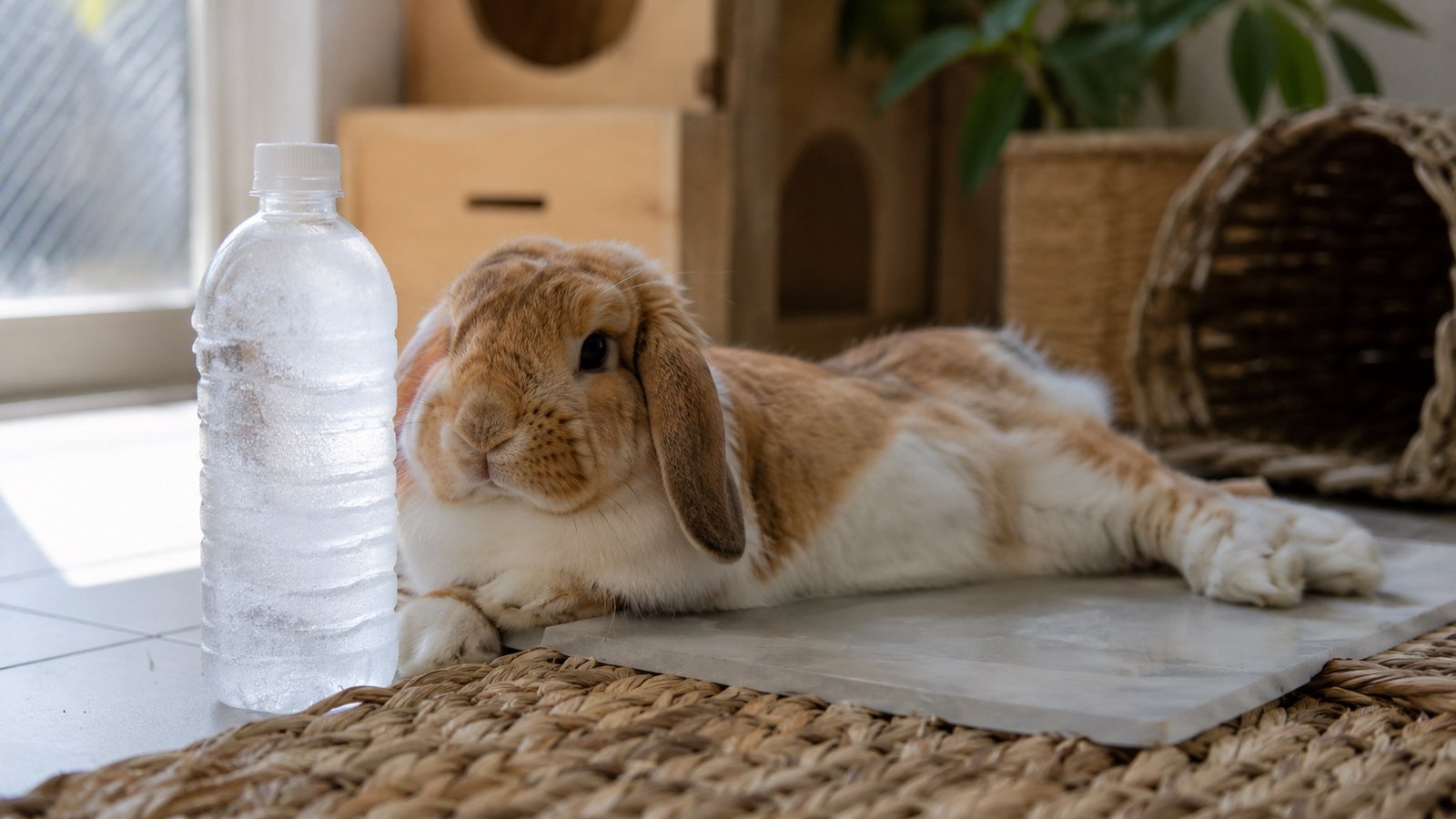
A rabbit lying stretched out on tile or against a frozen bottle is often trying to regulate body temperature.
Serious Signs of Heatstroke
Heatstroke is an emergency. Symptoms may include:
- Rapid or open-mouth breathing
- Drooling
- Weakness
- Disorientation
- Red or dark ears
- Wet nose from saliva
- Tremors
- Collapse
If a rabbit shows severe symptoms, contact a rabbit-savvy veterinarian immediately.
Do not place an overheated rabbit into ice-cold water. Sudden temperature changes can cause shock.
Ideal Summer Temperature for Rabbits
Here is a quick temperature guide for rabbit comfort and safety:
| Temperature | Risk Level | What to Do |
| Below 75°F (24°C) | Comfortable | Normal care |
| 75–80°F (24–27°C) | Mild caution | Increase cooling measures |
| 80–85°F (27–29°C) | High risk | Monitor closely |
| Above 85°F (29°C) | Dangerous | Active cooling required |
| Above 90°F (32°C) | Emergency risk | Move to cooler area immediately |
Humidity can make conditions worse even at lower temperatures.
Best Ways to Keep a Rabbit Cool in Summer
1. Keep Your Rabbit Out of Direct Sunlight
Shade is essential for both indoor and outdoor rabbits.
Outdoor hutches should never sit in direct afternoon sun. Even shaded hutches can become dangerously hot if airflow is poor.
Good shaded areas include:
- Under covered patios
- Beneath trees
- North-facing walls
- Ventilated sheds with windows
Indoor rabbits should stay away from sunny windows where heat builds up quickly.
2. Improve Airflow and Ventilation
Fresh airflow helps remove trapped heat.
You can improve ventilation by:
- Opening windows safely
- Using fans nearby
- Raising hutches slightly off the ground
- Removing solid covers that trap heat
Do not point a strong fan directly at a rabbit for long periods. Gentle circulation works best.
For outdoor setups, wire-sided enclosures usually stay cooler than fully enclosed wooden hutches.
3. Provide Unlimited Fresh Water
Hydration is one of the most important defenses against overheating.
Best practices include:
- Refill water multiple times daily
- Use heavy ceramic bowls instead of bottles when possible
- Add extra water stations
- Keep water in shaded areas
Some rabbits drink more readily from bowls because water flows faster and feels cooler.
On extremely hot days, adding a few ice cubes can help keep water cool longer.
4. Use Frozen Water Bottles
Frozen bottles are one of the safest and most effective cooling tools for rabbits.
How to use them:
- Fill plastic bottles with water
- Freeze them overnight
- Wrap lightly in a towel
- Place them near your rabbit
Rabbits often lean against frozen bottles to cool themselves.
Keep multiple bottles rotating throughout the day.
5. Offer Cooling Tiles or Stone Slabs
Ceramic tiles and stone surfaces stay naturally cooler than bedding or wood.
Good options include:
- Ceramic floor tiles
- Marble slabs
- Granite pieces
Place cooling tiles in shaded resting spots. Many rabbits instinctively lie on them during hot weather.
6. Freeze Safe Treats
Frozen rabbit-safe snacks can encourage hydration and help lower body temperature slightly.
Safe summer treats include:
- Chilled romaine lettuce
- Refrigerated cucumber slices
- Frozen herbs
- Small pieces of frozen banana
- Cold parsley or cilantro
Avoid sugary frozen treats or anything made for humans.
Treats should remain occasional additions rather than replacing hay.
7. Keep Bedding Light and Breathable
Heavy bedding traps heat.
During summer:
- Reduce excess fleece layers
- Use breathable straw sparingly
- Clean damp bedding quickly
- Avoid thick enclosed nesting areas
Indoor rabbits may prefer bare floors or cooling mats during hotter months.
8. Brush Your Rabbit Regularly
Loose fur traps extra heat.
Regular grooming helps by:
- Removing shedding fur
- Improving airflow through the coat
- Preventing mats
- Reducing insulation buildup
Long-haired rabbits may require daily brushing in summer.
Never shave a rabbit completely unless specifically instructed by a veterinarian. A rabbit’s coat also protects against sunburn and helps regulate body temperature.
9. Move Outdoor Rabbits Indoors During Heatwaves
Extreme heat can overwhelm outdoor cooling methods.
When temperatures become dangerous, the safest option is often bringing rabbits indoors temporarily.
Good indoor locations include:
- Air-conditioned rooms
- Basements
- Tiled laundry rooms
- Quiet shaded spaces
Even garages can become dangerously hot, so monitor temperatures carefully.
How to Keep Outdoor Rabbits Cool
Outdoor rabbits need extra protection during summer because hutches heat up rapidly.
Best Outdoor Cooling Strategies
Use a combination of:
- Shade cloths
- Frozen bottles
- Cooling tiles
- Ventilation panels
- Elevated hutches
- Misting nearby surfaces (not directly on rabbits)
Avoid Plastic Covers
Plastic sheets trap heat and humidity. They may create greenhouse-like conditions inside hutches.
Instead, use breathable weather covers designed for airflow.
Protect From Predators While Ventilating
Leaving hutches open for airflow can create safety risks.
Use:
- Secure wire mesh
- Predator-proof locks
- Covered runs with ventilation
Never sacrifice security for airflow.
How to Keep Indoor Rabbits Cool
Indoor rabbits are usually safer in summer, but homes can still become too warm.
Use Air Conditioning Carefully
Air conditioning is one of the best cooling tools for rabbits.
Aim for moderate temperatures rather than blasting extremely cold air directly onto them.
Block Heat From Windows
Sunlight through windows can raise room temperatures significantly.
Helpful solutions include:
- Blackout curtains
- Reflective blinds
- UV-blocking window film
Limit Exercise During Peak Heat
Rabbits generate heat while running and playing.
Encourage active play during:
- Early morning
- Evening hours
- Cooler nighttime periods
Safe and Unsafe Cooling Methods
Some cooling ideas online are unsafe for rabbits.
Safe Cooling Methods
| Safe | Why It Helps |
| Frozen water bottles | Provides gentle cooling |
| Ceramic tiles | Naturally cool surface |
| Fresh water | Prevents dehydration |
| Shade and airflow | Reduces heat buildup |
| Cooling mats made for pets | Offers safe temperature relief |
Unsafe Cooling Methods
| Unsafe | Why It’s Dangerous |
| Ice baths | Can cause shock |
| Direct misting | Fur traps moisture and heat |
| Wetting entire rabbit | Risk of stress and chills |
| Human cooling gels | May contain toxic ingredients |
| Leaving rabbits in parked cars | Extremely dangerous |
What to Do if Your Rabbit Overheats
If your rabbit appears overheated:
- Move them to a cooler shaded area immediately
- Offer cool drinking water
- Place cool towels nearby
- Use frozen bottles wrapped in cloth
- Contact a veterinarian quickly
Do not force-feed water or immerse the rabbit in cold water.
Gradual cooling is safer.
Common Summer Mistakes Rabbit Owners Make
Keeping Hutches in the Sun
Even partial direct sunlight can overheat a hutch quickly.
Using Small Water Bottles Only
Bottles may not provide enough hydration during extreme heat.
Ignoring Humidity
Humid weather reduces a rabbit’s ability to cool through ear circulation.
Overhandling During Hot Weather
Excessive cuddling or carrying increases stress and body heat.
Assuming Fur Trimming Solves Everything
Over-trimming can expose skin to sunburn and disrupt natural temperature regulation.
Best Practices for Rabbit Care During Summer
Follow these habits consistently during hot months:
- Check rabbits multiple times daily
- Monitor weather forecasts
- Keep backup frozen bottles ready
- Refresh water frequently
- Groom regularly
- Provide shaded resting areas
- Reduce stress and excessive activity
Consistency matters more than occasional cooling efforts.
Quick Summary: How to Keep a Rabbit Cool in Summer
Here are the most effective ways to prevent overheating:
- Keep rabbits in shaded, ventilated areas
- Provide unlimited cool water
- Use frozen bottles and cooling tiles
- Groom regularly
- Avoid direct sunlight
- Bring outdoor rabbits inside during extreme heat
- Watch closely for signs of heat stress
Prevention is always easier and safer than treating heatstroke.
Frequently Asked Questions
Can rabbits die from heat?
Yes. Rabbits are highly sensitive to heat, and severe overheating can lead to fatal heatstroke if not treated quickly.
Is it safe to put ice in a rabbit’s water?
Yes, small amounts of ice are generally safe and can help keep water cool. Avoid making the water extremely cold.
Do fans help keep rabbits cool?
Fans can improve airflow and reduce heat buildup, especially indoors. Gentle circulation works better than strong direct airflow.
Can rabbits stay outside in summer?
Yes, but only with proper shade, ventilation, cooling methods, and close monitoring during hot weather.
Should I spray my rabbit with water?
Usually no. Wet fur can trap moisture and create stress. Cooling the environment is safer than soaking the rabbit.
What temperature is too hot for rabbits?
Temperatures above 80°F (27°C) can become risky, especially with high humidity or poor airflow.
Final Thoughts on Keeping Rabbits Cool in Summer
Knowing how to keep a rabbit cool in summer is an essential part of responsible rabbit care. Rabbits tolerate cold weather much better than extreme heat, which means summer requires extra attention and preparation.
Simple measures like shade, airflow, cool water, frozen bottles, and regular monitoring can dramatically reduce the risk of heat stress. Whether your rabbit lives indoors or outdoors, creating a cool, calm environment helps them stay comfortable and healthy throughout the hottest months of the year.