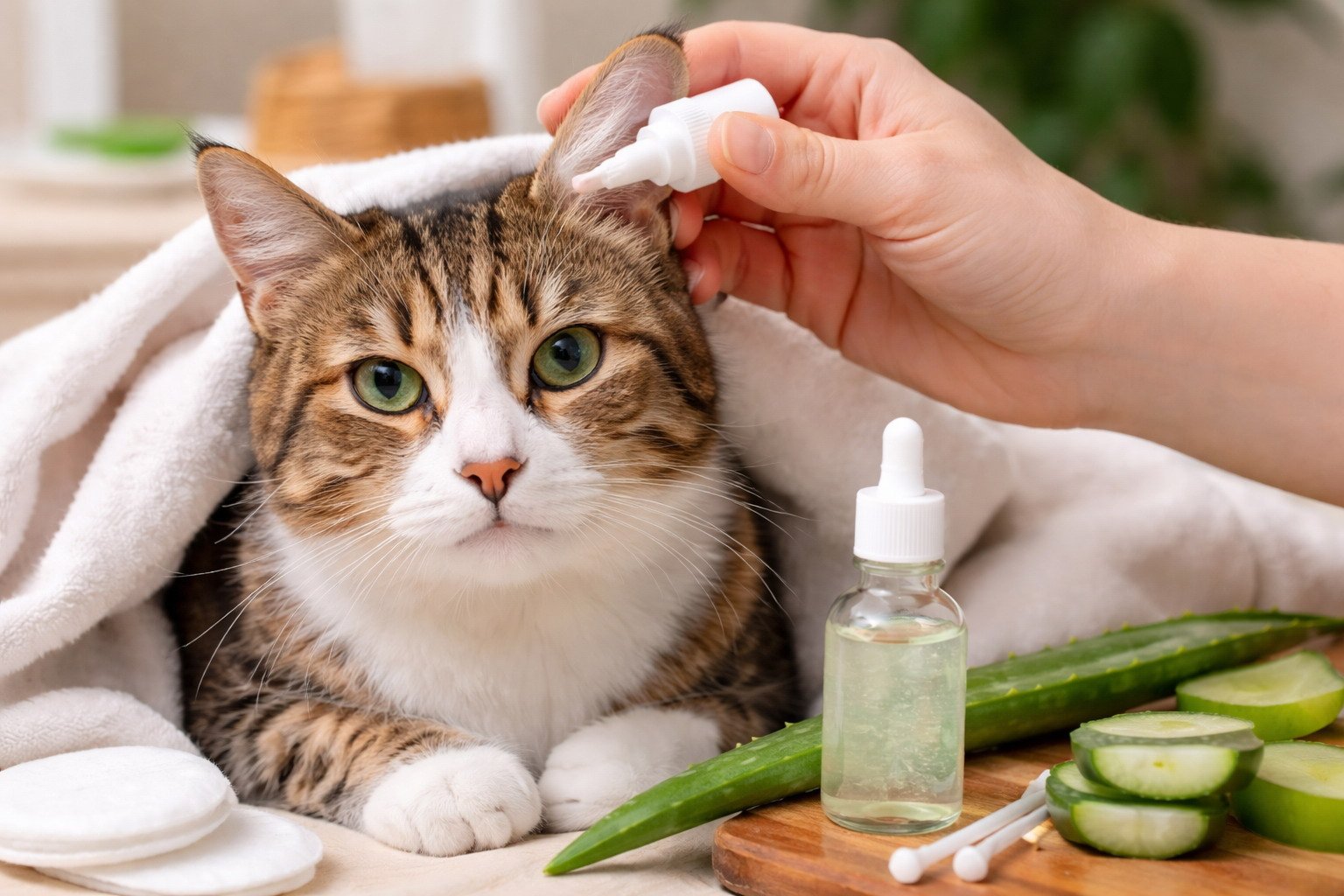
Ear mites can turn a calm, happy cat into an itchy, uncomfortable mess—and that’s where natural aloe-based ear mite treatment for cats (four paws approach) comes in. Many cat owners today are looking for gentler, non-toxic ways to treat common issues like ear mites without jumping straight to harsh chemicals.
This guide walks you through everything you need to know—from spotting early symptoms to safely using aloe-based remedies at home. You’ll also learn when natural care works best, when to be cautious, and how to support your cat’s ear health long-term.
In This Article
Why Ear Mites in Cats Should Never Be Ignored
Ear mites might seem like a minor irritation at first, but they can quickly escalate into something more serious if left untreated.
What Are Ear Mites and Why Are They a Problem?
Ear mites are tiny parasites that live inside your cat’s ear canal. They feed on wax and oils, causing intense irritation.
Common issues caused by ear mites include:
- Persistent scratching around the ears
- Head shaking and discomfort
- Dark, crumbly debris (often described as “coffee grounds”)
- Inflammation or foul odor
Unchecked infestations can lead to secondary bacterial or yeast infections, making treatment more complicated.
Why Early Treatment Matters
Catching ear mites early makes treatment faster, easier, and less stressful for your cat.
Delaying care can lead to:
- Painful ear infections
- Skin wounds from excessive scratching
- Spread to other pets in the household
Natural vs Conventional Treatments: A Quick Look
Many pet owners now prefer natural remedies like aloe-based solutions because they are gentle and soothing.
- Natural treatments: Focus on calming irritation and supporting healing
- Conventional treatments: Often kill mites faster but may include stronger chemicals
A balanced approach depends on the severity of the infestation.
What Makes Natural Aloe-Based Ear Mite Treatment for Cats So Effective?
Aloe vera isn’t just for human skincare—it’s also a powerful, pet-friendly ingredient when used correctly.
The Healing Power of Aloe Vera
Aloe contains natural compounds that help soothe and repair irritated skin inside the ear.
Key benefits include:
- Anti-inflammatory properties that reduce redness and swelling
- Soothing effect that relieves itching
- Mild antibacterial action that helps prevent infection
This makes aloe especially helpful during the early or mild stages of ear mite infestations.
Why Pet Owners Are Turning to Aloe-Based Solutions
Many cat owners are cautious about exposing their pets to strong medications unless necessary.
Aloe-based treatments are popular because they:
- Are generally non-toxic when properly formulated for pets
- Provide comfort while the ear heals
- Can be part of a holistic care routine
That said, aloe alone may not eliminate severe infestations, which is why monitoring progress is essential.
When Natural Treatment Is a Good (or Bad) Idea
Natural aloe-based ear mite treatment for cats works best in specific situations.
Best used when:
- Symptoms are mild
- Infestation is caught early
- Your cat has sensitive skin
Not ideal when:
- There is heavy discharge or bleeding
- Symptoms persist or worsen after a few days
- A vet has diagnosed a serious infection
For deeper guidance on ear health and parasite care, trusted resources like the
American Veterinary Medical Association offer helpful insights:
https://www.avma.org/resources/pet-owners/petcare/ear-infections-pets
Understanding the “Four Paws” Approach to Ear Mite Treatment
The “four paws” approach isn’t a brand—it’s a philosophy of caring for your pet in the safest, most balanced way possible.
What Does “Four Paws” Really Mean?
It focuses on treating your pet as a whole, not just the symptom.
Core principles include:
- Gentle, pet-safe ingredients
- Minimizing stress during treatment
- Supporting overall health—not just eliminating mites
Why This Approach Works for Ear Care
Cats are sensitive creatures, especially when it comes to their ears. Harsh treatments can cause fear, discomfort, or resistance.
A four paws approach helps by:
- Keeping the experience calm and manageable
- Reducing irritation with soothing ingredients like aloe
- Encouraging consistent, stress-free care routines
Long-Term Benefits for Your Cat
Using a gentle, consistent method doesn’t just solve the current problem—it helps prevent future ones.
Long-term advantages include:
- Healthier ear environment
- Less anxiety during grooming or treatment
- Lower risk of recurring infections
Signs Your Cat Needs an Aloe-Based Ear Mite Treatment
Recognizing the early signs of ear mites makes a huge difference in how quickly your cat recovers. Subtle symptoms often appear before things get serious.
Common Physical Symptoms
Ear mites are irritating, and your cat will show it in very obvious ways.
Watch for these signs:
- Constant scratching around the ears
- Frequent head shaking
- Dark brown or black debris inside the ears
- Redness or swelling in the ear canal
That “coffee ground” debris is one of the most telltale indicators of mites.
Behavioral Changes You Shouldn’t Ignore
Cats tend to hide discomfort, so behavior shifts are important clues.
Look out for:
- Increased irritability when touched near the head
- Reduced activity or playfulness
- Restlessness, especially at night
When It Might Be More Than Ear Mites
Not every ear issue is caused by mites. Some symptoms overlap with infections or allergies.
Seek veterinary advice if you notice:
- Strong odor from the ears
- Yellow or pus-like discharge
- Bleeding or open wounds
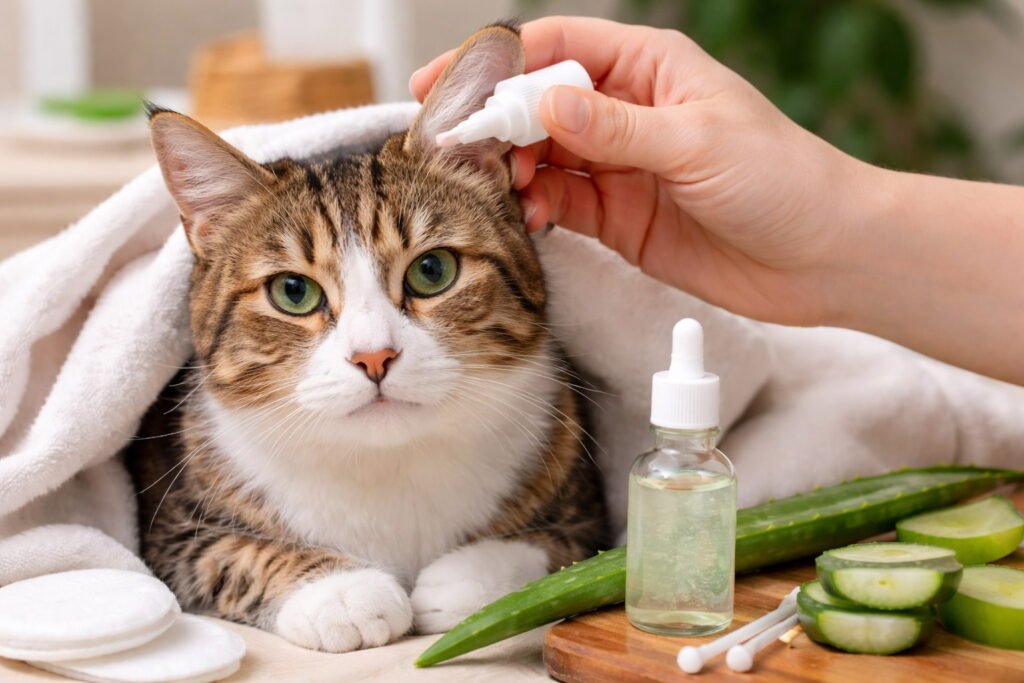
Step-by-Step: How to Use Natural Aloe-Based Ear Mite Treatment for Cats
Applying aloe-based treatment properly is key to making it effective and safe.
Preparing Your Cat for Treatment
A calm environment helps your cat cooperate.
Before you begin:
- Choose a quiet room
- Wrap your cat gently in a towel if needed
- Have all supplies ready (cotton pads, aloe solution)
Cleaning the Ear Safely
Cleaning removes debris so the aloe can work effectively.
Steps to follow:
- Use a vet-approved ear cleaner or warm damp cotton pad
- Gently wipe the outer ear—never push deep into the canal
- Allow the ear to dry before applying treatment
Applying the Aloe-Based Solution
This is where the soothing benefits of aloe come into play.
How to apply:
- Use a pet-safe aloe gel or diluted aloe solution
- Apply a small amount to the ear canal entrance
- Gently massage the base of the ear for 20–30 seconds
This helps distribute the solution inside the ear.
How Often Should You Use It?
Consistency matters more than quantity.
- Mild cases: once daily
- Moderate irritation: 1–2 times daily (with caution)
Avoid overuse, as too much moisture can create new problems.
Keeping Your Cat Calm During Treatment
Some cats resist ear handling, especially when uncomfortable.
Helpful tips:
- Reward with treats after each session
- Keep sessions short and gentle
- Speak softly to reduce stress
DIY vs Store-Bought Aloe Ear Treatments: Which Is Better?
Both options can work, but safety and consistency should guide your choice.
DIY Aloe Remedies: Pros and Cons
Pros:
- Natural and customizable
- Cost-effective
- Minimal ingredients
Cons:
- Risk of incorrect dilution
- Potential contamination
- No guaranteed formulation for pets
Store-Bought Aloe-Based Products
Pros:
- Formulated specifically for pets
- Safer ingredient balance
- Often combined with other soothing agents
Cons:
- Higher cost
- Some products include unnecessary additives
What to Look for in a Safe Product
Choose products that:
- Clearly state “pet-safe”
- Contain pure aloe vera (no alcohol or artificial fragrance)
- Avoid harsh preservatives or chemicals
Avoid anything with:
- Lidocaine (unless prescribed)
- Strong essential oils
- Unknown or vague ingredient lists
Common Mistakes When Using Aloe for Ear Mites in Cats
Even natural treatments can backfire if used incorrectly.
Overusing Aloe-Based Treatments
More is not always better.
Too much aloe can:
- Trap moisture in the ear
- Create an environment for bacteria or yeast
- Slow down healing
Using the Wrong Type of Aloe
Not all aloe products are safe for cats.
Avoid:
- Human skincare aloe gels with additives
- Products containing alcohol or artificial colors
Always choose pure, pet-safe formulations.
Skipping Proper Ear Cleaning
Applying aloe without cleaning the ear first reduces effectiveness.
Debris blocks the treatment from reaching the affected areas.
Ignoring Underlying Conditions
Ear mites sometimes come with secondary infections.
If symptoms don’t improve within a few days, don’t delay—get a vet check.
How Long Does It Take for Aloe-Based Ear Mite Treatment to Work?
Patience is important when using natural remedies.
Typical Healing Timeline
| Stage | What to Expect |
| Days 1–3 | Reduced scratching and irritation |
| Days 4–7 | Less debris and improved comfort |
| Week 2 | Noticeable recovery in mild cases |
Signs the Treatment Is Working
Positive progress is usually easy to spot.
Look for:
- Less head shaking
- Cleaner ears
- Improved mood and activity
When to Reevaluate Your Approach
Switch strategies or consult a vet if:
- Symptoms persist beyond 7–10 days
- Condition worsens
- Your cat shows signs of pain
Natural aloe-based ear mite treatment for cats works best when monitored closely.
Natural Aloe-Based Ear Mite Treatment for Cats: Safety Tips Every Owner Should Know
Safety should always come first—even with gentle remedies.
Proper Usage Guidelines
- Use small amounts per application
- Keep treatment frequency consistent
- Store aloe products in clean, sealed containers
Watch for Allergic Reactions
Although rare, some cats may react to aloe.
Warning signs include:
- Increased redness
- Swelling
- Excessive scratching after application
Stop use immediately if these appear.
Special Care for Kittens and Senior Cats
Younger and older cats need extra caution.
- Use lower amounts
- Apply less frequently
- Monitor closely for sensitivity
When It’s Time to See a Vet
Natural remedies are helpful—but not a replacement for professional care.
Seek veterinary help if:
- There’s no improvement within a week
- You notice discharge, odor, or swelling
- Your cat seems in pain or distressed
Supporting Ear Health Beyond Treatment
Treating ear mites is only part of the solution. Long-term ear health depends on consistent care and good hygiene habits.
Build a Simple Ear Cleaning Routine
Routine cleaning helps prevent wax buildup and reduces the risk of reinfestation.
A healthy routine includes:
- Checking your cat’s ears once a week
- Cleaning only when you see visible dirt or wax
- Using a gentle, vet-approved ear cleaner
Over-cleaning can irritate the ears, so keep it balanced.
Grooming Habits That Make a Difference
Regular grooming plays a bigger role than most cat owners realize.
Helpful habits:
- Brushing your cat to reduce dirt and debris
- Keeping nails trimmed to minimize scratching damage
- Checking ears after outdoor exposure or contact with other animals
Keep the Environment Clean
Ear mites spread easily, especially in multi-pet homes.
Focus on:
- Washing bedding regularly
- Vacuuming common resting areas
- Cleaning shared grooming tools
A clean environment reduces the chance of reinfestation significantly.
Boosting Your Cat’s Immunity to Prevent Ear Mites
A strong immune system helps your cat resist parasites and recover faster.
The Role of Nutrition in Ear Health
What your cat eats directly affects skin and ear condition.
Key nutrients for healthy ears:
- Omega-3 fatty acids (reduce inflammation)
- Vitamin E (supports skin repair)
- High-quality protein (overall health and immunity)
Hydration and Overall Wellness
Hydration is often overlooked but essential.
Encourage better hydration by:
- Providing fresh water daily
- Including wet food in the diet
- Using water fountains for picky drinkers
Stress Management Matters Too
Stress weakens the immune system, making cats more vulnerable.
Reduce stress by:
- Maintaining a consistent routine
- Providing safe, quiet resting spaces
- Avoiding sudden environmental changes
Natural vs Chemical Treatments: A Quick Comparison
Choosing between natural and conventional treatments depends on your cat’s condition.
| Factor | Natural Aloe-Based Treatment | Chemical Treatment |
| Gentleness | Very gentle | Can be harsh for sensitive cats |
| Speed | Slower results | Faster mite elimination |
| Safety | Safe when used properly | Requires careful dosing |
| Best For | Mild to moderate cases | Severe infestations |
When Natural Treatment Is Enough
Natural aloe-based ear mite treatment for cats works well when:
- The infestation is caught early
- Symptoms are mild
- You can monitor progress closely
When You Should Consider Medication
Some situations require stronger intervention.
Choose vet-prescribed treatment if:
- Mites persist despite treatment
- Infection is present
- Your cat is in pain or distress
A combined approach—natural care plus medical guidance—often delivers the best outcome.
Expert Tips for Preventing Future Ear Mite Infestations
Prevention is always easier than treatment.
Make Ear Checks a Habit
Quick checks can catch problems early.
What to look for:
- Clean, light pink ears
- No strong odor
- Minimal wax buildup
Manage Multi-Pet Households Carefully
Ear mites spread easily between animals.
Prevention tips:
- Isolate infected pets temporarily
- Treat all pets if one is infected
- Avoid sharing grooming tools
Stay Consistent Year-Round
Ear mites aren’t just a seasonal issue.
Stay proactive by:
- Maintaining hygiene routines
- Monitoring changes in behavior
- Acting quickly at the first sign of irritation
Frequently Asked Questions About Aloe-Based Ear Mite Treatment for Cats
Can aloe completely eliminate ear mites in cats?
In mild cases, aloe may help control and reduce mites, but severe infestations usually require veterinary medication for full elimination.
Is it safe to use aloe-based treatment every day?
Yes, in small amounts and for short periods. Overuse can create excess moisture, which may lead to other ear issues.
Can I use human aloe vera gel on my cat?
Only if it is 100% pure and free from alcohol, fragrance, or additives. Many human products contain ingredients that are unsafe for cats.
What should I do if my cat resists ear treatment?
Try wrapping your cat in a towel, keeping sessions short, and offering treats afterward. Gradual desensitization helps over time.
How do I know if the treatment isn’t working?
If symptoms persist beyond 7–10 days, worsen, or include discharge and odor, it’s time to consult a veterinarian.
Helping your cat recover from ear mites doesn’t have to involve harsh treatments right away. A thoughtful, gentle approach using natural aloe-based ear mite treatment for cats (four paws method) can make a real difference—especially when combined with proper hygiene and consistent care.
Pay close attention to your cat’s behavior, stay consistent with treatment, and don’t hesitate to seek professional advice when needed.
If you want your cat to stay healthy and itch-free, start building these simple care habits today—and explore more pet care guides on MyPetInfoo.com to keep your furry friend thriving.