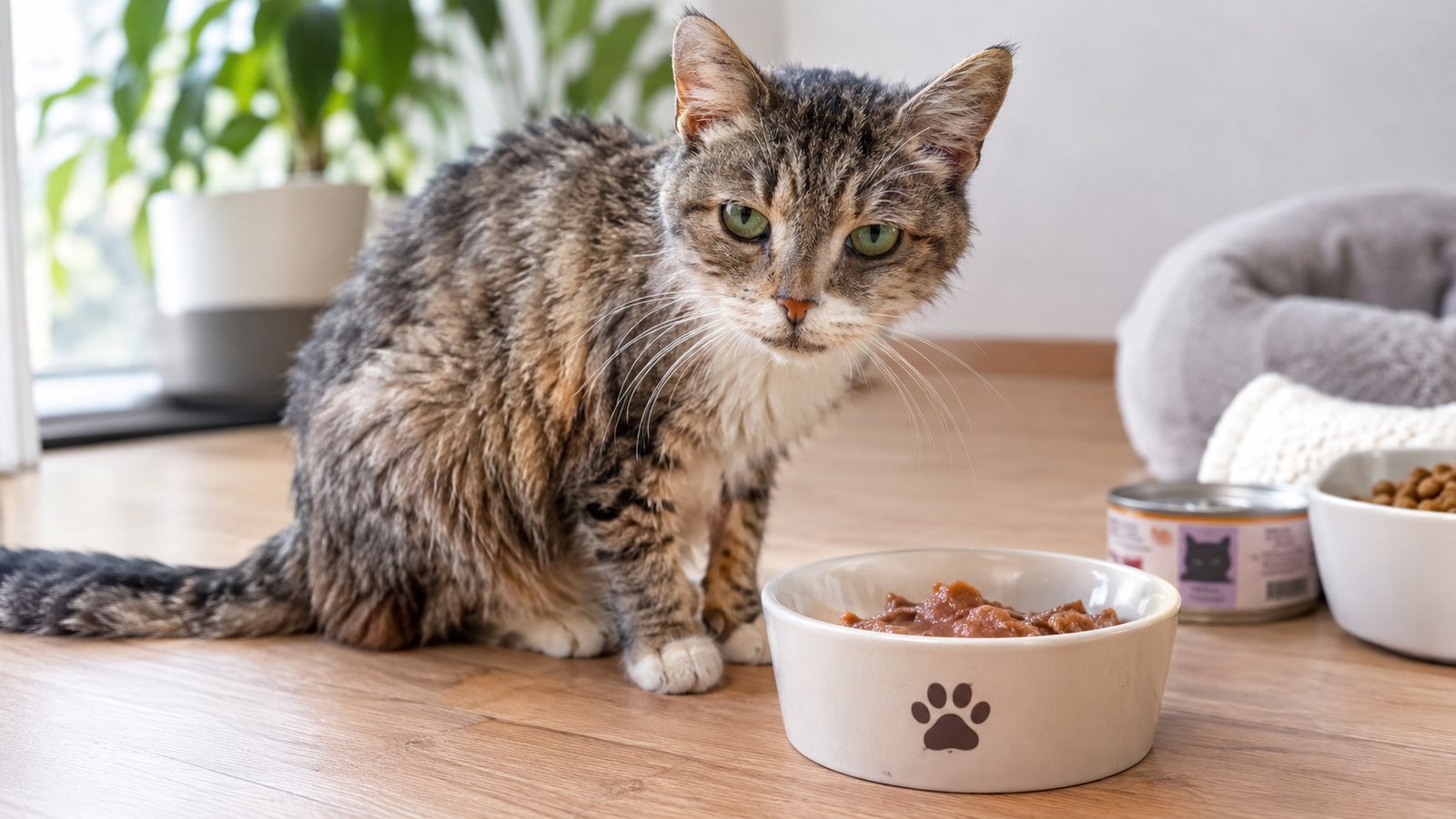
Seeing an older cat gradually lose weight can be worrying, especially when you are not sure whether the problem is simply aging, picky eating, or something more serious. Knowing what to feed an older cat that is losing weight starts with understanding why the weight is disappearing in the first place.
Senior cats can lose weight because of dental problems, reduced appetite, digestive issues, kidney disease, hyperthyroidism, diabetes, cancer, or other age-related health conditions. Food can help support healthy weight gain, but the right diet depends heavily on the cat’s individual health needs.
This guide explains what to feed an older cat that is losing weight, how to choose nutritious and appealing foods, how to make meals easier to eat, and which warning signs mean it is time to involve a veterinarian.
In This Article
What to Feed an Older Cat That Is Losing Weight: Start With the Cause, Not Just the Calories
Adding calories may seem like the obvious solution when an older cat becomes thin. The bigger question is why the cat is losing weight.
Senior cats can have a surprisingly good appetite while still becoming noticeably thinner. Others simply stop eating enough because food no longer smells appealing, chewing hurts, or an underlying illness is affecting their appetite or ability to use nutrients properly.
Why unexplained weight loss matters in senior cats
Some gradual changes are easy to overlook. You may notice that your cat still finishes meals but feels lighter when you pick them up, or that the spine, hips, and ribs seem more prominent.
Persistent weight loss deserves attention because several medical conditions become more common as cats age.
Possible causes include:
- Dental disease: Painful teeth or gums can make chewing uncomfortable, particularly with dry food.
- Hyperthyroidism: Older cats may lose weight despite having a strong or even increased appetite.
- Chronic kidney disease: Changes in appetite, hydration, muscle mass, and body weight can occur.
- Diabetes: Weight loss can accompany increased thirst and urination.
- Gastrointestinal disorders: Poor digestion, intestinal disease, or reduced nutrient absorption can affect body condition.
- Cancer: Some cancers cause appetite changes, weight loss, or muscle wasting.
- Pain or mobility problems: An uncomfortable cat may become less interested in walking to the food bowl or eating normally.
- Reduced sense of smell: Older cats can become less interested in food when its aroma is not strong enough.
Food should support the solution, not hide the problem. Feeding a more calorie-dense diet can be useful, but it should not replace investigating unexplained weight loss.
When should you call the veterinarian?
A small change on the scale may not seem dramatic, but repeated weight loss is more meaningful than a single measurement.
Arrange a veterinary examination if your older cat:
- Continues losing weight without an obvious reason
- Has a noticeably reduced appetite
- Eats normally but keeps getting thinner
- Suddenly becomes extremely hungry
- Drinks or urinates much more than usual
- Vomits frequently
- Develops persistent diarrhea or abnormal stools
- Has difficulty chewing or swallowing
- Becomes unusually tired or weak
- Shows changes in grooming or behavior
A senior cat that stops eating deserves prompt attention. Cats can develop serious complications when they go without adequate food, particularly when they are already ill or overweight.
A useful first step: track what is actually happening
Before changing several things at once, keep a simple record for several days.
Write down:
| What to monitor | What to record |
| Food | Type, brand, flavor, texture, and approximate amount |
| Appetite | Eager, normal, picky, or refusing |
| Weight | Regular measurements on the same scale |
| Water | Noticeable increase or decrease |
| Vomiting | Frequency and appearance |
| Stool | Frequency and consistency |
| Behavior | Energy, grooming, interaction, mobility |
This information can be extremely useful during a veterinary appointment because it gives you a clearer picture than simply saying, “My cat isn’t eating as much.”
What Should an Older Cat Eat to Gain Weight Safely?
Once serious medical problems have been considered, the next step is choosing food that provides enough nutrition without relying on empty calories.
The goal is healthy body condition, not simply putting more weight on the scale.
An older cat needs adequate protein, energy, essential nutrients, and hydration. The ideal balance can change when a cat has kidney disease, diabetes, gastrointestinal disease, or another diagnosed condition.
Prioritize complete and balanced nutrition
Look for a cat food that is formulated to provide complete and balanced nutrition for cats rather than relying heavily on treats, toppers, or human foods.
A good everyday diet should provide nutrients such as:
- High-quality protein
- Appropriate dietary fat
- Essential amino acids
- Taurine
- Essential fatty acids
- Vitamins and minerals
- Adequate moisture, particularly when wet food is used
Calories matter, but nutrient density matters too. A cat may gain weight from eating calorie-rich food, but that does not mean the diet is appropriate for long-term health.
Protein is particularly important for maintaining muscle
Weight loss in an older cat does not always mean losing only body fat. Senior cats can also lose muscle, which can leave them weaker and less mobile.
Adequate dietary protein helps support normal muscle maintenance. Cats are obligate carnivores, so animal-derived ingredients are an important part of their nutritional needs.
That does not mean every senior cat should automatically receive the highest-protein food available. Cats with certain medical conditions may require a diet with carefully controlled amounts of particular nutrients.
A veterinarian can help determine whether a standard high-quality senior diet or a therapeutic diet is more appropriate.
Choose foods that provide plenty of calories in a manageable portion
A cat with a poor appetite may not be able to eat a large volume of food.
Calorie-dense food can therefore be useful because it provides more energy in a smaller serving. This can be particularly helpful when an older cat seems interested in food but eats only a few bites at a time.
Try to look beyond marketing terms such as “premium,” “natural,” or “weight gain.” Compare the food’s nutritional information and consider how much your cat actually needs to consume to meet daily energy requirements.
What about kitten food for an older cat?
Kitten food is sometimes suggested because it tends to be energy-dense and highly palatable. It can occasionally be useful under veterinary guidance, particularly for a cat that needs extra calories temporarily.
Kitten food should not automatically become the long-term answer for every underweight senior cat.
An older cat may have a medical condition that requires a different nutritional profile. For example, a cat with kidney disease may need a veterinary therapeutic diet rather than simply a higher-calorie growth formula.
The underlying health problem should determine the diet whenever possible.
Don’t overlook hydration
Wet food can be especially useful for older cats because it contributes substantial moisture while also providing calories and nutrients.
Adequate water intake is particularly important for cats with certain urinary or kidney concerns, although individual medical needs vary.
Keep fresh water available in several convenient locations. Some cats also prefer wide, shallow bowls or water fountains, so experimenting with different setups can be worthwhile.
The Best Types of Food for a Senior Cat That Is Losing Weight
There is no single food that works for every aging cat. The best choice depends on appetite, chewing ability, medical conditions, body condition, and what the cat will actually eat consistently.
Calorie-dense wet cat food
Wet food is often an excellent starting point for an older cat that is losing weight.
Soft textures can be easier for cats with dental discomfort, while the strong aroma of canned food may encourage eating. Pâté, mousse, minced, and shredded varieties give you several textures to test.
Choose a complete and balanced food rather than relying on plain meat or homemade mixtures.
Senior cat formulas
Senior formulas can be useful for otherwise healthy older cats because they are designed with aging cats in mind.
Look for a diet that your cat enjoys and tolerates well rather than choosing a product solely because the package says “senior.”
Age-specific food is not automatically better if your cat refuses to eat it.
Highly palatable pâté or mousse
Cats that have become selective may prefer soft, smooth foods.
Pâté or mousse can also be easier to lick and swallow than larger chunks, which may matter when dental discomfort or reduced chewing ability is involved.
Try different textures one at a time rather than buying a large quantity of several unfamiliar foods.
Veterinary therapeutic diets
Therapeutic diets can be particularly important when weight loss is linked to an established disease.
Depending on the diagnosis, a veterinarian may recommend a specific nutritional approach for conditions involving:
- Kidneys
- Digestive health
- Blood glucose regulation
- Liver function
- Urinary health
- Food sensitivities
Do not switch a medically prescribed diet simply because another food appears more calorie-dense. The nutritional restrictions of the underlying disease may be more important than maximizing calories.
For broader guidance on feline nutrition and choosing an appropriate diet, the Cornell Feline Health Center’s nutrition resources provide useful educational information for cat owners.
Dry food versus wet food for a losing-weight senior cat
Both can have a place in a feeding plan, but wet food often has practical advantages for cats that are struggling with appetite or chewing.
| Food type | Potential advantage | Potential limitation |
| Wet food | High moisture, strong aroma, soft textures | Spoils more quickly after serving |
| Dry food | Convenient, calorie-dense, easy to portion | May be harder to chew for cats with dental problems |
| Mixed feeding | Provides flexibility and different textures | Requires monitoring total daily calories |
| Veterinary diet | Tailored to certain medical conditions | May require veterinary recommendation |
There is no universal rule that every senior cat should eat wet food exclusively. The most appropriate diet is one that meets the cat’s nutritional and medical needs while encouraging consistent eating.
Make the food more appealing without compromising the diet
Small changes can make a surprising difference when an older cat is becoming selective.
You can try:
- Gently warming wet food to increase its aroma
- Offering smaller portions more frequently
- Testing different approved textures
- Serving food in a quiet location
- Keeping bowls clean and fresh
- Using a shallow dish if whisker contact seems bothersome
- Offering food at predictable times
- Separating feeding areas if other pets create competition
Avoid making every meal increasingly elaborate with treats and human food. The long-term goal is to get your cat eating a nutritionally complete diet consistently, not to create a menu of increasingly tempting extras.
Why Wet Food Can Be a Game Changer for an Older Cat With Poor Appetite
Wet food can be particularly helpful when an aging cat is eating less than usual. Its moisture content, soft texture, and stronger aroma often make it more appealing than dry kibble, especially when a cat’s appetite or sense of smell has changed with age.
The best food is ultimately one your cat will reliably eat while still meeting their nutritional needs. A nutritionally complete wet food can provide calories and essential nutrients without requiring the cat to chew hard pieces.
Why older cats may prefer wet food
Senior cats can become more selective about texture and smell. Dental disease can also make crunchy food uncomfortable, even when the cat still appears interested in eating.
Wet food offers several potential advantages:
- Soft textures require less chewing
- Strong aromas can stimulate interest in food
- High moisture content contributes to daily fluid intake
- Different textures allow you to accommodate changing preferences
- Small portions can provide a useful amount of energy
Cats with painful teeth or inflamed gums may approach a bowl enthusiastically and then walk away after trying to eat. That behavior can sometimes be mistaken for simple fussiness.
A sudden preference for soft food can be a clue that something is making chewing uncomfortable.
Which wet food texture should you try?
Texture preferences can vary dramatically between cats. One senior cat may happily lick pâté from a bowl while another refuses anything except shredded meat in gravy.
You can experiment with:
- Smooth pâté
- Mousse
- Minced food
- Shredded meat
- Small chunks in gravy
- Moist loaf-style formulas
Make changes gradually whenever possible. Offering too many unfamiliar foods at once can make it difficult to determine what your cat actually prefers and may increase the risk of digestive upset.
Warm the food to make it more tempting
Slightly warming wet food can increase its aroma, which may encourage an older cat to investigate the bowl.
Place the appropriate portion in a microwave-safe dish and warm it briefly, then stir thoroughly and check the temperature before serving. The food should be comfortably warm rather than hot.
Never serve food that has hot spots from microwaving.
Another simple approach is to add a small amount of warm water and mix it thoroughly. This can soften the texture while creating a stronger-smelling, more appealing meal.
Feed smaller meals more often
A senior cat that struggles to finish a large serving may do better with several smaller meals.
Instead of putting a large portion down twice a day, divide the daily amount into three, four, or even more meals when your schedule allows.
Smaller meals can be easier to manage for cats with reduced appetite, nausea, or digestive sensitivity.
The important point is the total daily intake, not simply how large each individual meal looks.
Make the feeding environment comfortable
An older cat may also eat less because getting to the food is uncomfortable.
Consider whether your cat has difficulty:
- Walking to the feeding area
- Climbing stairs
- Bending down to a low bowl
- Eating around other pets
- Reaching a bowl placed in a busy area
A quiet, easily accessible feeding location can make meals less stressful.
Cats with arthritis or mobility limitations may appreciate having food, water, and resting areas located close together.
Keep food fresh
Cats can be sensitive to stale odors. Refrigerated leftovers should be stored appropriately, and uneaten wet food should not be allowed to sit out for extended periods.
Serve smaller portions if your cat tends to eat slowly. You can always offer another small serving later rather than allowing a large amount of food to sit untouched.
How Much Should You Feed an Older Cat That Is Losing Weight?
Knowing what to feed an older cat that is losing weight is only part of the equation. The amount your cat actually consumes matters just as much.
There is no single feeding quantity that works for every senior cat. Calorie requirements depend on body size, current body condition, activity level, metabolism, medical conditions, and whether the cat needs to maintain or regain weight.
Start with calories, not just cups or cans
Different foods can contain very different amounts of energy.
Two cans that look similar in size may provide substantially different calories. Dry food can also be much more calorie-dense than wet food.
Check the food packaging for its calorie content, which may be expressed as kcal per can, pouch, cup, or kilogram.
A veterinarian can help estimate an appropriate daily calorie target, particularly if your cat is significantly underweight or has an underlying disease.
Don’t rely blindly on the feeding chart
Feeding charts are useful starting points, but they are not individualized prescriptions.
A cat’s actual needs may be higher or lower than the package recommendation.
Monitor:
- Body weight
- Body condition
- Appetite
- Energy level
- Stool quality
- Muscle condition
- Changes in activity
If your cat continues losing weight despite following the recommended amount, increasing the portion without investigating the cause may not solve the problem.
Divide the daily food into several meals
Older cats that have a poor appetite often respond better to smaller, frequent meals.
A practical schedule might look like this:
| Time | Example approach |
| Morning | Main meal |
| Late morning | Small meal |
| Afternoon | Small meal |
| Evening | Main meal |
| Before bedtime | Small meal if needed |
The exact schedule is flexible. What matters is creating a routine that encourages enough food intake without overwhelming your cat with large portions.
Measure food consistently
Eyeballing portions makes it difficult to know whether your cat is actually eating more or less than before.
Use a measuring cup for dry food or a kitchen scale when practical. Wet food can also be divided into measured portions and stored appropriately between meals.
Tracking food intake for several days can reveal something that is otherwise easy to miss.
For example, a cat that appears to eat “normally” may actually be leaving a quarter of every meal behind.
Monitor weight regularly
Weight monitoring is one of the simplest ways to determine whether your feeding strategy is working.
For a small cat, even a modest change can be meaningful. Weigh your cat under similar conditions each time, such as at the same time of day and before a meal.
A pet scale is ideal, but smaller cats can sometimes be weighed using a household scale by first weighing yourself and then weighing yourself while holding the cat.
Do not focus solely on reaching a particular number. Healthy body condition and preservation of muscle are more important than simply maximizing body weight.
Avoid trying to make your cat gain weight too quickly
An underweight cat needs adequate nutrition, but aggressive feeding is not necessarily safer.
Cats that have eaten very little for a prolonged period can develop serious metabolic problems when nutrition is suddenly increased. A significantly underweight cat, particularly one that has stopped eating, should be assessed by a veterinarian rather than managed with a rapid home feeding program.
10 Appetite-Boosting Foods and Feeding Tricks for Senior Cats
Getting an older cat to eat can become frustrating when they sniff the bowl, take a few bites, and walk away.
Fortunately, several simple strategies can make meals more attractive without turning the diet into an unhealthy collection of treats.
1. Gently warm wet food
Warming food slightly can release more aroma and make it easier for your cat to notice.
This is particularly useful for cats whose appetite seems better when food smells strong.
2. Try different textures
Texture can matter just as much as flavor.
If your cat rejects chunks, try pâté. If pâté is ignored, shredded food may be worth testing.
Keep changes controlled so you can identify genuine preferences.
3. Offer small, frequent meals
A small amount of appealing food may seem less intimidating than a full bowl.
Frequent meals also give you more opportunities to encourage eating throughout the day.
4. Add a little warm water
A small amount of warm water can make wet food softer and more aromatic.
It can also increase moisture intake without introducing additional ingredients.
5. Use an appropriate food topper
A small amount of a cat-safe topper can sometimes encourage eating.
Suitable options should complement a complete diet rather than replace it. Excessive toppers can dilute essential nutrients or contribute too many calories from treats.
6. Try a different feeding dish
Some cats prefer shallow dishes that allow easy access to the food.
A wide plate can also be useful for cats that dislike having their whiskers brush against the sides of a narrow bowl.
7. Feed somewhere quiet
Noise, household activity, children, or other pets can make some cats uncomfortable while eating.
Give a nervous senior cat a peaceful feeding area where they can eat without being disturbed.
8. Keep meals predictable
Cats often benefit from routine.
Try feeding at approximately the same times each day. A predictable schedule can help an older cat anticipate meals and make it easier for you to notice changes in appetite.
9. Experiment with aroma
Strong-smelling foods are often more enticing than bland foods for cats with reduced appetite.
Wet food, gently warmed food, or approved gravies can provide stronger aromas than dry kibble.
Avoid adding salty sauces, seasoned meat, or human food simply to make the meal smell stronger.
10. Give attention without creating pressure
Some cats enjoy having their owner nearby while they eat. Others prefer complete privacy.
Watch your cat’s behavior and adjust accordingly.
Never force food into a reluctant cat’s mouth unless a veterinarian has specifically instructed you how to do so. Force-feeding can create food aversion and may also carry a risk of aspiration.
What about treats when your cat is losing weight?
Treats can be useful as an occasional appetite aid, but they should not become the main source of calories.
When an older cat is underweight, it may be tempting to offer favorite treats throughout the day because they are one of the few things the cat eagerly accepts.
The problem is that treats generally do not provide the complete nutritional balance needed for a daily diet.
Use treats strategically and keep the majority of calories coming from a nutritionally complete cat food.
A simple appetite-support routine
A practical approach could look like this:
- Offer a small portion of complete wet food.
- Warm it gently if your cat prefers stronger aromas.
- Place it in a clean, shallow dish.
- Feed in a quiet location.
- Give your cat time to approach without pressure.
- Remove uneaten food appropriately rather than leaving it out indefinitely.
- Record approximately how much was eaten.
- Repeat with another small meal later.
If appetite remains poor despite these strategies, don’t keep experimenting with foods indefinitely. Persistent appetite loss or weight loss is a reason to look for an underlying medical problem.
What If Your Older Cat Is Eating but Still Losing Weight?
One of the most confusing situations for cat owners is watching an older cat eat normally—or even seem constantly hungry—while their body becomes thinner.
Eating does not always mean that a cat is getting or using enough nutrition. Certain diseases can increase appetite while causing weight loss, while other conditions can interfere with digestion, nutrient absorption, or normal metabolism.
Weight loss despite a good appetite is a warning sign
Hyperthyroidism is one well-known example. Older cats with this condition may lose weight even though they continue eating enthusiastically.
Diabetes can also cause weight loss, particularly when increased thirst and urination occur at the same time.
Other possibilities include gastrointestinal disease, intestinal parasites, pancreatic problems, cancer, or other metabolic disorders.
The important point is not to diagnose the cause at home.
If your senior cat keeps losing weight despite eating adequately, schedule a veterinary examination rather than simply increasing the amount of food.
Watch for changes beyond the food bowl
Weight loss becomes more significant when it appears alongside other changes.
Pay attention to:
- Increased thirst
- More frequent urination
- Vomiting
- Diarrhea or abnormal stools
- Increased hunger
- Reduced appetite
- Restlessness or unusual activity
- Weakness or lethargy
- Poor grooming
- Changes in coat quality
- Difficulty jumping or walking
- Hiding more than usual
- Bad breath or difficulty chewing
Keeping track of these changes can help your veterinarian understand the bigger picture.
Why a veterinary check matters
A veterinarian may recommend a physical examination and diagnostic testing depending on your cat’s age, symptoms, and history.
Possible evaluations can include blood tests, urine testing, dental examination, blood pressure measurement, or other diagnostic procedures.
The purpose is to identify whether the weight loss is related to a condition requiring specific treatment or dietary management.
The right food for a healthy senior cat may be completely different from the right food for a senior cat with kidney disease, diabetes, hyperthyroidism, or gastrointestinal problems.
Don’t assume more food will fix unexplained weight loss
Increasing portions can be reasonable when a healthy cat simply needs additional calories, but persistent weight loss needs a more careful approach.
For example, a cat with an underlying disease may need medication, a therapeutic diet, dental treatment, or another intervention before their body condition improves.
Trying several high-calorie foods without investigating the problem can delay appropriate care.
Foods to Avoid When an Older Cat Is Losing Weight
When a senior cat becomes thin, the temptation is to offer anything they will eat.
That instinct is understandable, but not every calorie is a good calorie. A diet based heavily on treats, table scraps, or nutritionally incomplete foods can create new problems while failing to provide the nutrients an aging cat needs.
Don’t rely on treats as the main source of calories
Treats can be useful for encouragement, but they should remain a relatively small part of the overall diet.
A cat may happily eat treats while refusing its regular food, creating the impression that the appetite is fine.
The problem is that most treats are not formulated to serve as a complete daily diet.
If your cat will only eat treats, consider that a potential appetite problem rather than a successful feeding strategy.
Avoid unbalanced homemade diets
Plain cooked chicken, fish, beef, or other meats may seem like an excellent way to add protein.
These foods can sometimes be used as small additions, but meat alone does not provide everything a cat needs for long-term nutrition.
Cats require carefully balanced amounts of essential amino acids, vitamins, minerals, fatty acids, and other nutrients.
A homemade diet intended to replace commercial cat food should be formulated with appropriate veterinary nutritional guidance rather than assembled from a few ingredients.
Be careful with human foods
Some human foods are unsafe for cats, while others may be too salty, fatty, seasoned, or nutritionally inappropriate.
Never intentionally feed foods containing ingredients known to be toxic to cats, including:
- Onions
- Garlic
- Chives
- Certain artificial sweeteners
- Alcohol
- Chocolate
- Excessively salty foods
Fatty or heavily seasoned leftovers can also cause digestive problems.
Weight gain should never come at the expense of food safety.
Don’t switch diets repeatedly
A cat that is losing weight may need a dietary change, but changing food every few days can make the situation harder to manage.
Frequent changes can cause digestive upset and make it difficult to determine which food your cat tolerates well.
Whenever a rapid dietary change is not medically necessary, transition gradually by mixing increasing amounts of the new food with the previous diet.
Cats with significant appetite loss may require a different approach under veterinary supervision.
Avoid unnecessary supplements
Pet stores offer numerous products marketed for weight gain, appetite, digestion, joints, immunity, or senior wellness.
More supplements do not necessarily mean better nutrition.
Some supplements can interact with medications or provide excessive amounts of certain nutrients.
Ask your veterinarian before adding supplements to a senior cat’s diet, particularly when the cat has an established medical condition.
Raw diets require extra caution
Raw diets can carry food-safety concerns and may not provide balanced nutrition unless carefully formulated.
An older cat with a weakened immune system or an underlying illness may be particularly vulnerable to complications from foodborne pathogens.
If you are considering a raw or homemade diet for a senior cat that is losing weight, discuss the plan with a veterinarian or qualified veterinary nutrition professional first.
A simple “better choice or avoid?” guide
| Food or approach | Better choice? | Why |
| Complete and balanced wet cat food | Yes | Provides essential nutrients and can be highly palatable |
| Veterinary therapeutic diet | When prescribed | Designed around specific medical needs |
| Plain cooked meat as a small topper | Sometimes | Can encourage eating but should not replace a balanced diet |
| Cat treats | Limited | Useful for encouragement but nutritionally incomplete |
| Seasoned table scraps | No | May contain unsafe or inappropriate ingredients |
| Meat-only homemade diet | No as a complete diet | Can be nutritionally deficient |
| Random supplements | Usually avoid | May be unnecessary or inappropriate |
| Raw food | Requires careful consideration | Food safety and nutritional balance can be concerns |
Senior Cat Feeding Mistakes That Can Make Weight Loss Worse
Helping an older cat regain weight can feel like trial and error. Some common approaches, however, can unintentionally make the situation more difficult.
Mistake: Assuming weight loss is normal because your cat is old
Older age does not automatically make significant weight loss normal.
Senior cats can experience changes in muscle mass and body condition, but unexplained or ongoing weight loss deserves attention.
“She’s just getting old” should not be the final explanation without considering possible medical causes.
Mistake: Focusing only on the number on the scale
Weight is important, but it is only one part of the picture.
A cat can gain some weight while still having poor muscle condition. Conversely, a small change in weight may be less concerning if body condition and overall health remain stable.
Look at the whole cat:
- Can you easily feel the ribs?
- Are the spine and hip bones becoming prominent?
- Is muscle disappearing from the hind legs or shoulders?
- Has the coat become less healthy?
- Is your cat still active?
- Has grooming behavior changed?
Body condition and muscle mass provide valuable context.
Mistake: Offering too many different foods at once
Variety can help a picky cat, but excessive experimentation can backfire.
Imagine opening five different cans, adding several toppers, offering treats, and changing the feeding schedule all in the same week. If your cat develops diarrhea or refuses food, you will have no clear idea which change caused the problem.
Introduce changes methodically whenever possible.
Mistake: Choosing food based only on calorie content
A calorie-dense food may sound ideal for an underweight cat.
However, the highest-calorie food is not automatically the healthiest food for every senior cat.
Medical conditions can affect protein, phosphorus, fat, carbohydrate, sodium, and other nutritional considerations.
The diet should match the cat’s overall health rather than simply maximize calories.
Mistake: Ignoring dental problems
Dental disease is particularly easy to overlook because cats are experts at hiding discomfort.
Watch for:
- Dropping food while chewing
- Chewing on one side
- Pawing at the mouth
- Bad breath
- Drooling
- Avoiding dry food
- Swallowing food without chewing
- Walking away from meals after attempting to eat
A cat that suddenly prefers soft food may not simply have developed a new taste preference.
Painful teeth can make eating difficult even when appetite remains normal.
Mistake: Waiting until the cat looks extremely thin
Weight loss is easier to address when the underlying problem is identified early.
Regular weighing can help you notice a gradual decline before the change becomes visually obvious.
This is particularly useful for senior cats because changes in muscle and body condition can happen gradually.
Mistake: Measuring success only by how enthusiastically your cat eats
A cat that suddenly becomes extremely hungry may appear to be improving.
If the cat continues losing weight, however, increased appetite may actually be an important symptom.
Look at food intake, body weight, thirst, urination, stool, energy, and behavior together.
Mistake: Making feeding stressful
Repeatedly moving the bowl, hovering over the cat, coaxing constantly, or forcing food can make mealtimes unpleasant.
Create a calm environment and allow the cat to approach food at their own pace.
Gentle encouragement is useful. Pressure is not.
A better approach for senior cats losing weight
Instead of reacting to every missed meal with another food change, use a more organized strategy:
- Track the weight.
- Record daily food intake.
- Observe appetite and eating behavior.
- Check for dental or chewing problems.
- Watch for increased thirst, urination, vomiting, diarrhea, or behavior changes.
- Choose a complete and balanced food appropriate for the cat’s health.
- Offer smaller, appealing meals when needed.
- Arrange veterinary evaluation for persistent or unexplained weight loss.
The goal is not simply to make an older cat eat more. The goal is to help the cat eat enough of the right food while identifying and addressing whatever is causing the weight loss.
Choosing Between Senior Cat Food, High-Calorie Food, and Veterinary Diets
Choosing food for an older cat that is losing weight can become confusing because different products make different promises. One bag may emphasize senior nutrition, another may highlight high calories, while a veterinary diet may focus on kidney, digestive, or urinary health.
The best option depends on why your cat is losing weight, not simply how thin they look.
Senior cat food: best for some healthy aging cats
A quality senior formula can be appropriate for an older cat that is otherwise healthy and needs a nutritionally balanced maintenance diet.
These foods may be formulated with considerations for aging cats, such as digestibility, protein, calorie density, and other nutritional factors.
Senior food can be a sensible choice when:
- Your cat has no diagnosed condition requiring a therapeutic diet
- Appetite is reasonably normal
- Body condition is only mildly below ideal
- The food is complete and balanced
- Your cat enjoys eating it consistently
Age alone does not mean every cat needs a special formula. Individual health and nutritional requirements matter more than the label on the package.
High-calorie food: useful when calories are the limiting factor
Calorie-dense food can help when a cat needs more energy but struggles to eat large portions.
This approach may be useful for a cat that:
- Eats only small meals
- Has a reduced appetite
- Needs to regain some body condition
- Prefers small portions
- Is otherwise healthy or has been cleared for the diet by a veterinarian
High-calorie food is not a universal solution. Certain medical conditions require dietary restrictions that can make an ordinary high-calorie formula inappropriate.
Veterinary therapeutic diets: when disease changes the equation
A therapeutic diet may be more important than calorie density when weight loss is associated with a diagnosed disease.
For example, cats with chronic kidney disease may need a diet formulated around specific nutritional considerations. Cats with diabetes, gastrointestinal disorders, urinary conditions, or food sensitivities may have different requirements.
A therapeutic diet can therefore seem less appealing on paper but be much more appropriate for the individual cat.
Quick comparison
| Diet type | Best suited for | Main consideration |
| Senior cat food | Generally healthy older cats | Choose complete, balanced nutrition your cat enjoys |
| Calorie-dense food | Cats needing more energy in smaller portions | Medical conditions may affect whether it is appropriate |
| High-protein food | Cats needing support for muscle maintenance | Protein needs should be considered alongside overall health |
| Veterinary therapeutic food | Cats with diagnosed medical conditions | Ideally selected with veterinary guidance |
| Homemade diet | Specific situations under professional guidance | Must be nutritionally balanced |
Don’t change a therapeutic diet without guidance
If your cat has already been diagnosed with a medical condition and is eating a veterinary diet, talk with the veterinarian before switching foods simply because your cat is losing weight.
The weight loss may mean the disease needs better management, the cat is not eating enough of the prescribed food, or another problem has developed.
Diet and medical treatment need to work together.
A Simple Feeding Plan for an Older Cat Losing Weight
Once your cat has been evaluated and you know what type of food is appropriate, creating a predictable routine can make feeding much easier.
A senior cat with a small appetite may do better with several modest meals instead of one or two large servings.
Example daily feeding schedule
This is a general example rather than a fixed prescription:
Morning: Offer a measured portion of complete wet food.
Late morning: Provide a smaller meal if your cat prefers frequent feeding.
Afternoon: Offer another measured portion and check how much of the previous meal was eaten.
Evening: Serve another main meal.
Before bedtime: Offer a small additional meal if your veterinarian agrees that extra calories are appropriate.
The total amount should be based on your cat’s nutritional needs rather than simply adding unlimited food at every feeding.
Make the routine easy to follow
Consistency makes it easier to determine whether the feeding plan is actually working.
Keep a simple record showing:
- What food was offered
- How much was served
- Approximately how much was eaten
- Any treats or toppers
- Body weight
- Appetite
- Vomiting or diarrhea
- Changes in behavior
A basic notebook or phone note can be enough.
Transition to a new food carefully
When your cat is eating reliably, gradual transitions are generally preferable.
You can begin by mixing a small amount of the new food with the current food and slowly increase the new proportion over several days.
The process may need to be adjusted for particularly sensitive cats.
Do not let a lengthy food transition result in a cat refusing to eat. When appetite is already poor, getting adequate nutrition becomes the immediate priority, and veterinary guidance may be necessary.
What if your cat refuses the new food?
Don’t assume refusal means the food is nutritionally unsuitable.
Cats can reject a new food because of its smell, texture, temperature, bowl, location, or simply because it is unfamiliar.
Try changing one variable at a time.
For example, you might offer the same food slightly warmed in a shallow dish rather than immediately switching to another brand.
Persistent refusal, however, should not be managed indefinitely through food experimentation.
Related Senior Cat Nutrition: How to Protect Muscle While Supporting Healthy Aging
Helping an older cat gain weight is not just about increasing body fat.
Maintaining muscle is one of the most important nutritional goals during aging.
Senior cats can gradually lose lean muscle mass, particularly when they are inactive, chronically ill, or not consuming enough protein and calories.
Why muscle condition matters
Muscle supports movement, strength, balance, and everyday activities such as jumping onto furniture or climbing stairs.
A cat may technically gain weight while remaining weak if the weight gain does not reflect healthy body composition.
Look for changes around the:
- Spine
- Shoulders
- Hips
- Thighs
- Hind legs
Prominent bones combined with visibly reduced muscle can indicate that your cat needs more than simply additional calories.
Support muscle with appropriate nutrition
Cats need adequate protein to maintain normal tissues and muscle.
A complete diet containing high-quality protein sources can help provide the amino acids required for normal body maintenance.
Older cats should not automatically be placed on a low-protein diet simply because they are old. Protein recommendations should be individualized when kidney disease or another medical condition is present.
Your veterinarian can help determine the appropriate nutritional balance.
Gentle activity can complement good nutrition
Nutrition is only one part of maintaining an older cat’s body condition.
Age-appropriate activity can help support muscle and mobility when the cat is physically capable of exercising.
Short play sessions with a favorite toy, gentle climbing opportunities, or food puzzles can provide movement and mental stimulation.
Avoid pushing an elderly or painful cat into strenuous activity. Arthritis and other mobility problems are common reasons an older cat may become less active.
Make healthy eating easier for an aging body
Simple environmental changes can help.
Keep food and water easily accessible, particularly if your cat has difficulty climbing stairs.
Multiple feeding and water stations may be useful in a larger home.
A comfortable resting area near the feeding area can also reduce unnecessary travel for cats with mobility problems.
When Weight Loss in an Older Cat Is an Emergency
Not every case of weight loss requires an emergency visit, but certain symptoms should never be ignored.
A senior cat that suddenly stops eating, becomes severely weak, or develops serious symptoms needs prompt veterinary attention.
Warning signs that need urgent attention
Contact a veterinarian promptly if your cat experiences:
- Complete refusal of food
- Severe lethargy or weakness
- Repeated vomiting
- Persistent or severe diarrhea
- Difficulty breathing
- Collapse
- Severe dehydration
- Sudden difficulty walking
- Significant changes in consciousness or responsiveness
- Yellow discoloration of the gums, eyes, or skin
- Rapid or substantial unexplained weight loss
Cats can become seriously ill when they consume too little food for an extended period.
Why appetite loss can become dangerous
Cats are not designed to tolerate prolonged periods of inadequate nutrition.
When a cat stops eating, the body begins using stored energy. Under certain circumstances, particularly in overweight cats, excessive fat accumulation in the liver can contribute to a potentially serious condition called hepatic lipidosis.
That is one reason “wait and see” is not always appropriate when a cat completely stops eating.
A veterinarian can determine whether appetite support, medication, nutritional intervention, or treatment of an underlying condition is needed.
Don’t wait for dramatic symptoms
A cat does not need to look critically ill before you seek professional advice.
A senior cat that has been gradually losing weight over several weeks may benefit from evaluation even if they are still walking around, eating, and behaving relatively normally.
Early investigation can make it easier to identify problems before they become more difficult to manage.
FAQ: What to Feed an Older Cat That Is Losing Weight
What is the best food for an old cat that is losing weight?
There is no single best food for every senior cat. A complete and balanced, highly palatable food with adequate calories and protein may help a healthy older cat, while cats with conditions such as kidney disease or diabetes may need a specific veterinary diet.
Should I give my senior cat kitten food to gain weight?
Kitten food can be calorie-dense and may sometimes be useful under veterinary guidance, but it is not automatically the best choice for an older cat. The underlying reason for weight loss should be considered before making the switch.
Is wet or dry food better for an underweight older cat?
Wet food can be especially helpful because it provides moisture, has a strong aroma, and comes in soft textures that may be easier for older cats to eat. Dry food can also be appropriate when a cat prefers it and can chew comfortably.
How can I make my elderly cat eat more?
Try smaller, more frequent meals, gently warming wet food, experimenting with appropriate textures, keeping the feeding area quiet, and using a shallow clean dish. Persistent appetite loss should be discussed with a veterinarian.
How many times a day should I feed a senior cat that is losing weight?
Many cats do well with two or more meals daily, while a cat with a poor appetite may benefit from several smaller meals. The total daily calorie intake matters more than following one universal feeding schedule.
What should I feed an old cat that is losing weight but still eating?
Continue providing a complete and balanced diet while arranging a veterinary evaluation if the weight loss continues. Weight loss despite eating can be associated with conditions such as hyperthyroidism, diabetes, gastrointestinal disease, or other health problems.
Can high-protein food help an older cat gain weight?
Adequate protein can help support muscle maintenance, but the ideal amount depends on the individual cat. Cats with certain medical conditions may require a carefully formulated diet rather than simply choosing the highest-protein food available.
When should weight loss in a senior cat become a concern?
Any unexplained or ongoing weight loss deserves attention, particularly when it occurs alongside appetite changes, increased thirst, increased urination, vomiting, diarrhea, weakness, behavioral changes, or difficulty chewing.
Feed the Cat, Not Just the Weight
Knowing what to feed an older cat that is losing weight is important, but the food itself is only part of the solution.
A senior cat needs enough calories and appropriate nutrients, yet unexplained weight loss can be a sign that something else is happening beneath the surface. Dental disease, thyroid problems, diabetes, kidney disease, digestive disorders, and other conditions can all affect body weight and appetite.
Start by monitoring your cat’s weight, food intake, appetite, and behavior. Choose a complete and balanced food that your cat enjoys, make meals easy and comfortable to eat, and avoid relying heavily on treats or nutritionally incomplete foods.
Most importantly, don’t ignore continued weight loss simply because your cat is getting older. If your senior cat keeps becoming thinner, eats poorly, or develops other changes in health, arrange a veterinary examination.
With the right combination of medical care, appropriate nutrition, and a feeding routine tailored to your cat, you can give an aging companion a much better chance of maintaining strength, comfort, and quality of life.