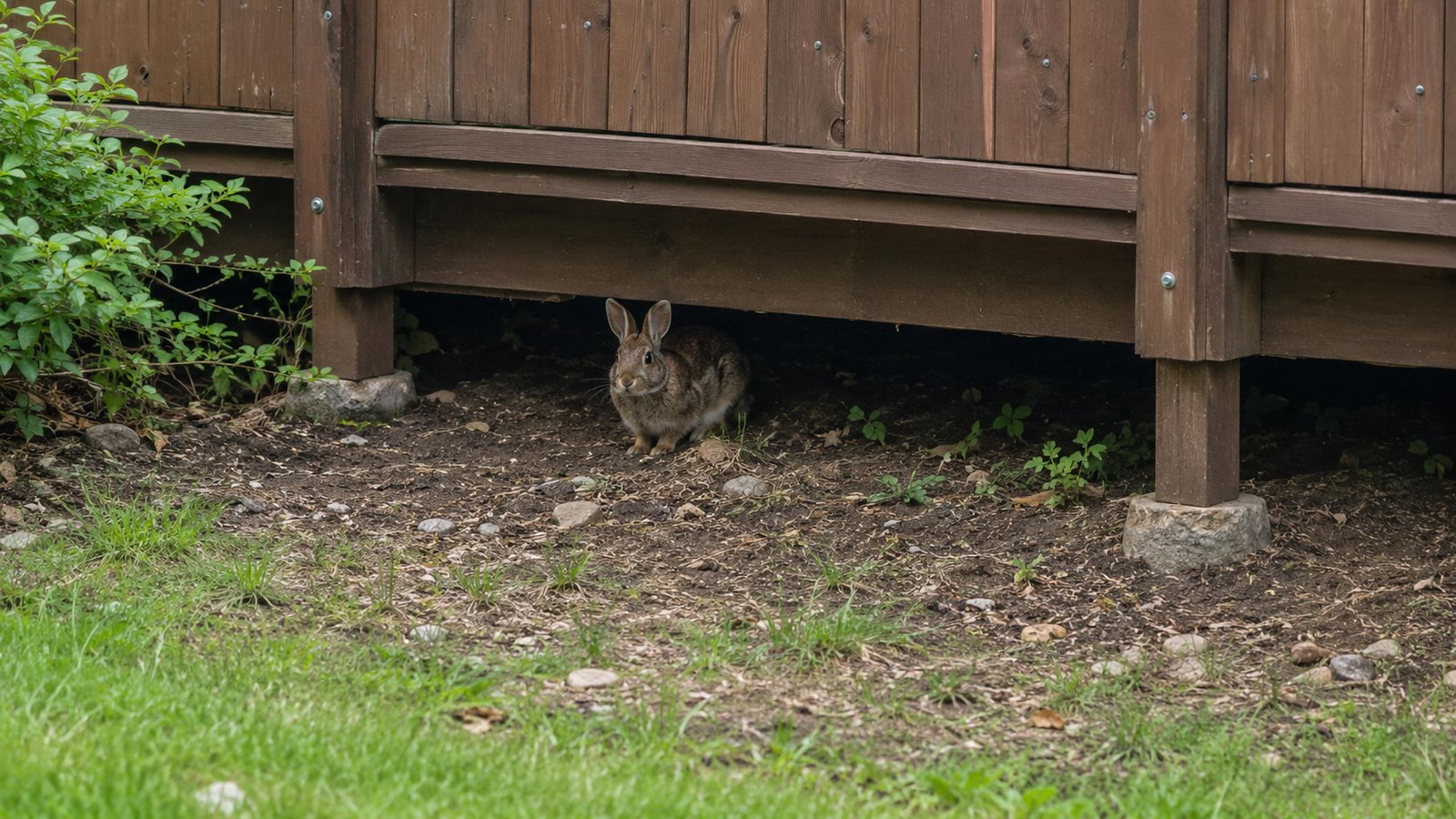
Rabbits living under a deck can quickly turn from a harmless sight into an ongoing nuisance. They dig shallow burrows, chew garden plants, leave droppings, and often return year after year if the shelter remains accessible. The good news is that you can remove rabbits safely and prevent them from coming back without harming them or damaging your property.
The most effective way to get rid of rabbits under a deck is to confirm the rabbits are no longer nesting, remove food and hiding spots, install an underground barrier around the deck, and use humane deterrents to discourage return visits.
This guide explains exactly how to identify rabbit activity, safely remove them, block future access, and avoid common mistakes homeowners make.
In This Article
Why Rabbits Choose to Live Under Decks
Decks create an ideal rabbit shelter because they provide:
- Shade and protection from predators
- Dry ground during rain
- Quiet nesting areas
- Easy access to nearby gardens or lawns
- Warmth during colder months
Female rabbits often choose areas under decks for nesting because the space feels secure and hidden. A single rabbit family can eventually attract more rabbits if conditions stay favorable.
Signs You Have Rabbits Under Your Deck
Before taking action, make sure rabbits are actually the animals using the space.
Common Signs of Rabbit Activity
- Small round droppings scattered nearby
- Shallow burrows or dug-out soil
- Chewed grass, flowers, or vegetable plants
- Fur caught on fencing or wood
- Narrow pathways through grass
- Sightings during dawn or dusk
How Rabbit Burrows Look
Rabbit nesting holes are usually:
- Shallow rather than deep
- About 4–6 inches wide
- Hidden near edges or corners
- Lined with grass or fur
Unlike rats or groundhogs, rabbits rarely create large tunnel systems.
Quick Summary: Best Ways to Remove Rabbits Under a Deck
| Method | Effectiveness | Best For |
| Install hardware cloth barrier | Very high | Long-term prevention |
| Remove food sources | High | Preventing return visits |
| Use humane repellents | Moderate | Mild rabbit problems |
| Motion-activated sprinklers | High | Open yards and gardens |
| Close access points | Very high | Permanent solution |
| Live trapping | Limited | Only where legal and necessary |
Step-by-Step: How to Get Rid of Rabbits Under a Deck
Step 1: Check for Baby Rabbits First
Before sealing the area, inspect carefully for nests.
Baby rabbits are often hidden in:
- Grass-lined depressions
- Fur-covered nests
- Shallow holes near deck edges
A mother rabbit may only return a few times daily, so an apparently abandoned nest may still be active.
Important Tip
Never block access if babies are present. Wait until the young rabbits leave naturally, which usually happens within 3–4 weeks.
Step 2: Encourage Rabbits to Leave Naturally
The safest and easiest approach is making the area less attractive.
Reduce Shelter Comfort
Try these humane disturbances:
- Place bright lights under the deck at night
- Use a battery-powered radio during daytime hours
- Introduce mild activity near the deck
- Remove brush piles and tall weeds nearby
Rabbits prefer quiet, hidden locations. Consistent disturbance often encourages them to relocate.
Step 3: Remove Food Sources
If rabbits find easy food nearby, they are more likely to stay.
Common Rabbit Food Sources
- Vegetable gardens
- Clover patches
- Bird seed on the ground
- Newly planted flowers
- Bark from shrubs and trees
How to Reduce Attraction
- Clean fallen bird seed regularly
- Use raised garden beds
- Trim overgrown vegetation
- Install fencing around vegetables
- Avoid leaving pet food outdoors
Step 4: Use Rabbit Repellents
Repellents work best alongside exclusion methods rather than alone.
Types of Rabbit Repellents
Scent Repellents
These use odors rabbits dislike, such as:
- Garlic
- Predator urine
- Putrescent egg solids
- Peppermint oils
Taste Repellents
Applied to plants to discourage chewing.
Natural Rabbit Deterrents
Some homeowners use:
- Cayenne pepper sprays
- Vinegar-soaked rags
- Garlic-water mixtures
Natural solutions may help temporarily but usually require frequent reapplication after rain.
Step 5: Install a Barrier Around the Deck
Exclusion is the most reliable long-term solution.
Best Material to Use
Use galvanized hardware cloth with:
- 1/4-inch or 1/2-inch mesh
- Rust-resistant coating
- Strong metal construction
Chicken wire is less effective because rabbits can sometimes squeeze through or dig beneath it.
How to Install It Properly
- Dig a trench around the deck perimeter
- Make the trench about 6–12 inches deep
- Attach hardware cloth to the deck base
- Extend mesh underground
- Bend the bottom outward in an L-shape for extra digging protection
- Cover with soil
This prevents rabbits from burrowing underneath.
Step 6: Seal All Entry Points
After rabbits leave, close every access point completely.
Areas to Inspect
- Gaps between deck boards
- Corners near stairs
- Spaces around lattice panels
- Loose skirting
Even small openings can allow rabbits to return.
Step 7: Add Motion Deterrents
Motion devices help reinforce your prevention efforts.
Effective Options
- Motion-activated sprinklers
- Ultrasonic animal deterrents
- Solar-powered flashing lights
Sprinklers tend to work better because rabbits react strongly to sudden movement and water.
Humane Rabbit Removal vs. Trapping
Many people consider trapping, but it is not always the best solution.
When Trapping May Help
Live trapping may be useful if:
- One rabbit repeatedly returns
- Exclusion methods fail
- Local laws allow relocation
Problems With Trapping
- Relocated rabbits may not survive
- New rabbits often move in afterward
- Stress can injure trapped animals
- Some areas restrict wildlife relocation
For most homeowners, exclusion and habitat modification are more effective than trapping.
How to Keep Rabbits From Coming Back
Removing rabbits is only half the job. Preventing future infestations matters most.
Long-Term Prevention Strategies
Maintain Short Grass
Tall grass gives rabbits cover from predators.
Use Deck Skirting
Proper skirting limits hiding opportunities while improving appearance.
Fence Gardens Properly
Rabbit fencing should:
- Be at least 2 feet tall
- Extend underground several inches
- Use small mesh openings
Reduce Dense Landscaping
Heavy shrubs and ground cover near the deck create ideal shelter.
Best Plants to Discourage Rabbits
Some plants are less attractive to rabbits because of their smell or texture.
Rabbit-Resistant Plants
- Lavender
- Marigolds
- Rosemary
- Sage
- Daffodils
- Salvia
No plant is completely rabbit-proof, especially when food is scarce, but these are less commonly eaten.
Common Mistakes Homeowners Make
Sealing the Deck Too Early
Blocking access while rabbits or babies remain inside can create serious odor and sanitation issues.
Using Poison
Poison is dangerous for:
- Pets
- Children
- Birds of prey
- Other wildlife
It is also inhumane and often illegal for wildlife control.
Ignoring Nearby Shelter
If brush piles, weeds, or garden debris remain nearby, rabbits may simply relocate a few feet away.
Relying Only on Repellents
Repellents fade quickly and rarely solve the problem alone.
Are Rabbits Under a Deck Dangerous?
Rabbits are generally not aggressive, but they can still create problems.
Potential Issues
- Damage to gardens and landscaping
- Fleas or ticks
- Burrowing near foundations
- Attraction of predators
- Repeated nesting cycles
Most risks are nuisance-related rather than dangerous to humans.
When to Call a Professional
You may need professional wildlife removal if:
- Rabbits repeatedly return
- Burrows are extensive
- You suspect another animal is involved
- The deck structure is damaged
- Local wildlife regulations are complicated
A wildlife control expert can identify the species and recommend legal removal methods.
DIY vs. Professional Rabbit Removal
| Option | Pros | Cons |
| DIY exclusion | Affordable and effective | Requires labor |
| Repellents | Easy to apply | Temporary results |
| Professional service | Expert assessment | Higher cost |
| Trapping | Can remove individual rabbits | Limited long-term success |
Seasonal Rabbit Activity Around Decks
Spring
This is peak nesting season. Mothers often search for quiet protected spaces.
Summer
Young rabbits begin exploring and feeding heavily on gardens.
Fall
Rabbits look for sheltered overwintering areas.
Winter
Decks provide warmth and protection from snow and wind.
Understanding seasonal behavior helps homeowners act before rabbits establish nests.
Best Practices for Rabbit-Proofing a Deck
Use Multiple Methods Together
The best results come from combining:
- Habitat modification
- Exclusion barriers
- Repellents
- Motion deterrents
Inspect Your Yard Regularly
Early signs are easier to manage before rabbits settle in.
Prioritize Humane Solutions
Humane exclusion protects both wildlife and your property.
FAQ About Rabbits Under Decks
How do I know if rabbits are still under my deck?
Look for fresh droppings, new digging activity, fur, or sightings during early morning and evening hours. You can also lightly cover entry holes with loose soil and check for new tracks the next day.
Will rabbits leave on their own?
Sometimes. Rabbits often relocate if the area becomes noisy, exposed, or lacks food sources. However, if conditions remain ideal, they may stay and breed.
What smell keeps rabbits away?
Rabbits dislike strong scents such as garlic, vinegar, peppermint, and predator odors. Commercial repellents often combine several scent deterrents for better effectiveness.
Can rabbits damage my deck foundation?
Rabbits usually cause minor structural damage compared to larger burrowing animals, but repeated digging can loosen soil and create drainage problems over time.
What is the best barrier to stop rabbits from digging?
Galvanized hardware cloth buried 6–12 inches underground is one of the most effective rabbit barriers for decks and gardens.
Are rabbits active at night?
Rabbits are most active at dawn and dusk, although they may occasionally move around at night if the area feels safe.
Final Thoughts on How to Get Rid of Rabbits Under a Deck
Learning how to get rid of rabbits under a deck starts with understanding why they choose the space in the first place. Decks offer safety, shelter, and easy access to food, making them attractive nesting areas.
The most effective long-term solution combines humane removal, food-source reduction, and a properly installed underground barrier. Repellents and motion deterrents can help, but exclusion is what truly prevents rabbits from returning.
By acting early and sealing access points correctly, you can protect your deck, garden, and landscaping without harming local wildlife.