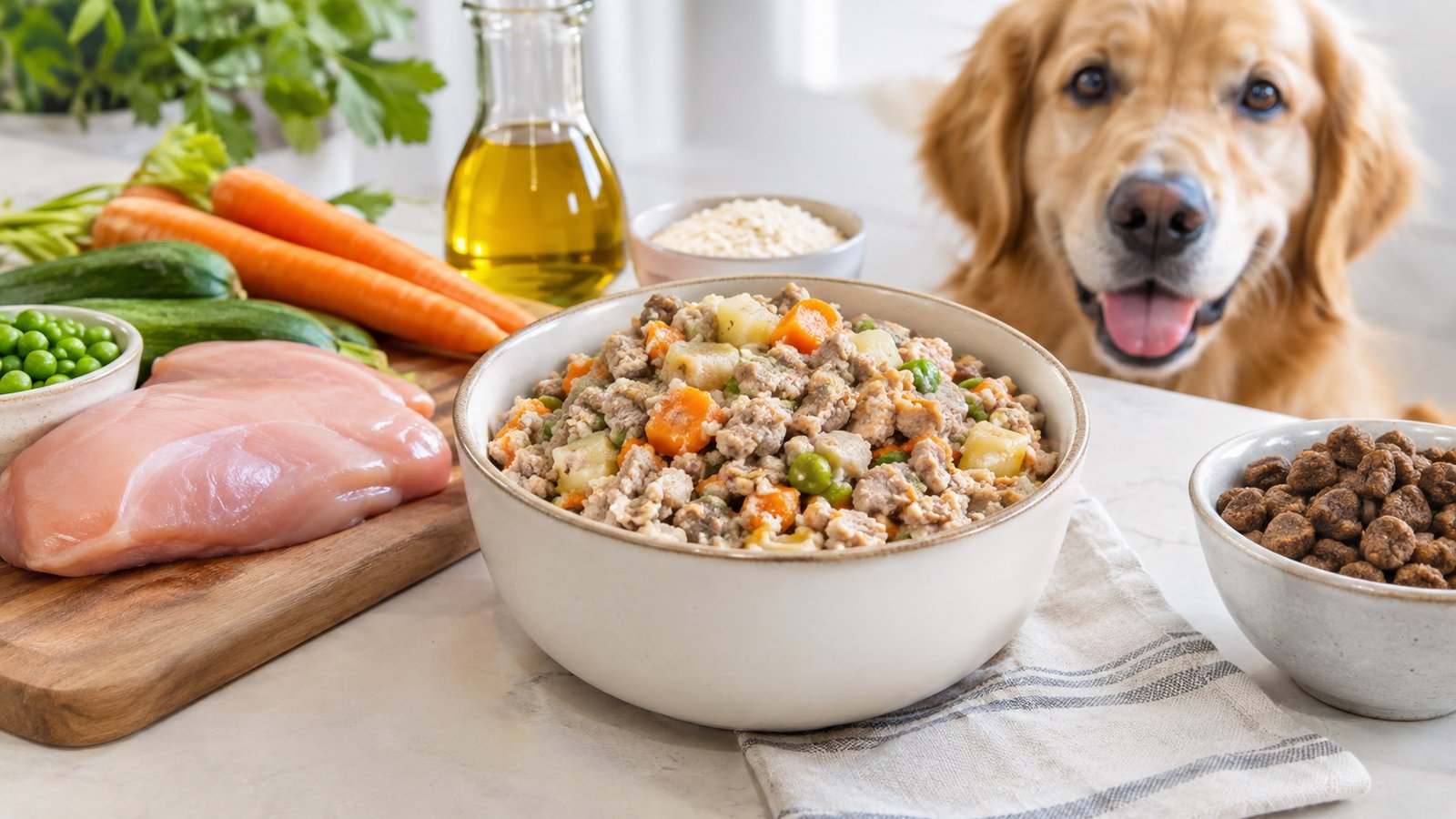
Finding the right low fat dog food recipes for pancreatitis can be challenging when your dog needs food that is gentle on the digestive system while still providing enough nutrition. A meal that looks simple or “bland” is not automatically low in fat, and homemade food is not automatically nutritionally complete.
This guide explains what makes a diet appropriate for a dog with pancreatitis, which ingredients are commonly used in low-fat meals, and how to approach homemade recipes safely. You’ll also learn which foods to avoid and when dietary changes should be discussed with your veterinarian.
In This Article
Low Fat Dog Food Recipes for Pancreatitis: What Pet Parents Need to Know First
Pancreatitis occurs when the pancreas becomes inflamed. The condition can range from relatively mild digestive upset to a serious illness requiring intensive veterinary treatment.
Dogs with pancreatitis may experience vomiting, diarrhea, reduced appetite, lethargy, abdominal discomfort, dehydration, or weakness. Some dogs develop recurrent episodes, making long-term nutritional management particularly important.
Diet can play an important role in managing pancreatitis, but food alone does not treat every case. A dog that is currently vomiting, painful, severely lethargic, dehydrated, or refusing food needs veterinary assessment rather than simply being switched to a homemade recipe.
Why fat content deserves special attention
Veterinarians commonly recommend a low-fat diet for dogs with pancreatitis because dietary fat is energy-dense and can be difficult to manage when a dog has problems tolerating dietary fat.
The exact fat target can vary depending on the individual dog and the veterinarian’s treatment plan. Some veterinary references use fat content measured relative to calories rather than simply looking at the percentage printed on a food label.
That distinction matters because two foods can have the same crude-fat percentage but provide different amounts of fat relative to their total calories.
Homemade food is not automatically a complete diet
Chicken and rice is one of the most familiar homemade meals for dogs with digestive problems. It can be useful in certain short-term situations when recommended by a veterinarian, but chicken and rice alone is not a nutritionally complete long-term diet.
Dogs need appropriate amounts of protein, energy, vitamins, minerals, essential fatty acids, and other nutrients. A homemade diet intended for ongoing feeding should therefore be formulated to meet the dog’s nutritional requirements.
Pet parents looking for veterinary background on canine pancreatitis can also review the Merck Veterinary Manual’s pancreatitis information for additional guidance.
When a dog with pancreatitis needs veterinary care
Never assume that a change in food is enough when your dog’s condition appears to be getting worse.
Seek veterinary advice promptly if your dog develops:
- Repeated or persistent vomiting
- Severe or worsening abdominal pain
- Extreme lethargy or weakness
- Refusal to eat
- Difficulty keeping water down
- Persistent diarrhea
- Signs of dehydration
- Collapse or significant weakness
- A sudden deterioration in overall condition
Dogs with suspected or severe pancreatitis may need fluids, medication, nutritional support, pain management, and monitoring. Homemade food should complement an appropriate veterinary care plan rather than replace it.
Why a Low-Fat Diet Matters for Dogs With Pancreatitis
Fat contains more calories per gram than protein or carbohydrates. That makes fatty ingredients particularly easy to overfeed, especially when treats, table scraps, cooking oils, and rich foods are added on top of regular meals.
A dog recovering from pancreatitis may therefore be placed on a carefully controlled low-fat diet. The goal isn’t to eliminate every trace of fat. Instead, the diet needs to provide appropriately restricted fat while still supplying essential nutrients and sufficient energy.
Low-fat does not mean fat-free
Completely eliminating dietary fat is not a sensible goal for a healthy nutritional plan.
Dogs need essential fatty acids for normal physiological functions. The challenge is determining how much dietary fat is appropriate for a particular dog while avoiding excessive amounts.
That is one reason a veterinarian-guided therapeutic diet can be useful. Commercial veterinary diets designed for digestive conditions are formulated with specific nutritional targets rather than relying solely on individual ingredients.
Foods that can quietly add too much fat
Many pancreatitis diet problems come from ingredients that seem insignificant.
Common examples include:
- Chicken skin
- Turkey skin
- Bacon
- Sausage
- Fatty cuts of beef
- Fatty pork
- Butter
- Cooking oils
- Cream
- Full-fat cheese
- Greasy meat drippings
- Rich sauces
- High-fat treats
A meal containing lean chicken can become considerably higher in fat if the skin is left on or if the meat is cooked in oil.
Bland and low-fat are not the same thing
“Bland” generally describes a simple, relatively mild meal that may be easier for some dogs to tolerate. Low-fat describes the amount of fat in the diet.
Those terms should not be treated as interchangeable.
For example, plain food cooked with butter could still be high in fat. Likewise, a homemade recipe containing several low-fat ingredients might still fail to provide balanced nutrition.
A better approach is to evaluate the entire meal:
| Consideration | Why it matters |
| Fat content | Helps maintain the dietary restriction recommended for your dog |
| Digestibility | May improve tolerance during digestive recovery |
| Calories | Prevents excessive weight loss and inadequate energy intake |
| Protein | Supports normal body maintenance |
| Vitamins and minerals | Helps maintain nutritional adequacy |
| Individual tolerance | Every dog may respond differently to specific ingredients |
The objective is not simply to make food as bland as possible. The objective is to create an appropriately low-fat, digestible, nutritionally suitable feeding plan.
Best Ingredients for Low Fat Dog Food Recipes for Pancreatitis
Choosing ingredients carefully is the foundation of good low fat dog food recipes for pancreatitis. Lean proteins, simple carbohydrates, and selected vegetables can form the basis of some homemade meals when they fit your veterinarian’s recommendations.
Preparation is equally important. Adding oil, butter, fatty broth, or rich sauces can change an otherwise low-fat meal into something unsuitable for a dog requiring strict fat control.
Lean protein options
Skinless chicken breast is a commonly used lean protein for homemade dog meals. It can be boiled, poached, or baked without added oil.
Skinless turkey breast is another option that can work in some diets. Visible fat should be removed before preparation.
Other proteins may also be suitable depending on your dog’s individual nutritional plan. Don’t assume that every type of meat is interchangeable, because fat content can vary substantially between cuts and products.
White rice and other simple carbohydrate sources
Plain, thoroughly cooked white rice is frequently included in simple homemade meals for dogs with digestive upset.
Potatoes can also be used in some recipes when properly cooked and approved for the individual dog. They should be served plain rather than prepared with butter, cream, cheese, or oil.
Never use seasoned potato dishes or flavored rice mixes as substitutes for plain ingredients. Added fats and seasonings can make them inappropriate for a dog following a veterinary low-fat diet.
Vegetables that may fit a low-fat meal
Some dogs can tolerate small amounts of plain vegetables such as:
- Pumpkin
- Carrots
- Green beans
Pumpkin is especially popular because it can add fiber and moisture to a meal. It should not, however, be promoted as a treatment or cure for pancreatitis.
The amount matters too. Adding large quantities of vegetables can alter the calorie and nutrient balance of the diet.
Preparation methods make a real difference
The cooking method can determine whether a naturally lean ingredient stays lean.
Good options generally include:
- Boiling
- Poaching
- Steaming
- Baking without added oil
Avoid cooking methods that introduce unnecessary fat, such as frying or sautéing meat in oil or butter.
Once cooked, fatty juices and drippings should not be poured over your dog’s food.
A simple ingredient check before cooking
Before adding something to a homemade pancreatitis meal, consider five questions:
- Is the ingredient naturally low in fat?
- Can I prepare it without adding oil, butter, or fatty sauces?
- Has my veterinarian approved it for my dog’s situation?
- Does it fit the overall nutritional plan?
- Am I using an appropriate amount rather than assuming more is better?
The simplest-looking bowl isn’t necessarily the best diet. Good pancreatitis nutrition combines controlled fat, digestibility, adequate calories, and nutritional balance.
5 Simple Low Fat Dog Food Recipes for Pancreatitis
Once your veterinarian has approved home-prepared food, simple ingredients can make meal preparation much easier. The following low fat dog food recipes for pancreatitis use lean ingredients and avoid added oils, butter, and rich sauces.
These recipes are best viewed as simple meal ideas rather than automatically complete therapeutic diets. If your dog needs homemade food for more than a short period, ask your veterinarian or a board-certified veterinary nutritionist to formulate a balanced recipe specifically for your dog.
Skinless Chicken and White Rice
This is one of the simplest low-fat combinations for dogs that tolerate both ingredients.
Ingredients:
- 1 part cooked, skinless chicken breast
- 2 parts thoroughly cooked white rice
- Plain water as needed for moisture
Preparation:
- Remove all skin and visible fat from the chicken.
- Cook the chicken thoroughly without oil, butter, salt, or seasoning.
- Cook the rice until soft.
- Shred or finely chop the chicken.
- Mix the chicken and rice thoroughly.
- Allow the food to cool before serving.
Important: The familiar chicken-and-rice combination should not automatically become your dog’s permanent diet. It lacks several nutrients required for long-term feeding.
Turkey, Rice, and Pumpkin
Plain pumpkin can add moisture and variety while keeping the recipe relatively simple.
Ingredients:
- Cooked, skinless turkey breast
- Thoroughly cooked white rice
- A small amount of plain pumpkin puree
Choose 100% plain pumpkin, not pumpkin pie filling, which may contain added sugar, spices, or other ingredients.
Mix the ingredients thoroughly and serve the amount recommended by your veterinarian.
Lean Chicken and Potato
Some dogs may tolerate plain cooked potato as a carbohydrate source.
Ingredients:
- Skinless chicken breast
- Plain cooked potato
- Water for moisture
Peel the potato if appropriate, cook it thoroughly, and mash it without milk, butter, cheese, or oil. Combine it with thoroughly cooked, finely chopped chicken.
Never use raw potato or heavily seasoned potato dishes for this recipe.
Turkey and Green Bean Bowl
Green beans can provide texture and variety without relying on fatty ingredients.
Ingredients:
- Cooked skinless turkey breast
- Thoroughly cooked white rice
- Plain cooked green beans
Chop the green beans into small pieces and combine them with the turkey and rice. Keep the vegetable portion modest rather than allowing it to replace nutritionally important ingredients.
Chicken and Pumpkin Recovery Meal
A simple chicken-and-pumpkin combination can be useful as a temporary option when approved by your veterinarian.
Ingredients:
- Cooked skinless chicken breast
- Plain pumpkin puree
- Cooked white rice
Mix the ingredients with enough water to create a moist consistency. This can be especially useful for dogs that prefer softer food.
Do not add coconut oil, olive oil, butter, gravy, cheese, or other calorie-dense toppings simply to make the meal more appealing. Those additions can undermine the purpose of a low-fat diet.
Recipe safety checklist
Before serving any homemade pancreatitis meal, check that:
- The meat is thoroughly cooked.
- Poultry skin has been removed.
- Visible fat has been trimmed.
- No oil or butter has been added.
- No onion, garlic, or potentially harmful seasoning is present.
- Ingredients are plain and appropriately prepared.
- The portion follows your veterinarian’s feeding recommendation.
Homemade recipes can look very different from one another, so don’t judge their suitability based only on appearance. The overall nutrient and fat content is what matters.
How to Prepare Homemade Food Safely for a Dog With Pancreatitis
Cooking for a dog with pancreatitis requires more attention than simply boiling meat and adding rice. Small additions that are harmless in many household meals can significantly change the fat content of your dog’s food.
Trim the fat before cooking
Start with the leanest practical cut of meat.
Remove:
- Poultry skin
- Visible chunks of fat
- Fatty connective tissue
- Greasy leftovers
- Meat drippings
Don’t rely on cooking to remove all the fat. Choosing lean meat from the beginning gives you better control over the finished meal.
Skip the oil, butter, and rich toppings
Healthy fats can be beneficial in many canine diets, but healthy does not automatically mean appropriate for a dog that has been prescribed a low-fat pancreatitis diet.
Avoid adding:
- Olive oil
- Coconut oil
- Butter
- Margarine
- Cream
- Cheese
- Bacon grease
- Gravy
A common mistake is adding oil because the meal appears dry. If extra moisture is needed, plain water is a much safer way to adjust the texture without introducing additional fat.
Keep the recipe completely unseasoned
Dogs don’t need the same seasoning people enjoy.
Avoid ingredients such as:
- Onion
- Garlic
- Excess salt
- Spicy sauces
- Seasoning blends
- Rich broths
Plain food is preferable when you’re trying to keep a therapeutic diet predictable.
Introduce dietary changes carefully
A sudden food change can cause digestive upset even when the new food itself is appropriate.
When your veterinarian recommends transitioning to homemade food, follow the transition schedule they provide. Dogs recovering from pancreatitis may have different nutritional needs depending on whether they are recovering from an acute episode, managing recurrent pancreatitis, or dealing with another health problem at the same time.
Don’t forget food safety
Homemade dog food should be handled with the same basic food-safety principles you would use for human meals.
Keep these habits:
- Wash your hands before and after handling raw meat.
- Clean preparation surfaces thoroughly.
- Cook meat completely.
- Refrigerate leftovers promptly.
- Store portions in clean, sealed containers.
- Discard food that has been left out for an unsafe length of time.
- Don’t serve spoiled or questionable leftovers.
Making food at home gives you more control over ingredients, but it also means you are responsible for preparation, storage, and portion consistency.
How Much Homemade Low-Fat Food Should You Feed?
Determining how much homemade food to give a dog with pancreatitis is more complicated than measuring out a standard cup per meal.
Your dog’s calorie needs depend on factors such as:
- Body weight
- Ideal body condition
- Age
- Activity level
- Current health status
- Weight loss or gain
- Recovery stage
- Other medical conditions
- The calorie density of the chosen recipe
A small dog and a large dog obviously need different quantities, but even two dogs of the same weight may require different amounts.
Don’t use a universal feeding chart
Generic feeding charts can be useful as starting points for healthy dogs eating specific commercial foods, but they are not a substitute for an individualized plan for a dog with pancreatitis.
Homemade foods also vary considerably in calorie density.
For example, adding more rice may increase calories while changing the balance between protein and carbohydrates. Adding oil would increase calories dramatically while also increasing dietary fat—something that may be inappropriate for a dog requiring strict fat restriction.
Follow your veterinarian’s calorie recommendation
If your veterinarian has provided a daily calorie target, use that number when determining portions.
A useful approach is to divide the recommended daily amount into the feeding schedule your veterinarian has suggested rather than estimating portions by eye.
Don’t assume that a hungry dog needs unlimited low-fat food. Excessive calories can contribute to unwanted weight gain, while too little food can result in weight loss and inadequate energy intake.
Smaller meals may be appropriate for some dogs
Some dogs recovering from digestive illness tolerate smaller, more frequent meals better than large meals.
Your veterinarian may recommend dividing the daily food allowance into several meals rather than feeding everything at once.
The important point is to divide the appropriate daily amount, rather than simply adding extra meals on top of the dog’s normal daily intake.
Monitor your dog’s response
Keep an eye on:
| What to monitor | What it can tell you |
| Appetite | Whether your dog is willing to eat |
| Stool quality | How the digestive system is tolerating the diet |
| Vomiting | Possible intolerance or worsening illness |
| Body weight | Whether calorie intake is appropriate |
| Energy level | General recovery and wellbeing |
| Abdominal comfort | Potential sign of ongoing problems |
Any significant deterioration should be discussed with your veterinarian.
For a dog with pancreatitis, the right portion is the amount that meets the individual dog’s nutritional and energy needs—not simply the amount that fills the bowl.
Foods and Treats to Avoid During Pancreatitis Recovery
Choosing the main meal is only part of managing a low-fat diet. Treats, table scraps, chews, and food used to hide medication can also contribute to your dog’s total daily fat intake.
A dog may eat an appropriately low-fat dinner but then receive several high-fat treats throughout the day. Those extras can make it much harder to maintain consistent dietary fat control.
High-fat foods to keep away from your dog
During pancreatitis recovery, avoid offering foods that are naturally rich in fat or prepared with added fat unless your veterinarian specifically approves them.
Common foods to avoid include:
- Bacon and sausage
- Fatty beef or pork
- Chicken skin
- Turkey skin
- Fatty meat scraps
- Fried foods
- Butter and margarine
- Cream and full-fat dairy products
- Cheese
- Greasy leftovers
- Meat drippings
- Rich gravies and sauces
- High-fat commercial treats
Never assume that a tiny portion is harmless simply because your dog has eaten the food before. Dogs with a history of pancreatitis may need much stricter dietary consistency than healthy dogs.
Don’t forget treats and chews
Treats can be one of the easiest ways to accidentally increase dietary fat.
Before giving a commercial treat, check its nutritional information and discuss suitable options with your veterinarian. Some treats marketed as “natural,” “premium,” or “high-protein” can still contain substantial amounts of fat.
Safer choices depend on your dog’s individual diet plan. In some cases, a small portion of the dog’s approved regular food can work better as a reward than introducing a separate treat.
Table scraps are particularly risky
Family meals often contain hidden sources of fat, including cooking oils, butter, cheese, sauces, and meat juices.
Ask everyone in the household to follow the same feeding rules. One person carefully preparing a low-fat diet won’t help much if another family member regularly slips fatty leftovers under the table.
| Food or treat | During pancreatitis recovery |
| Plain approved lean meat | May be suitable in the prescribed diet |
| Plain cooked rice | May be suitable when recommended |
| Plain pumpkin | May be suitable in controlled amounts |
| Chicken skin | Avoid |
| Bacon | Avoid |
| Sausage | Avoid |
| Butter | Avoid |
| Cheese | Generally avoid unless specifically approved |
| Fried food | Avoid |
| Greasy leftovers | Avoid |
| Fatty commercial treats | Avoid unless your veterinarian approves |
Consistency is one of the most important parts of managing a low-fat feeding plan.
Common Mistakes With Low Fat Dog Food Recipes for Pancreatitis
Even well-intentioned pet owners can make mistakes when preparing homemade food for a dog with pancreatitis. Most problems come from misunderstanding what “low-fat” actually means or assuming that a few simple ingredients are enough for long-term nutrition.
Mistake: Assuming homemade automatically means healthier
Homemade food gives you control over ingredients, but it doesn’t automatically provide balanced nutrition.
A bowl containing chicken, rice, and vegetables may be low in fat while still being deficient or excessive in certain essential nutrients.
Short-term simplicity and long-term nutritional completeness are two different goals.
If your dog needs a homemade diet for an extended period, ask your veterinarian about having the recipe properly formulated.
Mistake: Adding oil to increase calories
This is a particularly common misconception.
Someone may notice that a low-fat meal contains fewer calories and decide to add olive oil, coconut oil, or another fat source. That can work against the dietary goal for a dog that needs strict fat restriction.
If your dog is struggling to maintain weight, talk with your veterinarian rather than increasing fat on your own. The solution may involve changing the overall formulation or using an appropriate therapeutic diet.
Mistake: Giving fatty treats between meals
A carefully prepared breakfast and dinner won’t compensate for a high-fat treat routine.
Keep a written list of everything your dog eats during the day, including:
- Training treats
- Dental treats
- Pill pockets
- Chews
- Human food
- Food used for medication
- Toppings and supplements
This makes it easier to identify unexpected sources of dietary fat.
Mistake: Feeding homemade chicken and rice indefinitely
Chicken and rice can be convenient, but it should not automatically become a permanent diet.
A simple recipe can be appropriate for a short-term purpose without being nutritionally adequate for months of feeding.
Long-term homemade diets should be properly balanced for the individual dog.
Mistake: Changing foods too frequently
Some owners switch from one recipe to another whenever their dog refuses a meal.
Frequent changes can make it difficult to determine what your dog tolerates and may contribute to digestive upset.
Work with your veterinarian to establish a practical feeding plan and make changes deliberately rather than reacting to every minor preference.
Mistake: Ignoring new symptoms
Food intolerance and pancreatitis can produce overlapping digestive signs.
If your dog begins vomiting repeatedly, develops significant abdominal pain, becomes unusually weak, refuses food, or shows other concerning symptoms, don’t keep experimenting with recipes at home.
Contact your veterinarian so the underlying problem can be assessed.
Homemade Food vs. Prescription Low-Fat Dog Food: Which Is Better?
There isn’t one answer that works for every dog with pancreatitis.
Some pet owners prefer homemade food because they can see every ingredient going into the bowl. Others find that a veterinary therapeutic diet provides greater consistency and convenience.
The best choice depends on the dog’s medical needs, nutritional requirements, tolerance, and the veterinarian’s recommendations.
Homemade low-fat food
Potential advantages:
- Complete control over ingredients
- Useful when specific ingredients need to be avoided
- Can be customized when properly formulated
- May be appealing to dogs that are selective eaters
Potential disadvantages:
- Easy to make nutritional mistakes
- Fat content can be difficult to calculate accurately
- Requires preparation time
- Nutritional balance can vary between batches
- Requires careful portion and ingredient control
- May need professional formulation for long-term use
Veterinary therapeutic food
A prescription or veterinary therapeutic diet may provide several practical advantages.
Potential advantages:
- Consistent nutritional composition
- Controlled fat content
- Formulated to meet specific nutritional goals
- Convenient for daily feeding
- Easier to reproduce consistently
Potential disadvantages:
- Some dogs may dislike a particular formula
- Can cost more than basic homemade ingredients
- Not every therapeutic formula is appropriate for every medical situation
- Some dogs may require an individualized alternative
Which option should you choose?
Consider the differences:
| Factor | Homemade diet | Veterinary therapeutic diet |
| Ingredient control | High | Moderate |
| Nutritional consistency | Depends on formulation | Generally high |
| Fat control | Requires careful calculation | Formulated for a specific purpose |
| Preparation time | Higher | Low |
| Long-term nutritional balance | Requires proper formulation | Designed to be nutritionally complete |
| Customization | High when professionally formulated | More limited |
| Veterinary guidance | Important | Important |
A veterinarian-recommended therapeutic diet is often the simplest option for maintaining consistent nutritional control, particularly during recovery. Homemade food can also be appropriate when it is carefully designed around the dog’s individual needs.
Pet owners should avoid choosing a diet solely because another dog with pancreatitis responded well to it. Pancreatitis can have different causes and levels of severity, and dogs may have additional nutritional or medical considerations.
The most useful question isn’t “Is homemade food better than prescription food?” It’s “Which complete, appropriately low-fat diet is safest and most suitable for my dog?”
How to Make Homemade Food Nutritionally Complete
Simple low fat dog food recipes for pancreatitis can be useful in the right circumstances, but there is an important difference between a temporary simple meal and a complete long-term diet.
Chicken, rice, pumpkin, turkey, and vegetables may provide useful nutrients, yet a combination of these foods does not automatically contain everything your dog needs every day.
Why nutritional balance matters
Dogs require appropriate amounts of:
- High-quality protein
- Energy
- Essential fatty acids
- Calcium and phosphorus
- Vitamins
- Trace minerals
- Other essential nutrients
The correct amounts depend on your dog’s size, age, activity level, body condition, and health status.
Reducing fat should never mean ignoring the rest of the nutritional profile.
A recipe can be low in fat but still be deficient in calcium, certain vitamins, minerals, or other nutrients when fed as the sole diet for an extended period.
Temporary meal versus long-term diet
A veterinarian may recommend a simple homemade meal for a specific short-term situation. That does not necessarily mean the same recipe is appropriate for months of feeding.
Think of these two approaches differently:
| Type of diet | Main purpose |
| Simple temporary meal | Short-term feeding when specifically recommended |
| Complete homemade diet | Long-term nutrition formulated around the dog’s needs |
| Veterinary therapeutic diet | Consistent nutrition designed for a specific medical purpose |
Never add vitamin or mineral supplements randomly. Too much of certain nutrients can also cause health problems.
When to involve a veterinary nutritionist
If your dog needs homemade food long term, ask your veterinarian whether a board-certified veterinary nutritionist should formulate the diet.
Professional formulation can account for:
- Your dog’s calorie requirements
- Appropriate fat restriction
- Protein requirements
- Essential nutrients
- Existing medical conditions
- Ingredient preferences or restrictions
- Appropriate supplementation
- Long-term nutritional adequacy
This is especially valuable for dogs with recurrent pancreatitis or multiple health conditions.
Signs Your Dog May Not Be Tolerating the Diet
Even an appropriately selected low-fat meal may not agree with every dog. Individual tolerance matters, so watch your dog’s behavior and digestive health closely after dietary changes.
Digestive signs to watch
Potential warning signs include:
- Vomiting
- Diarrhea
- Refusal to eat
- Reduced appetite
- Excessive tiredness
- Abdominal discomfort
- Restlessness
- Dehydration
- Weakness
A single episode of mild digestive upset does not necessarily mean pancreatitis has returned, but repeated or worsening symptoms should not be ignored.
When to contact your veterinarian
Call your veterinarian if your dog develops persistent vomiting, refuses food, becomes unusually lethargic, appears painful, or has ongoing diarrhea.
Seek urgent veterinary care when symptoms are severe, rapidly worsening, or accompanied by collapse, profound weakness, significant pain, or an inability to keep water down.
Don’t keep testing different homemade recipes when your dog is clearly unwell. A worsening condition needs medical assessment, not more experimentation with food.
Keep a simple food-and-symptom record
A small notebook can be surprisingly useful.
Record:
- What your dog ate
- Approximate portion
- Treats received
- Time of each meal
- Vomiting or diarrhea
- Appetite
- Energy level
- Stool changes
- Body weight when appropriate
This information can help your veterinarian identify patterns and make better dietary recommendations.
Expert Tips for Feeding a Dog After Pancreatitis
Feeding a dog after pancreatitis is less about finding one magical recipe and more about maintaining a consistent, appropriate nutritional plan.
Keep fat intake consistent
Avoid alternating between very low-fat meals and occasional rich foods.
Consistency matters. Everyone in the household should understand which foods, treats, and table scraps are off-limits.
Follow the veterinary feeding plan
If your veterinarian recommends a therapeutic diet, specific calorie intake, meal schedule, or gradual transition, follow those instructions rather than replacing them with advice from a generic recipe.
Your dog’s feeding plan should reflect their medical history.
Be careful with treats
Treats count toward the overall diet.
Good options are those specifically approved for your dog’s condition and accounted for within the daily feeding plan. Using a portion of the dog’s regular approved food as a reward can also help avoid introducing unnecessary ingredients.
Monitor body condition
Weight changes can be easy to miss when they happen gradually.
Check your dog’s body condition regularly and report unexplained weight loss or weight gain to your veterinarian. A dog recovering from pancreatitis may need adjustments to calories or meal composition as their condition changes.
Don’t assume recovery means unlimited food
A dog that feels better may quickly return to begging for table scraps or fatty treats.
That doesn’t mean those foods are appropriate.
A history of pancreatitis is a good reason to remain cautious about high-fat foods even after your dog appears completely recovered.
Frequently Asked Questions About Low Fat Dog Food Recipes for Pancreatitis
What homemade food is best for a dog with pancreatitis?
There is no single best homemade recipe for every dog. Plain, lean ingredients such as skinless chicken or turkey, cooked rice, and selected vegetables may fit some veterinary feeding plans, but the appropriate recipe depends on the dog’s individual condition and nutritional needs.
Is boiled chicken and rice good for dogs with pancreatitis?
Boiled skinless chicken and plain rice can be used as a simple short-term meal in some situations when recommended by a veterinarian. Chicken and rice alone should not automatically be used as a complete long-term diet because it does not provide all essential nutrients.
Can dogs with pancreatitis eat pumpkin?
Plain pumpkin may be suitable for some dogs in small, controlled portions. It should not be considered a treatment or cure for pancreatitis, and pumpkin pie filling or seasoned pumpkin products should be avoided.
What treats can I give a dog with pancreatitis?
Treat choices should fit the dog’s prescribed low-fat diet. Ask your veterinarian about suitable commercial treats or consider using a small portion of the dog’s approved regular food as a reward.
How low in fat should a dog’s diet be with pancreatitis?
The appropriate fat level depends on the individual dog and veterinary treatment plan. Veterinary references may express dietary fat relative to calories rather than simply as a percentage of the food, so choosing foods based only on the crude-fat percentage can be misleading.
Can homemade food cure pancreatitis in dogs?
No. Homemade food does not cure pancreatitis. Dietary management can be an important part of treatment and recovery, but dogs with pancreatitis may also require veterinary evaluation, medication, fluids, nutritional support, and monitoring.
How long should a dog stay on a low-fat diet after pancreatitis?
The duration varies from dog to dog. Some dogs may need dietary fat restriction during recovery, while dogs with recurrent or chronic problems may require longer-term management. Your veterinarian should determine when and how the diet can be changed.
Can dogs with pancreatitis eat eggs?
Eggs contain fat, particularly in the yolk, so they should not be added casually to a strict low-fat diet. Ask your veterinarian whether eggs fit your dog’s specific nutritional plan before offering them.
Can dogs with pancreatitis eat treats between meals?
They may be able to have carefully selected low-fat treats, but treats should be included in the overall dietary plan. High-fat treats and table scraps are best avoided unless specifically approved by your veterinarian.
Choosing the Right Low Fat Dog Food Recipes for Pancreatitis
The best low fat dog food recipes for pancreatitis are not necessarily the ones with the fewest ingredients. The right approach combines controlled dietary fat, digestible ingredients, adequate calories, proper portion sizes, and complete nutrition when the diet is intended for long-term use.
Simple homemade meals can be helpful when they are appropriate for your dog’s situation and used according to veterinary guidance. Avoid adding oils, butter, fatty meats, rich treats, or table scraps simply to make food more appealing.
Most importantly, don’t try to manage serious or worsening symptoms through diet alone. A dog that is vomiting repeatedly, refusing food, showing significant pain, or becoming weak needs professional veterinary attention.
If you’re preparing meals at home, start with your veterinarian’s recommendations, keep ingredients simple, measure portions carefully, and monitor how your dog responds. A thoughtful low-fat feeding plan can make mealtimes safer and more manageable while supporting your dog’s recovery and long-term wellbeing.