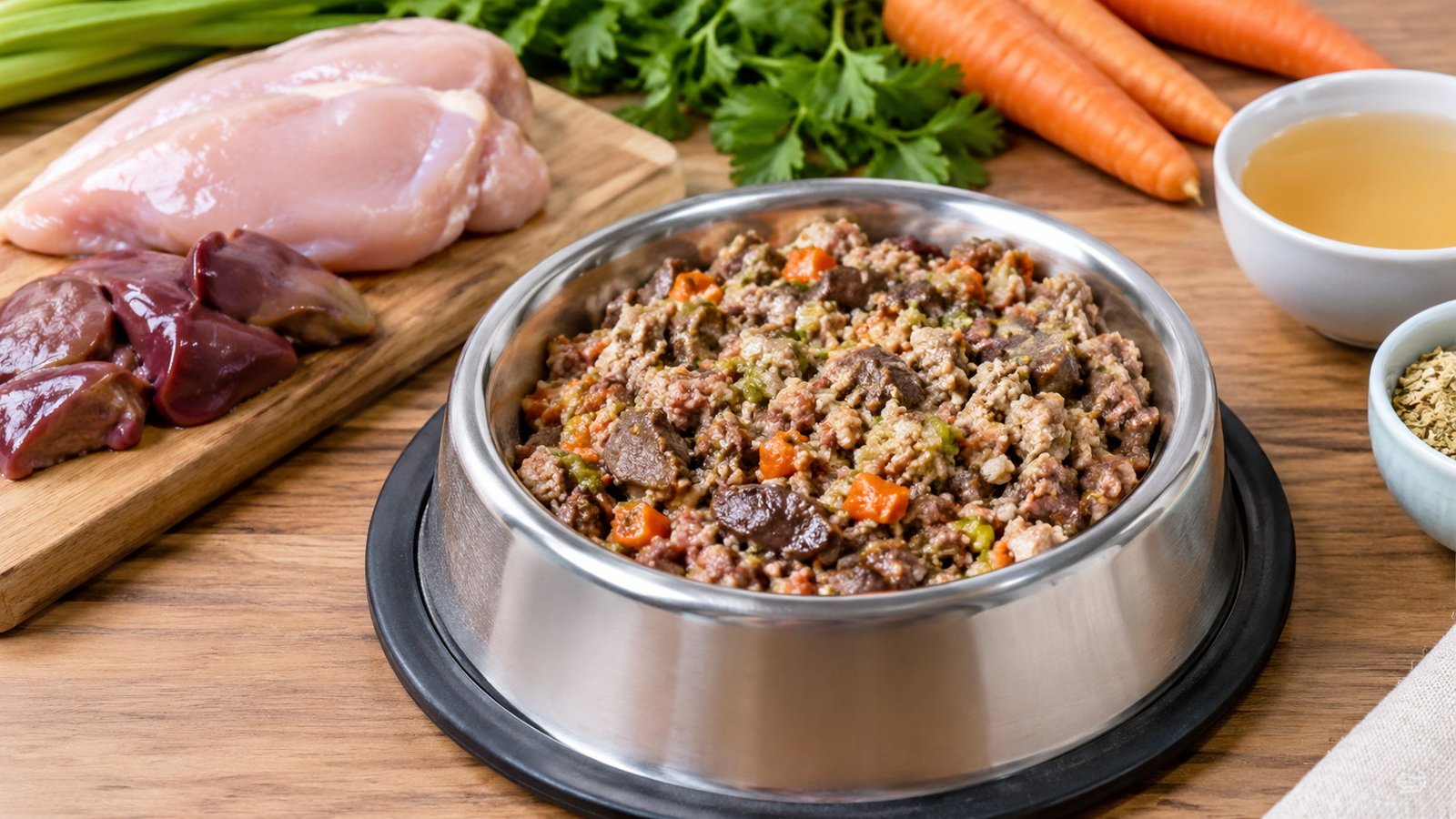
Making a chicken and chicken liver dog food recipe at home can be a simple way to prepare a wholesome, protein-rich meal for your dog. Chicken provides lean animal protein, while chicken liver adds concentrated nutrients and a rich flavor many dogs enjoy.
The key is preparing the ingredients safely and keeping liver in an appropriate proportion. Below, you’ll learn how to choose the ingredients, cook the chicken and liver properly, adjust the texture, store leftovers, and understand the difference between an occasional homemade meal and a nutritionally complete everyday diet.
In This Article
Chicken and Chicken Liver Dog Food Recipe: A Simple Homemade Meal for Dogs
Homemade dog food does not need complicated ingredients or elaborate cooking techniques. Chicken and chicken liver create a flavorful base that can be combined with suitable cooked carbohydrates or vegetables for a moist, easy-to-eat meal.
Recipe at a Glance
| Detail | Information |
| Recipe type | Homemade dog food |
| Main ingredients | Chicken and chicken liver |
| Preparation time | About 10–15 minutes |
| Cooking time | About 20–30 minutes |
| Total time | About 35–45 minutes |
| Yield | Depends on ingredient quantities and portion size |
| Cooking method | Stovetop, steaming, or baking |
| Texture | Shredded, chopped, or finely minced |
| Best for | Dogs accustomed to cooked homemade ingredients |
Important: Homemade food can be nutritious without automatically being complete and balanced. Dogs require specific amounts of protein, fat, essential fatty acids, vitamins, minerals, and other nutrients. A simple chicken-and-liver mixture should not be assumed to meet every nutritional requirement when fed as the sole long-term diet.
What Makes the Recipe Useful?
Chicken offers a familiar protein source with a relatively mild flavor. Boneless, skinless chicken works particularly well because the meat is easy to cook, shred, and portion.
Chicken liver serves a different purpose. Liver is highly nutrient-dense, so a modest quantity can contribute important vitamins and minerals while also adding strong savory flavor.
Moisture plays an important role, too. Adding water or another appropriate unsalted cooking liquid can create a softer consistency that’s easier for puppies, seniors, small dogs, or dogs that prefer moist food to eat.
Who Should Be Careful With Homemade Dog Food?
Dogs with diagnosed medical conditions, food allergies, kidney or liver problems, pancreatitis, or other special dietary needs may require a specifically formulated diet. Puppies also have different nutritional requirements from adult dogs.
Professional nutritional guidance becomes especially valuable when homemade food will replace commercial complete-and-balanced dog food rather than simply supplementing the normal diet.
Why Chicken and Chicken Liver Work Well in Homemade Dog Food
Chicken and chicken liver complement each other nicely from both a cooking and nutritional perspective. Chicken supplies the bulk of the meaty texture, while liver provides a concentrated source of nutrients and a distinctive taste.
Benefits of Chicken for Dogs
Plain, thoroughly cooked chicken can provide a useful source of animal-based protein and amino acids. Protein supports normal muscle maintenance and many other functions throughout the body.
Boneless, skinless chicken is particularly convenient for homemade dog food because it contains no bones that need to be removed after cooking. Chicken breast produces a leaner result, while chicken thighs generally provide more moisture and richness.
Choose plain chicken without marinades, sauces, spice blends, or seasoning mixes. Human recipes often contain ingredients that aren’t appropriate for dogs.
What Chicken Liver Adds
Chicken liver is much more concentrated nutritionally than ordinary muscle meat. Liver contains several vitamins and minerals, including vitamin A, iron, copper, and other micronutrients.
The concentrated nature of liver explains why moderation matters. More liver does not automatically mean a healthier dog food recipe. Excessive amounts can contribute excessive intake of certain nutrients, particularly vitamin A.
Strong liver flavor can also make the finished meal more appealing to some dogs. A relatively small amount mixed throughout the chicken helps distribute the flavor without allowing liver to dominate the recipe.
Chicken vs. Chicken Liver
| Ingredient | Main role | Cooking characteristic |
| Chicken breast | Lean protein and main meat component | Mild flavor, can become dry if overcooked |
| Chicken thigh | Protein with more moisture and richness | Tender and flavorful |
| Chicken liver | Nutrient-dense organ meat | Rich flavor and soft texture when properly cooked |
The important distinction: chicken and chicken liver aren’t nutritionally interchangeable. Muscle meat can make up much of the meaty portion, while liver should remain a controlled component.
Ingredients for This Chicken and Chicken Liver Dog Food Recipe
Simple ingredients work best. The exact proportions should depend on whether the food is intended as an occasional meal, topper, or a professionally formulated complete diet.
Main Ingredients
- Cooked boneless, skinless chicken – chicken breast or thigh can be used.
- Cooked chicken liver – use a modest amount rather than making liver the primary ingredient.
- Cooked dog-safe carbohydrate or vegetables – suitable options can provide additional calories, fiber, or texture depending on the recipe.
- Water or unsalted cooking liquid – useful for adjusting moisture and consistency.
Optional Dog-Safe Additions
Depending on the intended formulation, suitable cooked ingredients may include:
- Plain cooked pumpkin
- Carrots
- Green beans
- Plain cooked rice
- Plain cooked oats
- Other ingredients specifically selected for a balanced canine diet
Avoid treating optional ingredients as a nutritional substitute for a properly formulated diet. Adding several vegetables to meat does not automatically make homemade dog food complete.
Ingredients to Keep Out
Never season the recipe like a typical human chicken dinner. Avoid:
- Onion
- Garlic
- Chives
- Leeks
- Excessive salt
- Spicy seasonings
- Bouillon containing onion or garlic
- Butter-heavy sauces
- Gravy
- Marinades
- Xylitol-containing products
Plain preparation is the safest approach. Do not add cooked chicken bones, either. Cooked bones can become brittle and create serious hazards if swallowed.
Choosing the Chicken
Fresh or properly thawed chicken works well. Remove visible skin and excess fat when a leaner recipe is desired.
Chicken thighs can provide a softer, juicier texture than breast meat. Chicken breast is convenient when you want a leaner final mixture.
Whichever cut you choose, cook poultry thoroughly before mixing the ingredients together.
Choosing Chicken Liver
Fresh chicken liver should have a clean appearance and be handled like other raw poultry products. Keep raw liver refrigerated until preparation and prevent its juices from contacting ready-to-eat foods.
Cooking liver separately can make portion control easier. Once cooked and cooled slightly, the liver can be finely chopped or minced before being mixed with the chicken.
Don’t rely on color alone to determine whether poultry is safe. Using a food thermometer provides a much more reliable way to check doneness.
A useful food-safety reference for handling and cooking poultry is the USDA Food Safety and Inspection Service.
Equipment You’ll Need
- Cutting board
- Sharp kitchen knife
- Saucepan or skillet
- Large pot, if boiling ingredients
- Food thermometer
- Mixing bowl
- Fork or meat shredder
- Food processor, optional
- Airtight storage containers
A food processor isn’t necessary. Hand-shredded chicken often produces a pleasant texture, while finely minced ingredients work better for small dogs or dogs that prefer softer food.
How to Make Chicken and Chicken Liver Dog Food Step by Step
Preparing a chicken and chicken liver dog food recipe is straightforward when each ingredient is cooked thoroughly and the finished mixture is kept plain. The goal is tender chicken, fully cooked liver, and a moist texture that’s easy for your dog to eat.
Step 1: Prepare the Chicken and Liver
Start by keeping the raw chicken and liver refrigerated until you’re ready to cook. Wash your hands, utensils, and work surfaces thoroughly after handling the raw ingredients.
Trim excess skin and visible fat from the chicken if you’re using thighs. Cut larger pieces into similar-sized portions so they cook evenly.
Chicken liver can be left whole during cooking and chopped afterward. Keeping the liver intact initially makes it easier to monitor cooking and portion the finished ingredient.
Keep raw chicken and liver separate from foods that will be eaten without cooking.
Step 2: Cook the Chicken Thoroughly
Place the chicken in a saucepan or skillet and add enough water to prevent sticking and provide gentle moisture. Cook over medium heat until the meat is completely cooked.
A food thermometer is the most reliable way to check poultry. Chicken should reach an internal temperature of 165°F (74°C) at the thickest part.
Once cooked, remove the chicken and allow it to cool enough to handle. Shred the meat with two forks or chop it into small pieces.
Avoid browning the chicken with garlic, onion, salt, pepper, butter, or sauces. Plain cooked meat is the better choice for a dog-focused recipe.
Step 3: Cook the Chicken Liver
Cook the chicken liver separately or alongside the chicken if your cooking method allows close monitoring. Simmering, steaming, or gently sautéing without seasoning are practical options.
Cook until the liver is fully cooked throughout. Avoid serving raw or partially cooked chicken liver.
Once cooked, let the liver cool slightly before chopping it into very small pieces. Finely minced liver distributes its strong flavor throughout the chicken mixture and prevents a dog from receiving an unusually large piece at once.
Step 4: Prepare the Remaining Ingredients
Cook any selected carbohydrate or vegetables separately until tender.
Plain rice, oats, pumpkin, carrots, or green beans can work depending on the formulation. Keep every ingredient unseasoned.
Drain excess water from vegetables when necessary, but retain a little moisture if the finished food seems dry.
Step 5: Combine Everything
Add the shredded chicken, finely chopped chicken liver, and prepared additions to a clean mixing bowl.
Stir thoroughly so the liver is evenly distributed. Add a small amount of warm water or unsalted cooking liquid if a softer consistency is preferred.
Small dogs may benefit from finely minced pieces, while larger dogs can usually handle a coarser texture.
Step 6: Cool Before Serving
Allow the finished food to cool to a safe, comfortable temperature before offering it to your dog.
Never serve homemade dog food piping hot. Portion the cooled food according to your dog’s individual dietary needs rather than assuming one serving size works for every dog.
The Best Cooking Method for Chicken and Chicken Liver Dog Food
Several cooking methods can work well for homemade dog food, but gentle methods make it easier to control moisture and avoid unnecessary ingredients.
Stovetop Cooking
Stovetop simmering is one of the easiest approaches for chicken and liver.
Place the chicken in a saucepan with water and cook gently until fully done. Liver can be cooked separately using a small amount of water or in a nonstick pan without added seasoning.
Best for: Easy preparation, soft textures, and small batches.
Steaming
Steaming helps retain moisture while keeping the ingredients completely plain.
Chicken pieces and liver can be steamed until fully cooked, then chopped or shredded after cooling.
Best for: Dogs that prefer moist food and owners who want a simple cooking method without added fat.
Baking
Baking works particularly well when preparing a larger batch.
Place plain chicken and liver in a baking dish and cook until they reach the appropriate internal temperature. Avoid marinades, sauces, and seasoning.
Baking can produce a slightly firmer texture, so adding a little water after shredding may help create a softer meal.
Best for: Batch preparation and convenient hands-off cooking.
Which Method Should You Choose?
| Cooking method | Main advantage | Texture |
| Stovetop | Easy moisture control | Soft and moist |
| Steaming | Gentle cooking | Tender and moist |
| Baking | Convenient for batches | Slightly firmer |
| Boiling | Very simple | Soft, especially when shredded |
No cooking method makes an unbalanced recipe nutritionally complete. Cooking technique and nutritional formulation are separate considerations.
How Much Chicken Liver Should You Use?
Chicken liver deserves special attention because liver is far more concentrated in certain nutrients than ordinary chicken meat.
Vitamin A is one important example. Feeding excessive amounts of liver regularly can result in excessive vitamin A intake. Liver also contains substantial amounts of copper and other micronutrients.
Consequently, a chicken and chicken liver dog food recipe should use liver as a controlled component rather than allowing it to dominate the meal.
Why More Liver Isn’t Better
Adding extra liver may seem like a way to increase nutrition, but concentrated nutrients don’t work that way. Dogs need nutrients within appropriate ranges, and excessive intake can also cause problems.
A homemade meal containing chicken, liver, vegetables, and rice may look balanced on the plate while still lacking or overproviding specific nutrients.
Occasional Meal vs. Everyday Diet
The purpose of the recipe matters.
Occasional homemade meal or topper: A simple chicken-based recipe may be used alongside a nutritionally complete commercial diet, provided the overall feeding plan remains appropriate.
Primary everyday diet: A homemade recipe intended to provide all of a dog’s daily nutrition should be professionally formulated to meet the dog’s specific nutritional requirements.
Puppies, pregnant or nursing dogs, and dogs with medical or dietary requirements need particularly careful nutritional planning.
A Practical Rule for Liver
Think of liver as a nutrient-dense ingredient, not the main protein source.
Keep the chicken as the primary meat component and use liver in a controlled quantity. Avoid increasing liver simply because your dog enjoys the flavor.
Key takeaway: Getting the chicken-to-liver balance right is more important than adding as much liver as possible. A properly formulated homemade diet should account for the entire nutrient profile, including calcium, essential fatty acids, vitamins, and minerals.
Ingredient Swaps and Safe Variations to Try
The basic chicken and chicken liver dog food recipe can be adjusted for texture, flavor, and ingredient availability. Substitutions should still fit your dog’s overall nutritional needs, especially when homemade food becomes a regular part of the diet.
Chicken Breast vs. Chicken Thigh
Both cuts can work well, but the finished food will have a slightly different texture.
Chicken breast is leaner and has a mild flavor. Overcooking can make breast meat dry, so adding a little cooking liquid after shredding can improve the texture.
Chicken thighs contain more fat and usually produce softer, juicier meat. Remove excess skin and visible fat if a leaner meal is preferred.
| Chicken cut | Texture | Flavor | Best use |
| Breast | Lean and firm | Mild | Leaner homemade meals |
| Thigh | Moist and tender | Richer | Softer, more flavorful meals |
Can You Substitute Chicken Liver?
Another suitable organ meat may be possible in a professionally formulated diet, but substitutions shouldn’t be made based solely on taste or availability.
Different organs have different nutrient profiles. Replacing chicken liver with another ingredient can therefore change the nutritional balance considerably.
Don’t assume beef liver, turkey liver, or another organ can simply replace chicken liver in equal quantities without changing the nutritional formulation.
Vegetable and Carbohydrate Variations
Plain cooked vegetables or carbohydrates can change the texture and provide additional calories, fiber, or moisture.
Suitable options may include:
- Pumpkin: Adds moisture and a soft texture.
- Carrots: Provide mild sweetness and a pleasant texture when cooked until tender.
- Green beans: Useful for adding bulk and texture.
- Plain rice: Creates a soft, easy-to-mix base.
- Plain oats: Can provide a thicker consistency when cooked thoroughly.
Cook vegetables until soft enough to chew easily. Rice and oats should be cooked in plain water without salt, broth containing onion or garlic, butter, or seasoning.
Ingredient swaps are not automatically nutritional equivalents. Regularly feeding a modified homemade diet requires attention to the complete nutrient profile.
How to Make This Homemade Dog Food More Nutritionally Complete
Chicken and chicken liver can provide valuable nutrients, but meat, liver, rice, and vegetables alone do not automatically create a complete and balanced canine diet.
Dogs need carefully controlled amounts of essential nutrients, including protein, fats, calcium, phosphorus, essential fatty acids, vitamins, and minerals.
Why Calcium Deserves Special Attention
Boneless chicken contains phosphorus but provides relatively little calcium. A homemade diet built primarily around boneless meat can therefore have an inappropriate calcium-to-phosphorus balance.
Adding random calcium sources isn’t necessarily the right solution either. Too little, too much, or the wrong formulation can create nutritional problems.
Never add ground bone or calcium supplements based on guesswork. The appropriate amount depends on the entire recipe and the dog’s nutritional requirements.
What About Vitamins and Minerals?
A homemade recipe intended as a dog’s primary diet may require a specifically formulated canine vitamin-and-mineral supplement.
Human multivitamins are not an appropriate substitute. Nutritional requirements for dogs differ from human requirements, and some human supplements may contain ingredients that are unsuitable for pets.
A veterinary nutritionist can formulate a recipe around your dog’s age, size, activity level, and other individual needs.
Occasional Food vs. Complete Daily Food
A simple homemade chicken and liver meal can have a very different role from a complete daily diet.
| Feeding purpose | Nutritional consideration |
| Occasional meal | Doesn’t need to serve as the sole source of daily nutrition |
| Food topper | Should remain an appropriate portion of the overall diet |
| Regular replacement meal | Requires careful nutritional balancing |
| Long-term homemade diet | Best formulated specifically for the individual dog |
Dogs eating homemade food as their primary diet need more than an appealing combination of ingredients. The recipe must deliver the right nutrients in the right amounts over time.
When Professional Guidance Makes Sense
Consult a veterinarian or qualified veterinary nutritionist before switching to a homemade diet for:
- Growing puppies
- Pregnant or nursing dogs
- Dogs with chronic medical conditions
- Dogs with known food allergies
- Dogs requiring weight management
- Dogs with kidney, liver, gastrointestinal, or pancreatic dietary restrictions
Professional formulation becomes especially important when homemade food will replace commercial complete-and-balanced food.
Serving Chicken and Chicken Liver Dog Food Safely
Once the recipe has cooled, serving becomes a matter of portion control, texture, and gradual introduction.
How Much Should You Serve?
There isn’t one correct portion for every dog. Calorie requirements can vary significantly depending on body size, age, activity level, reproductive status, metabolism, and the rest of the dog’s diet.
Use your dog’s overall daily calorie and nutrient requirements rather than choosing a portion based only on the volume of food in the bowl.
Avoid assuming that a cup of homemade dog food has the same calories as a cup of commercial dog food. Homemade recipes can vary dramatically in moisture, fat, carbohydrates, and calorie density.
Choose the Right Texture
Shredded chicken works well for many adult dogs. Smaller pieces can make the meal easier to eat for small breeds.
A finer texture may be useful for dogs that prefer softer food. Adding a little warm water can turn a relatively dry mixture into a moist, spoonable meal.
Avoid serving large chunks of meat that could be difficult for your particular dog to chew.
Introduce the Recipe Gradually
Dogs accustomed to commercial food may experience digestive upset when a new homemade meal is introduced suddenly.
Start with a small amount mixed into the dog’s familiar food and increase gradually if your dog tolerates the change well.
Watch for signs such as loose stool, vomiting, reduced appetite, or other unusual digestive changes. Persistent or severe symptoms warrant veterinary advice.
Serving Tips for Better Results
- Serve the food cooled to a comfortable temperature.
- Keep the recipe completely free from onion, garlic, excessive salt, and unsafe seasonings.
- Maintain appropriate portions of chicken liver.
- Introduce new ingredients gradually.
- Keep fresh drinking water available.
- Consider the homemade food’s calories when combining it with regular dog food.
- Refrigerate leftovers promptly rather than leaving the meal sitting in the bowl for extended periods.
A simple chicken and chicken liver dog food recipe can be a useful homemade option when prepared carefully. The best results come from combining safe cooking practices with sensible portions and a nutritional plan appropriate for your dog’s needs.
Storage, Freezing, and Reheating Tips
Proper storage matters just as much as careful cooking when preparing a chicken and chicken liver dog food recipe. Cooked poultry and organ meat are perishable, so leftovers should be cooled and refrigerated promptly.
Refrigerating Homemade Dog Food
Transfer the cooked food into shallow, airtight containers after it has cooled enough to handle. Dividing a large batch into smaller portions helps the food cool more quickly and makes daily serving easier.
Keep refrigerated portions at 40°F (4°C) or below. For best quality and food safety, use refrigerated homemade dog food within 3–4 days.
Discard food that has developed an unusual smell, appearance, or texture. When uncertain about how long food has been refrigerated, throwing it away is safer than serving it.
Freezing Chicken and Chicken Liver Dog Food
Freezing works particularly well when preparing several meals at once.
Divide the cooled food into individual meal portions and place each portion in a freezer-safe airtight container or suitable freezer bag. Remove excess air from freezer bags before sealing.
Label each container with the preparation date so older portions can be used first.
For best quality, use frozen portions within 2–3 months, although continuously frozen food can remain safe longer when maintained at 0°F (-18°C) or below. Texture can gradually change during extended freezer storage.
Safe Thawing
Move a frozen portion from the freezer to the refrigerator and allow it to thaw gradually.
Avoid thawing cooked chicken and liver on the kitchen counter. Room-temperature thawing can allow bacteria to multiply as the food warms.
Never refreeze food that has been completely thawed and left at unsafe temperatures.
Reheating Tips
Reheat only the portion needed for one meal. Gentle warming can improve aroma and make refrigerated food more appealing.
Microwave heating can create hot spots, so stir the food thoroughly and check the temperature before serving.
A small splash of warm water can restore moisture if refrigeration has made the mixture firm or dry.
Serve the food warm or at room temperature—not hot.
Common Mistakes to Avoid With Chicken and Chicken Liver Dog Food
Even a simple homemade recipe can go wrong when cooking or portioning isn’t handled carefully. Avoiding a few common mistakes can make the meal safer and more practical.
| Common mistake | Why it matters | Better approach |
| Using too much liver | Liver is highly concentrated in several nutrients | Keep liver as a controlled component |
| Serving undercooked poultry | Raw or partially cooked poultry can carry harmful bacteria | Cook chicken thoroughly |
| Adding onion or garlic | Certain common seasonings aren’t appropriate for dogs | Keep the recipe plain |
| Adding cooked bones | Cooked bones can splinter and cause serious problems | Use boneless meat |
| Adding lots of salt or seasoning | Human-style seasoning isn’t necessary for dogs | Skip seasonings |
| Assuming meat and vegetables are complete | Important nutrients can be missing or imbalanced | Use professional formulation for long-term feeding |
| Changing food suddenly | Rapid dietary changes may cause digestive upset | Introduce gradually |
| Leaving leftovers out too long | Perishable food becomes unsafe as it warms | Refrigerate promptly |
| Reheating the entire batch repeatedly | Repeated temperature changes reduce quality and increase handling | Warm individual portions |
The biggest nutritional mistake is assuming that a wholesome-looking bowl is automatically complete and balanced. Homemade dog food needs appropriate nutrient quantities, not simply a collection of healthy ingredients.
Frequently Asked Questions About Chicken and Chicken Liver Dog Food Recipe
Can dogs eat cooked chicken liver?
Yes. Properly cooked chicken liver can be included in a dog’s diet in an appropriate amount. Liver is nutrient-dense, so feeding excessive quantities regularly isn’t recommended.
How long should I cook chicken and chicken liver for dogs?
Cooking time depends on the size and thickness of the pieces and the cooking method. Rather than relying only on a clock, use a food thermometer for the chicken and make sure the liver is thoroughly cooked throughout.
Can I substitute chicken thighs for chicken breast?
Yes. Chicken thighs generally produce a moister, richer mixture, while chicken breast provides a leaner result. Remove excess skin and fat when appropriate.
Can I add rice or vegetables to chicken and chicken liver dog food?
Plain cooked rice and certain dog-safe vegetables can be included depending on the recipe. Avoid onion, garlic, heavy seasoning, salty broth, and sauces. Regular homemade diets should be nutritionally formulated rather than balanced by simply adding vegetables.
Can I freeze homemade chicken and chicken liver dog food?
Yes. Divide cooled food into individual portions, seal it in freezer-safe containers, label the date, and thaw portions in the refrigerator before serving.
How should I reheat homemade dog food?
Warm only the portion being served. Stir thoroughly after microwave heating to eliminate hot spots, then allow the food to cool to a comfortable temperature before feeding.
How long does chicken and chicken liver dog food last in the refrigerator?
For best food safety and quality, use refrigerated portions within about 3–4 days when kept at 40°F (4°C) or below. Discard food that has been improperly stored or left at unsafe temperatures.
Can puppies eat chicken and chicken liver dog food?
Puppies have precise nutritional requirements for growth, so a simple homemade chicken-and-liver recipe shouldn’t be assumed to provide everything a growing puppy needs. A veterinarian or veterinary nutritionist can help formulate an appropriate diet.
Can this recipe replace commercial dog food?
Not automatically. A simple chicken and liver recipe may work as an occasional meal or topper, but a homemade diet intended to replace complete-and-balanced dog food needs careful formulation to provide all essential nutrients.
Can I feed chicken liver to my dog every day?
Daily liver feeding should not be approached casually because liver contains concentrated amounts of certain nutrients, including vitamin A. The appropriate quantity depends on the complete diet and the dog’s nutritional requirements.
Making Chicken and Chicken Liver Dog Food the Right Way
A good chicken and chicken liver dog food recipe starts with simple, thoroughly cooked ingredients and careful portion control. Tender chicken provides the main meaty component, while a controlled amount of liver adds concentrated nutrients and rich flavor.
Keep the preparation plain, cook poultry thoroughly, avoid unsafe seasonings and bones, and refrigerate or freeze leftovers promptly. Most importantly, don’t confuse a nutritious homemade meal with a nutritionally complete long-term diet.
Save the recipe for your next homemade meal-prep session, portion the food before storing, and adjust the texture to suit your dog’s preferences. For dogs eating homemade food regularly, pair the recipe with guidance from a veterinarian or qualified veterinary nutritionist so every meal supports long-term nutritional needs.