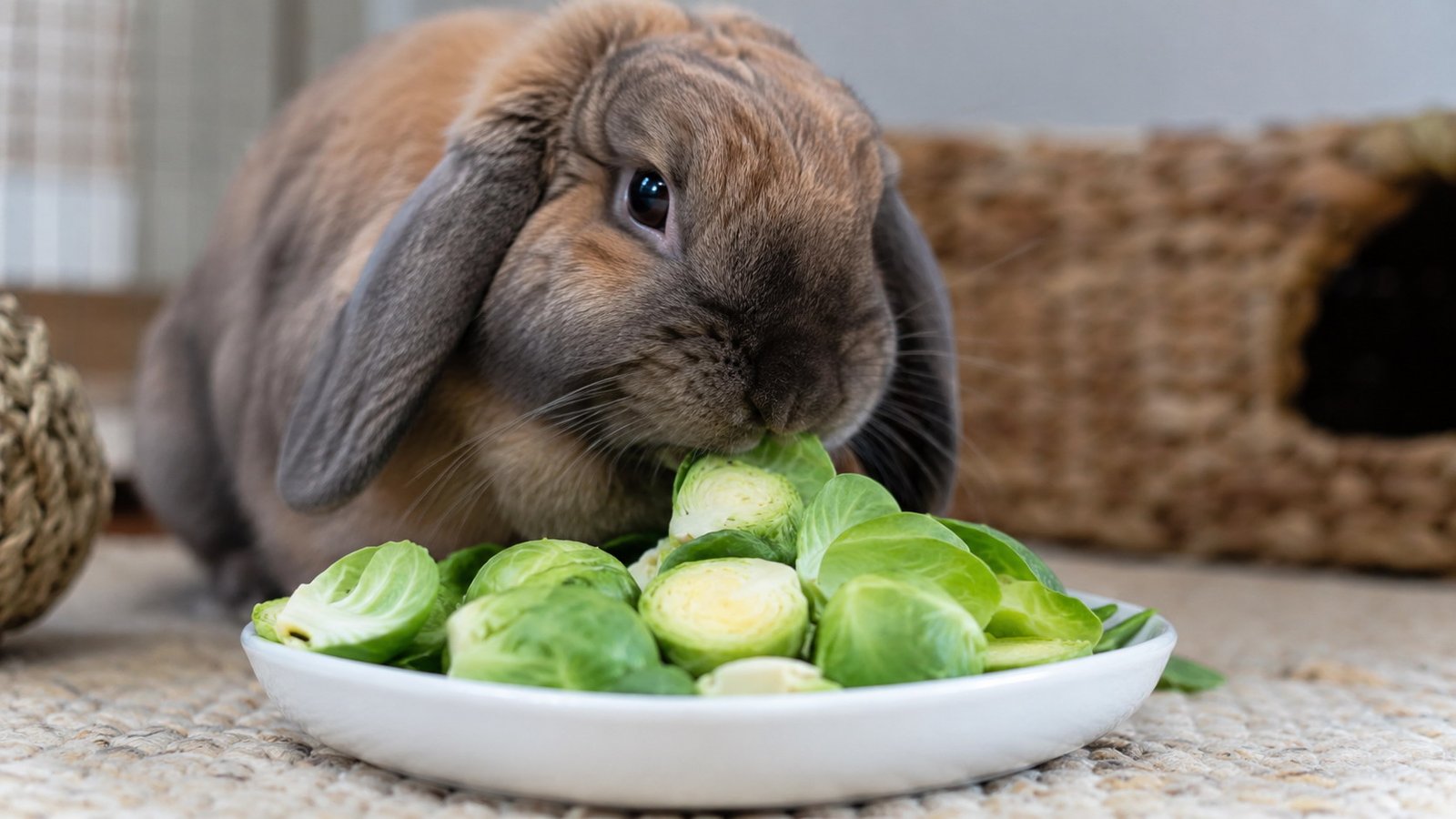
If you’ve ever wondered, can rabbits eat Brussels sprouts, the short answer is yes—but there are a few important things every rabbit owner should know first. While Brussels sprouts contain beneficial nutrients and can be a healthy treat, feeding too much or introducing them incorrectly may lead to digestive issues.
This guide explains the benefits, risks, proper serving sizes, and safest ways to feed Brussels sprouts to rabbits. You’ll also learn how Brussels sprouts compare to other vegetables and how they fit into a balanced rabbit diet.
In This Article
Can Rabbits Eat Brussels Sprouts? The Short Answer
Yes, rabbits can eat Brussels sprouts in moderation. Healthy adult rabbits can safely enjoy small amounts of raw Brussels sprouts as part of a varied diet that primarily consists of hay.
Brussels sprouts belong to the cruciferous vegetable family, which includes broccoli, kale, and cabbage. These vegetables contain valuable nutrients but are also known for potentially causing gas in some animals.
Since rabbits have sensitive digestive systems, moderation is the key to safe feeding.
Are Brussels Sprouts Safe for All Rabbits?
Most healthy adult rabbits can eat Brussels sprouts occasionally. However, some rabbits may be more sensitive than others.
You should be cautious if your rabbit:
- Has a history of digestive problems
- Experiences frequent gas or bloating
- Is recovering from illness
- Has never eaten cruciferous vegetables before
Baby rabbits under 12 weeks old should not be offered Brussels sprouts or other fresh vegetables. Their digestive systems are still developing and are best supported by mother’s milk, hay, and age-appropriate food.
Quick Brussels Sprout Safety Overview
| Question | Answer |
| Can adult rabbits eat Brussels sprouts? | Yes, in moderation |
| Can rabbits eat Brussels sprout leaves? | Yes |
| Can rabbits eat Brussels sprouts daily? | Not recommended |
| Raw or cooked? | Raw is best |
| Main concern | Gas and digestive upset |
| Best feeding method | Small portions as part of vegetable rotation |
Key takeaway: Brussels sprouts are safe for most rabbits when fed occasionally and in appropriate amounts.
What Makes Brussels Sprouts Different From Other Rabbit Vegetables?
Not all vegetables affect rabbits the same way. Brussels sprouts offer a unique nutritional profile that makes them both beneficial and somewhat controversial among rabbit owners.
Nutritional Benefits of Brussels Sprouts
Brussels sprouts contain:
- Dietary fiber
- Vitamin C
- Vitamin K
- Folate
- Potassium
- Antioxidants
- Small amounts of protein
Fiber is especially important because healthy digestion depends on a constant flow of fibrous food through the digestive tract.
Why Fiber Matters for Rabbits
A rabbit’s digestive system is designed to process large amounts of plant fiber throughout the day. Fiber helps:
- Support gut movement
- Promote healthy droppings
- Reduce digestive slowdown
- Maintain overall intestinal health
Although hay remains the primary source of fiber, vegetables such as Brussels sprouts can contribute additional nutritional variety.
How Brussels Sprouts Compare to Common Rabbit Greens
Many rabbit owners assume all leafy vegetables are equally suitable. In reality, Brussels sprouts are more nutrient-dense than some popular greens but also carry a higher risk of gas production.
| Vegetable | Fiber | Nutrients | Gas Risk |
| Romaine lettuce | Moderate | Good | Low |
| Cilantro | Moderate | Good | Low |
| Parsley | Moderate | High | Low |
| Brussels sprouts | High | Very high | Moderate |
| Kale | High | Very high | Moderate |
This doesn’t make Brussels sprouts unsafe—it simply means they should be offered thoughtfully rather than as an everyday staple.
Benefits of Feeding Brussels Sprouts to Rabbits
When fed properly, Brussels sprouts can provide several valuable health benefits.
Supports Digestive Health
Fiber plays a major role in maintaining healthy digestion.
Small servings of Brussels sprouts can help:
- Support normal gut movement
- Encourage chewing activity
- Add dietary variety
- Complement a hay-based diet
Healthy digestion is one of the most important factors in long-term rabbit wellness.
Provides Beneficial Vitamins and Minerals
Brussels sprouts contain nutrients that support many bodily functions.
Some notable benefits include:
- Vitamin K for healthy blood clotting and bone health
- Antioxidants that help protect cells from damage
- Potassium for muscle and nerve function
- Folate for normal cellular processes
Although rabbits obtain much of their nutrition from hay and pellets, vegetables can provide additional nutritional enrichment.
Encourages Natural Foraging Behavior
Rabbits naturally enjoy exploring different textures, flavors, and scents.
Adding safe vegetables like Brussels sprouts occasionally can:
- Increase mealtime enrichment
- Prevent boredom
- Encourage natural feeding behaviors
- Make vegetable time more exciting
Many rabbits enjoy nibbling both the leaves and the sprout itself.
Adds Healthy Variety to the Diet
Offering the same vegetables every day can limit nutritional diversity.
Rotating vegetables helps provide a broader range of nutrients while reducing the risk of overfeeding any one food.
A healthy vegetable rotation might include:
- Romaine lettuce
- Cilantro
- Basil
- Mint
- Bok choy
- Parsley
- Small amounts of Brussels sprouts
Important: Variety is beneficial, but hay should still make up roughly 80–90% of a rabbit’s overall diet.
A Note on Responsible Feeding
Brussels sprouts can be a nutritious addition to a rabbit’s menu, but they should never replace unlimited grass hay. Think of them as a healthy supplement to an already balanced diet rather than a primary food source.
According to rabbit feeding guidance from the House Rabbit Society, hay should remain the foundation of every rabbit’s diet, with fresh vegetables offered as complementary foods.
The Biggest Risk: Can Brussels Sprouts Cause Gas in Rabbits?
The biggest concern when feeding Brussels sprouts to rabbits is their potential to cause gas. While humans can usually pass gas without much trouble, rabbits have a digestive system that is far less forgiving.
Excessive gas can cause discomfort and, in severe cases, contribute to digestive slowdowns that may become serious if left untreated.
Why Do Brussels Sprouts Cause Gas?
Brussels sprouts are part of the cruciferous vegetable family. These vegetables contain complex carbohydrates and natural compounds that can ferment in the digestive tract.
Some rabbits tolerate them perfectly, while others may experience:
- Mild bloating
- Increased stomach noises
- Softer droppings
- Reduced appetite
- General discomfort
Each rabbit reacts differently, which is why gradual introduction is so important.
Signs Your Rabbit May Be Having Digestive Trouble
Watch your rabbit closely after introducing Brussels sprouts for the first few times.
Common warning signs include:
- Refusing food
- Smaller or fewer droppings
- Hunched posture
- Pressing the belly against the floor
- Reduced activity
- Teeth grinding due to pain
- Swollen abdomen
Any rabbit that stops eating or producing droppings should be evaluated by a veterinarian promptly. Digestive stasis can become life-threatening if not treated quickly.
How to Reduce the Risk of Gas
Fortunately, most digestive issues can be avoided with proper feeding practices.
Follow these guidelines:
- Introduce Brussels sprouts slowly
- Feed very small portions initially
- Offer only one new vegetable at a time
- Provide unlimited fresh hay
- Ensure access to clean water
- Monitor droppings for changes
Many rabbit owners discover their rabbits can enjoy Brussels sprouts without any problems when portions remain modest.
When Brussels Sprouts May Not Be Worth the Risk
Some rabbits simply have sensitive digestive systems.
If your rabbit consistently develops gas or soft stools after eating Brussels sprouts, there is no need to force the issue. Plenty of other rabbit-safe vegetables provide excellent nutrition without causing digestive discomfort.
Good alternatives include:
- Romaine lettuce
- Green leaf lettuce
- Cilantro
- Basil
- Mint
- Bok choy
The healthiest vegetable is one your rabbit can digest comfortably.
How Much Brussels Sprout Can a Rabbit Eat?
Knowing that rabbits can eat Brussels sprouts is only part of the equation. Portion size often determines whether a food remains healthy or becomes problematic.
Recommended Serving Sizes
Brussels sprouts should be treated as one item within a larger vegetable rotation, not as a daily staple.
Here is a practical feeding guide:
| Rabbit Size | Recommended Portion |
| Small rabbits (under 4 lbs) | ½ to 1 small Brussels sprout |
| Medium rabbits (4–8 lbs) | 1 small Brussels sprout |
| Large rabbits (over 8 lbs) | 1–2 small Brussels sprouts |
These amounts should be offered only occasionally, not every day.
How Often Can Rabbits Eat Brussels Sprouts?
Most rabbits do well with Brussels sprouts:
- Once or twice per week
- As part of a varied vegetable rotation
- Alongside lower-gas leafy greens
Offering them daily increases the chances of digestive upset and reduces dietary variety.
A Simple Feeding Example
A healthy weekly vegetable plan might look like this:
| Day | Vegetables |
| Monday | Romaine lettuce and cilantro |
| Tuesday | Parsley and basil |
| Wednesday | Romaine lettuce and mint |
| Thursday | Small serving of Brussels sprouts with leafy greens |
| Friday | Bok choy and cilantro |
| Saturday | Green leaf lettuce and basil |
| Sunday | Small serving of Brussels sprouts with romaine |
This approach helps spread nutrients across multiple foods while limiting potential digestive issues.
Why Overfeeding Is a Common Mistake
Many rabbit owners assume that because a rabbit enjoys a food, more must be better.
Unfortunately, overfeeding Brussels sprouts can lead to:
- Gas
- Bloating
- Soft stools
- Reduced hay consumption
- Nutritional imbalance
A rabbit that fills up on vegetables may eat less hay, and hay should always remain the most important part of the diet.
How to Introduce Brussels Sprouts Safely
Introducing any new vegetable requires patience. Even foods considered safe can upset a rabbit’s digestive system if offered too quickly.
Start With a Tiny Amount
The safest approach is to begin with a very small piece.
For example:
- One small leaf
- A thin slice of Brussels sprout
- A piece no larger than your thumbnail
Offer this amount and then observe your rabbit over the next 24 hours.
Monitor Your Rabbit Carefully
After feeding a new vegetable, check for:
- Normal appetite
- Regular droppings
- Typical energy levels
- Normal water consumption
If everything remains unchanged, you can gradually increase the amount during future feedings.
Introduce Only One New Food at a Time
Many digestive issues become difficult to identify when several new foods are offered together.
A better strategy is:
- Introduce one vegetable.
- Wait 24–48 hours.
- Observe your rabbit.
- Increase gradually if tolerated.
This makes it much easier to determine which food is responsible if a problem develops.
Proper Preparation Before Feeding
Before offering Brussels sprouts:
- Wash thoroughly under running water
- Remove damaged or wilted leaves
- Avoid vegetables treated with sauces or seasonings
- Serve raw, not cooked
- Cut larger sprouts into manageable pieces if needed
Fresh, clean vegetables are always the safest choice.
Signs the Introduction Is Going Well
Positive signs include:
- Eager eating
- Normal droppings
- No bloating
- Consistent hay consumption
- Normal activity levels
When these signs are present, Brussels sprouts can become an occasional part of your rabbit’s regular vegetable rotation.
Remember: Introducing new foods slowly may feel cautious, but it is one of the best ways to protect your rabbit’s digestive health and avoid unnecessary trips to the veterinarian.
Raw or Cooked: Which Form Is Best for Rabbits?
When feeding Brussels sprouts to rabbits, the answer is simple: raw Brussels sprouts are the safest and healthiest option.
A rabbit’s digestive system is designed to process fresh plant material. Cooking changes the texture, moisture content, and nutrient profile of vegetables, making them less suitable for rabbits.
Why Raw Brussels Sprouts Are Better
Raw Brussels sprouts retain their natural:
- Fiber content
- Texture
- Nutritional value
- Crunchiness that encourages chewing
Chewing fibrous foods helps support dental health, which is especially important because rabbit teeth grow continuously throughout their lives.
Are Cooked Brussels Sprouts Safe?
Cooked Brussels sprouts are not toxic to rabbits, but they are generally not recommended.
Cooking can:
- Reduce certain nutrients
- Alter digestion
- Make the vegetable too soft
- Encourage overeating due to reduced fiber structure
Rabbits gain the most benefit from fresh, raw vegetables.
Never Feed Seasoned Brussels Sprouts
Human recipes often include ingredients that are unsuitable for rabbits.
Avoid feeding Brussels sprouts prepared with:
- Salt
- Butter
- Oils
- Garlic
- Onion
- Sauces
- Seasonings
Many common cooking ingredients can upset a rabbit’s digestive system or even be harmful.
What About Frozen Brussels Sprouts?
Frozen Brussels sprouts are best avoided unless they have been fully thawed and returned to room temperature.
Cold vegetables may cause digestive discomfort in some rabbits, and frozen produce often becomes soft and mushy after thawing.
Fresh Brussels sprouts remain the preferred choice.
Best Preparation Method
Before feeding Brussels sprouts:
- Wash thoroughly to remove dirt and residues.
- Remove damaged outer leaves.
- Cut large sprouts into smaller pieces if needed.
- Serve raw and fresh.
- Remove uneaten portions after a few hours.
Simple is best. Fresh, raw, and unseasoned Brussels sprouts are the safest option for rabbits.
Brussels Sprout Leaves vs. Whole Brussels Sprouts
Many rabbit owners are surprised to learn that the leaves and the sprout itself can both be offered to rabbits.
In fact, some rabbits seem to enjoy the leaves even more than the compact sprout.
Can Rabbits Eat Brussels Sprout Leaves?
Yes, Brussels sprout leaves are generally safe for rabbits.
The leaves contain:
- Fiber
- Vitamins
- Moisture
- Beneficial plant nutrients
Because they resemble other leafy greens commonly fed to rabbits, many rabbits readily accept them.
Are the Leaves Easier to Digest?
Some rabbit owners report that their rabbits tolerate the leaves better than the dense sprout.
Possible reasons include:
- Softer texture
- Higher leaf-to-fiber ratio
- Easier chewing
- Smaller serving sizes
However, every rabbit is different, so observation remains important.
Comparing Leaves and Whole Sprouts
| Feature | Brussels Sprout Leaves | Whole Brussels Sprouts |
| Texture | Soft and leafy | Dense and compact |
| Ease of chewing | Easy | Moderate |
| Fiber content | Good | High |
| Gas potential | Moderate | Moderate to higher |
| Rabbit preference | Often high | Varies by rabbit |
Which Should You Feed?
A balanced approach works well.
You can:
- Offer a few fresh leaves
- Include a small piece of the sprout
- Rotate both occasionally
- Observe your rabbit’s preference
Many owners use the leaves as a gentle introduction before offering larger portions of the actual sprout.
Watch for Individual Preferences
Rabbits often have strong opinions about vegetables.
Some eagerly eat every part of a Brussels sprout, while others ignore the sprout and focus on the leaves.
Allow your rabbit’s response to guide future feeding choices while staying within safe serving limits.
Brussels Sprouts Compared to Other Rabbit-Friendly Greens
Brussels sprouts can be a healthy addition to a rabbit’s diet, but they are not necessarily the best everyday vegetable.
Understanding how they compare to other greens helps create a healthier and more balanced feeding plan.
Brussels Sprouts vs. Romaine Lettuce
Romaine lettuce is one of the most commonly recommended vegetables for rabbits.
| Category | Brussels Sprouts | Romaine Lettuce |
| Fiber | High | Moderate |
| Vitamins | Very high | Good |
| Water content | Moderate | High |
| Gas risk | Moderate | Low |
| Daily feeding suitability | Occasional | Frequent |
Romaine lettuce is generally safer for regular feeding because it rarely causes digestive issues.
Brussels Sprouts vs. Parsley
Parsley is another nutrient-rich option frequently included in rabbit diets.
| Category | Brussels Sprouts | Parsley |
| Nutrient density | Very high | Very high |
| Fiber | High | Moderate |
| Gas risk | Moderate | Low |
| Flavor strength | Mild | Strong |
Parsley offers excellent nutrition with a lower likelihood of causing gas.
Brussels Sprouts vs. Kale
Both Brussels sprouts and kale belong to the cruciferous vegetable family.
| Category | Brussels Sprouts | Kale |
| Fiber | High | High |
| Vitamins | Very high | Very high |
| Gas risk | Moderate | Moderate |
| Feeding frequency | Limited | Limited |
Neither should become the primary vegetable in a rabbit’s diet.
The Best Strategy: Rotation Instead of Reliance
No single vegetable provides everything a rabbit needs.
Experienced rabbit owners often rotate vegetables such as:
- Romaine lettuce
- Green leaf lettuce
- Cilantro
- Basil
- Mint
- Bok choy
- Parsley
- Small portions of Brussels sprouts
This approach provides broader nutrition while reducing the risk associated with feeding too much of any one vegetable.
Creating a Balanced Vegetable Plate
A healthy vegetable serving might include:
- One leafy green as the base
- One herb for variety
- One occasional nutrient-dense vegetable such as Brussels sprouts
For example:
- Romaine lettuce
- Cilantro
- Small piece of Brussels sprout
This combination delivers variety without overwhelming the digestive system.
Brussels sprouts work best as a supporting player in a rabbit’s diet—not the star of every meal. When combined with hay, fresh water, quality pellets, and a rotating selection of greens, they can contribute valuable nutrients while keeping your rabbit interested in mealtime.
Common Mistakes Rabbit Owners Make When Feeding Brussels Sprouts
Brussels sprouts can be a healthy treat, but several common mistakes can quickly turn a nutritious snack into a digestive problem.
Avoiding these errors helps keep your rabbit safe and comfortable.
Feeding Too Much Too Soon
Many owners become excited when their rabbit enjoys a new food and immediately increase the serving size.
This is one of the fastest ways to trigger digestive upset.
Always start with a tiny portion and gradually increase only if your rabbit tolerates it well.
Offering Brussels Sprouts Every Day
Brussels sprouts contain valuable nutrients, but they should not become a daily staple.
Daily feeding may:
- Increase the risk of gas
- Reduce dietary variety
- Encourage picky eating habits
A rotation of several rabbit-safe vegetables is a healthier long-term strategy.
Ignoring Changes in Droppings
A rabbit’s droppings provide important clues about digestive health.
Watch for:
- Smaller droppings
- Misshapen droppings
- Soft stools
- Reduced droppings
Any significant change after introducing Brussels sprouts suggests the serving size may be too large or that your rabbit does not tolerate them well.
Replacing Hay With Vegetables
One of the biggest nutritional mistakes is allowing vegetables to replace hay.
Hay should always remain the foundation of a rabbit’s diet because it supports:
- Healthy digestion
- Proper tooth wear
- Gut motility
- Overall wellness
Unlimited grass hay should be available at all times, regardless of how many vegetables your rabbit receives.
Feeding Wilted or Spoiled Produce
Fresh vegetables are safest.
Discard Brussels sprouts that are:
- Slimy
- Moldy
- Discolored
- Rotten-smelling
Spoiled produce can upset digestion and expose rabbits to harmful bacteria.
Assuming Every Rabbit Reacts the Same Way
Two rabbits can eat the exact same vegetable and respond differently.
Some rabbits handle Brussels sprouts with no issues, while others develop gas from even small portions.
Pay attention to your rabbit’s individual response rather than relying solely on general guidelines.
Building a Balanced Rabbit Diet Beyond Brussels Sprouts
Brussels sprouts can play a small role in a healthy diet, but they should never be the main focus.
A truly balanced rabbit diet prioritizes the foods rabbits are biologically designed to eat.
Hay Should Be the Foundation
Most rabbit nutrition experts recommend that hay make up approximately 80–90% of a rabbit’s daily diet.
Benefits of unlimited hay include:
- Improved digestion
- Healthy teeth
- Mental enrichment
- Reduced obesity risk
Popular options include:
- Timothy hay
- Orchard grass hay
- Meadow hay
Fresh Vegetables Add Variety
Vegetables provide additional nutrients, moisture, and enrichment.
Good daily vegetable choices include:
- Romaine lettuce
- Green leaf lettuce
- Cilantro
- Bok choy
- Basil
- Mint
- Parsley
Brussels sprouts can occasionally join this rotation in small amounts.
Quality Pellets Have a Supporting Role
Pellets can help provide balanced nutrition but should be fed in moderation.
Look for:
- High-fiber formulas
- Timothy-hay-based pellets
- Products without colorful treats or seeds
Excess pellets may contribute to weight gain and reduce hay consumption.
Foods Rabbits Should Avoid
Certain foods can be dangerous for rabbits.
Avoid feeding:
- Chocolate
- Candy
- Avocado
- Onions
- Garlic
- Processed snacks
- Sugary cereals
- Iceberg lettuce in large amounts
When introducing any new food, research its safety first.
Why Variety Matters
Feeding a wide range of rabbit-safe vegetables helps provide:
- Diverse nutrients
- Mealtime enrichment
- Reduced risk of overfeeding one food
- Better long-term dietary balance
A varied diet often leads to healthier, happier rabbits.
Signs Your Rabbit Is Enjoying Brussels Sprouts—and Signs They Aren’t
Every rabbit responds differently to new foods. Learning to recognize positive and negative reactions can help you make better feeding decisions.
Signs Your Rabbit Is Enjoying Brussels Sprouts
Healthy responses include:
- Eager eating
- Normal droppings
- Continued hay consumption
- Good energy levels
- Normal water intake
These signs suggest your rabbit is handling the vegetable well.
Signs Brussels Sprouts May Not Agree With Your Rabbit
Monitor for:
- Reduced appetite
- Fewer droppings
- Soft stools
- Bloating
- Lethargy
- Hunched posture
Even mild digestive changes should be taken seriously.
When to Contact a Veterinarian
Seek veterinary care immediately if your rabbit:
- Stops eating
- Stops producing droppings
- Appears painful
- Shows severe bloating
- Becomes unusually inactive
Digestive stasis is a medical emergency in rabbits and requires prompt treatment.
Trust What Your Rabbit Tells You
Some rabbits love Brussels sprouts and tolerate them perfectly.
Others simply do better with different vegetables.
A healthy rabbit diet is not about forcing specific foods—it’s about finding safe, nutritious options your rabbit can comfortably enjoy.
Frequently Asked Questions About Rabbits and Brussels Sprouts
Can baby rabbits eat Brussels sprouts?
No. Baby rabbits should not be fed Brussels sprouts or most fresh vegetables until their digestive systems are mature enough to handle them safely. Consult your veterinarian regarding appropriate age and feeding guidelines.
Can rabbits eat Brussels sprout leaves?
Yes. Brussels sprout leaves are generally safe for healthy adult rabbits and are often enjoyed just as much as the sprout itself.
Can rabbits eat Brussels sprouts every day?
Daily feeding is not recommended. Brussels sprouts are best offered once or twice per week as part of a varied vegetable rotation.
How much Brussels sprout should a rabbit eat?
Most rabbits only need a small serving, typically one small sprout or less depending on their size and individual tolerance.
Can Brussels sprouts cause gas in rabbits?
Yes. Brussels sprouts are known to cause gas in some rabbits, which is why moderation and gradual introduction are important.
Are frozen Brussels sprouts safe for rabbits?
Fresh Brussels sprouts are the better choice. Frozen vegetables can become mushy after thawing and may not provide the same texture and feeding experience.
Can rabbits eat raw Brussels sprouts?
Yes. Raw Brussels sprouts are the preferred form because they retain their natural fiber and nutrients without added ingredients.
What vegetables are safer than Brussels sprouts for sensitive rabbits?
Romaine lettuce, green leaf lettuce, cilantro, basil, and mint are often easier on sensitive digestive systems.
Final Verdict: Should You Feed Brussels Sprouts to Your Rabbit?
So, can rabbits eat Brussels sprouts?
Yes—healthy adult rabbits can safely eat Brussels sprouts in moderation. They provide fiber, vitamins, antioxidants, and dietary variety that can contribute to a balanced diet.
The main concern is their potential to cause gas, which makes portion control and gradual introduction especially important. Small servings offered once or twice per week are usually sufficient for most rabbits.
Remember that no vegetable should replace the essentials: unlimited hay, fresh water, appropriate pellets, and a rotating selection of rabbit-safe greens.
If you’re unsure whether a new food is right for your rabbit, consult an experienced rabbit veterinarian and monitor your rabbit closely whenever introducing dietary changes.
Want to help your rabbit thrive? Start by reviewing your rabbit’s current vegetable rotation, introduce new foods carefully, and continue learning about proper rabbit nutrition to support a long, healthy, and happy life.