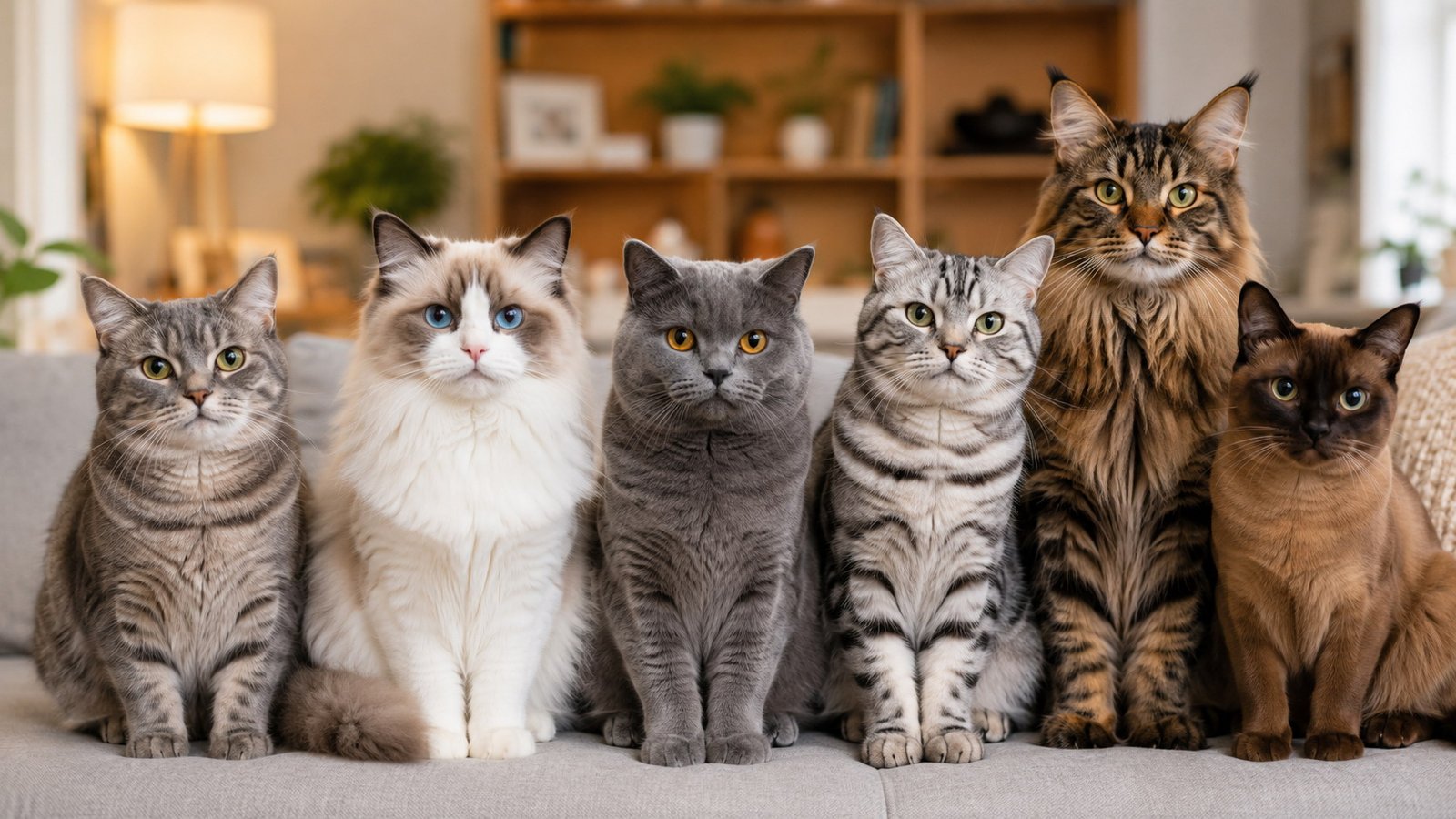
Choosing the right cat can feel overwhelming when you’re a first-time pet owner. A thorough comparison between cats for beginners helps narrow down the options and prevents common mistakes that lead to frustration later.
Some cats are naturally more independent, while others crave constant attention. Certain breeds require frequent grooming, whereas others are remarkably low-maintenance. Understanding these differences before bringing a cat home can make the transition smoother for both you and your new companion.
This guide compares some of the best beginner-friendly cats, explains what makes them easy to care for, and helps you match a cat’s personality and needs to your lifestyle.
In This Article
What Makes a Cat Good for Beginners?
Not every cat is equally suited for first-time owners. While every individual cat has a unique personality, certain traits tend to make some breeds easier to manage than others.
Friendly and Adaptable Temperament
Beginner-friendly cats typically adjust well to new environments and enjoy human interaction without being overly demanding.
Look for cats that are:
- Social but not clingy
- Comfortable around visitors
- Patient with children
- Easy to handle during grooming and vet visits
A cat with a stable temperament often creates fewer challenges for new owners.
Moderate Grooming Requirements
Long-haired cats can be beautiful, but they often require regular brushing to prevent mats and tangles.
Many first-time owners find short-haired breeds easier because they:
- Shed less noticeably
- Need less frequent brushing
- Develop fewer coat-related issues
Manageable Energy Levels
Highly active cats can be entertaining, but they also need more stimulation.
A good beginner cat usually has:
- Balanced activity levels
- Enjoyment of interactive play
- Ability to relax independently
Cats that can entertain themselves for short periods are often easier for busy households.
Good Overall Health
Although no breed is completely free from health issues, some tend to experience fewer inherited conditions than others.
Mixed-breed cats, for example, often benefit from greater genetic diversity.
Fits Your Living Situation
Lifestyle matters as much as breed.
Ask yourself:
- Do you live in an apartment or house?
- Are you home most of the day?
- Do you have children or other pets?
- Can you dedicate time to grooming and play?
Matching a cat to your daily routine is often more important than choosing the “best” breed.
Quick Comparison: The Best Cat Breeds for First-Time Owners
The table below highlights several popular cats often recommended for beginners.
| Breed | Friendliness | Grooming Needs | Energy Level | Affection Level | Ease of Care |
| Domestic Shorthair | High | Low | Moderate | Moderate | Excellent |
| Ragdoll | Very High | Moderate | Low to Moderate | Very High | Excellent |
| British Shorthair | High | Low | Low | Moderate | Excellent |
| American Shorthair | High | Low | Moderate | Moderate | Very Good |
| Maine Coon | Very High | Moderate to High | Moderate | High | Good |
| Burmese | Very High | Low | Moderate to High | Very High | Very Good |
Domestic Shorthair
Domestic Shorthairs are among the easiest cats for beginners.
Benefits include:
- Generally healthy
- Adaptable to various homes
- Affordable adoption costs
- Minimal grooming needs
Many shelter cats fall into this category, making them a fantastic choice for first-time owners.
Ragdoll
Ragdolls are famous for their gentle and affectionate personalities.
Owners often love them because they:
- Enjoy being held
- Follow family members around the home
- Adapt well to indoor living
- Usually get along with children
Their semi-long coat requires regular brushing but is generally easier to maintain than many other long-haired breeds.
British Shorthair
British Shorthairs are calm, independent, and easygoing.
They are ideal for people who:
- Work outside the home
- Prefer a quieter pet
- Want a low-maintenance companion
Their relaxed personality makes them one of the easiest purebred cats for beginners.
American Shorthair
American Shorthairs offer an excellent balance between playfulness and independence.
Key advantages include:
- Adaptability
- Strong health history
- Friendly nature
- Easy grooming
They tend to fit well into a variety of households.
Maine Coon
Known as gentle giants, Maine Coons combine friendliness with intelligence.
Potential owners should consider:
- Larger food expenses
- More grooming than short-haired breeds
- Need for climbing space and enrichment
Despite their size, they are often exceptionally patient and affectionate.
Burmese
Burmese cats are social, curious, and people-oriented.
They thrive in homes where:
- Someone is frequently present
- Interactive play is encouraged
- Human companionship is readily available
Their short coat makes grooming relatively simple.
Ragdoll vs British Shorthair: Which Beginner Cat Fits Your Lifestyle?
Both breeds frequently appear on lists of the best cats for beginners, but they suit different types of owners.
Personality Differences
Ragdolls are highly affectionate and often seek attention throughout the day.
British Shorthairs tend to be more reserved. They enjoy companionship but are usually less demanding.
If you want a cat that follows you from room to room, a Ragdoll may be the better choice.
If you appreciate a pet that enjoys company while maintaining independence, the British Shorthair may be a better fit.
Grooming Commitment
Ragdolls have longer coats that benefit from regular brushing.
British Shorthairs have dense but relatively easy-to-maintain coats.
| Trait | Ragdoll | British Shorthair |
| Coat Length | Semi-long | Short |
| Brushing Frequency | 2–3 times weekly | Weekly |
| Shedding Management | Moderate | Moderate |
| Grooming Difficulty | Moderate | Easy |
Attention Needs
One of the biggest differences involves social interaction.
Ragdolls generally:
- Seek human companionship
- Prefer not to be left alone for long periods
- Enjoy lap time
British Shorthairs generally:
- Appreciate personal space
- Handle alone time better
- Show affection in a calmer way
Best Owner Match
Choose a Ragdoll if you:
- Want a highly affectionate companion
- Spend lots of time at home
- Enjoy frequent interaction
Choose a British Shorthair if you:
- Have a busier schedule
- Prefer a more independent pet
- Want lower grooming demands
Neither breed is objectively better—the best choice depends entirely on your lifestyle and expectations as a first-time cat owner.
Hidden Costs: Comparing Cat Ownership Beyond Adoption Fees
Many first-time owners focus on adoption or purchase costs when comparing cats for beginners. While that initial expense matters, the ongoing costs of cat ownership often have a much greater impact on your budget.
Understanding these expenses before bringing a cat home can help prevent unpleasant surprises later.
Food Costs Vary by Breed and Size
A cat’s size, activity level, and dietary needs all influence feeding expenses.
For example:
- Maine Coons generally eat more than smaller breeds.
- Active cats may require additional calories.
- Some cats benefit from specialized diets recommended by a veterinarian.
Choosing high-quality food can support long-term health and may help reduce future medical issues.
Veterinary Care Is a Long-Term Commitment
Routine veterinary visits are essential for every cat, regardless of breed.
Typical annual expenses may include:
- Wellness exams
- Vaccinations
- Parasite prevention
- Dental evaluations
- Diagnostic testing when needed
Preventive care is usually less expensive than treating avoidable health problems.
According to the veterinary nutrition guidelines provided by the World Small Animal Veterinary Association (WSAVA), proper nutrition and preventive healthcare play important roles in maintaining lifelong feline health.
Litter and Everyday Supplies
Recurring costs add up over time.
Common monthly expenses include:
- Cat litter
- Litter box liners
- Waste bags
- Scratching surfaces
- Toys
- Cleaning products
Many beginners underestimate how much litter costs over a cat’s lifetime.
Grooming Expenses
Grooming costs depend largely on coat type.
| Breed Type | Typical Grooming Needs | Potential Cost |
| Short-haired cats | Minimal brushing | Low |
| Semi-long-haired cats | Regular brushing | Moderate |
| Long-haired cats | Frequent coat care | Higher |
Cats like Ragdolls and Maine Coons generally require more grooming time than British Shorthairs or American Shorthairs.
Emergency Expenses Matter Too
Unexpected veterinary emergencies can happen with any cat.
Examples include:
- Injuries
- Urinary blockages
- Digestive issues
- Dental problems
- Sudden illnesses
Many experienced pet owners recommend maintaining an emergency fund specifically for veterinary care.
Which Beginner Cats Tend to Be Most Budget-Friendly?
While individual costs vary, many owners find these cats relatively affordable over the long term:
- Domestic Shorthairs
- American Shorthairs
- British Shorthairs
Their combination of manageable grooming needs and generally straightforward care often makes them attractive options for first-time owners.
Beginner Mistakes When Choosing a Cat Breed
Selecting the wrong cat isn’t usually the result of choosing a “bad” breed. More often, it happens because the owner’s expectations don’t match the cat’s needs.
Recognizing common mistakes can help you make a better decision.
Choosing Based Only on Appearance
Many people fall in love with a breed’s looks before learning about its care requirements.
A fluffy coat or striking eye color may be appealing, but appearance should never be the primary factor.
Consider:
- Temperament
- Grooming requirements
- Energy levels
- Social needs
A cat’s personality affects daily life far more than its appearance.
Underestimating Grooming Needs
Long-haired cats often require significantly more maintenance than beginners expect.
Potential challenges include:
- Matting
- Hairballs
- Increased shedding
- More frequent brushing
Owners who prefer minimal grooming may be happier with a short-haired breed.
Ignoring Activity Levels
Every cat needs exercise, but some breeds are noticeably more energetic.
Highly active cats may:
- Climb furniture
- Demand interactive play
- Become bored more easily
Without sufficient enrichment, unwanted behaviors can develop.
Choosing a Cat That Doesn’t Match Your Schedule
Lifestyle compatibility is one of the most overlooked factors.
Questions worth asking include:
- How many hours are you away from home?
- Do you travel frequently?
- Can you dedicate time to daily interaction?
A social breed like a Burmese may struggle if left alone for extended periods every day.
Focusing Too Much on Breed Labels
Breed descriptions provide useful guidance, but individual personality matters just as much.
Two cats of the same breed can have noticeably different temperaments.
Whenever possible:
- Meet the cat first
- Spend time interacting with it
- Ask shelter staff or breeders about personality traits
This approach often leads to a better match.
Essential Nutrition Tips for Your First Cat
Nutrition is one of the most important aspects of responsible cat ownership. Regardless of breed, providing a balanced diet helps support healthy growth, immune function, weight management, and overall well-being.
Cats Are True Carnivores
Unlike dogs, cats have specific nutritional requirements that depend heavily on animal-based proteins.
A quality cat food should provide:
- High-quality protein
- Essential amino acids such as taurine
- Appropriate fat levels
- Vitamins and minerals formulated for cats
Cats cannot thrive on diets designed for humans or other pets.
Match Food to Life Stage
Nutritional needs change throughout a cat’s life.
| Life Stage | Nutritional Focus |
| Kitten | Growth and development |
| Adult | Maintenance and energy balance |
| Senior | Healthy aging and weight management |
Feeding food designed for the correct life stage helps meet these changing needs.
Monitor Portion Sizes
Overfeeding is one of the leading causes of obesity in cats.
Helpful practices include:
- Following feeding guidelines on the package
- Measuring meals
- Limiting excessive treats
- Monitoring body condition regularly
A healthy weight contributes to better mobility and long-term health.
Encourage Hydration
Many cats naturally drink less water than they should.
You can increase hydration by:
- Providing multiple water stations
- Using pet fountains
- Offering wet food as part of the diet
- Keeping water bowls clean and fresh
Proper hydration supports kidney and urinary tract health.
Transition Food Gradually
Sudden diet changes can upset a cat’s digestive system.
A gradual transition often works best:
- Day 1–2: 75% old food, 25% new food
- Day 3–4: 50% old food, 50% new food
- Day 5–6: 25% old food, 75% new food
- Day 7+: 100% new food
This method allows the digestive system to adapt comfortably.
Warning Signs of Nutritional Problems
Contact your veterinarian if you notice:
- Unexplained weight loss
- Persistent vomiting
- Chronic diarrhea
- Poor coat quality
- Loss of appetite
- Significant changes in drinking habits
Early intervention can prevent more serious health concerns.
Building Healthy Habits From Day One
Many experienced cat owners find that establishing good feeding habits early makes lifelong care easier.
Focus on:
- Consistent feeding schedules
- Quality nutrition
- Fresh water availability
- Regular weight monitoring
These simple practices can help your first cat enjoy a healthier and happier life for years to come.
Grooming Requirements Compared: Which Cats Need the Least Maintenance?
Grooming is often one of the biggest differences between beginner-friendly cat breeds. While all cats spend a considerable amount of time grooming themselves, they still benefit from regular care from their owners.
Understanding grooming needs before adopting can save time, money, and frustration.
Short-Haired vs Long-Haired Cats
Short-haired cats generally require less maintenance than long-haired breeds.
| Coat Type | Grooming Frequency | Difficulty Level |
| Short-haired | Once weekly | Easy |
| Medium-haired | 2–3 times weekly | Moderate |
| Long-haired | Daily or near-daily | Higher |
Breeds such as British Shorthairs, American Shorthairs, and Domestic Shorthairs are often easier for beginners because their coats require less attention.
Cats With the Lowest Grooming Needs
If low maintenance is your goal, consider:
- British Shorthair
- American Shorthair
- Domestic Shorthair
- Burmese
These breeds typically require:
- Weekly brushing
- Occasional nail trimming
- Routine ear and dental care
Their simple grooming routines make them excellent choices for first-time owners.
Cats That Need More Coat Care
Longer-haired breeds may require additional effort.
Examples include:
- Ragdoll
- Maine Coon
- Persian
Potential challenges include:
- Matting
- Tangles
- Increased shedding
- More frequent brushing sessions
Skipping grooming sessions can quickly lead to coat problems, especially in long-haired cats.
Beyond Brushing: Other Grooming Essentials
Many beginners focus only on fur care, but grooming includes several other important tasks.
Nail Trimming
Most indoor cats need nail trims every few weeks.
Regular trimming helps:
- Prevent overgrowth
- Reduce accidental scratches
- Protect furniture
Ear Checks
Inspect ears regularly for:
- Excess wax
- Redness
- Unpleasant odor
Healthy ears should appear clean and pale pink.
Dental Care
Dental disease is common in cats and often goes unnoticed.
Helpful habits include:
- Brushing teeth when possible
- Using veterinarian-approved dental products
- Scheduling regular dental evaluations
Grooming Tools Every New Owner Should Have
A basic grooming kit may include:
- Soft-bristle brush
- Nail clippers designed for cats
- Cat-safe toothbrush
- Grooming wipes
- Fine-tooth comb
Starting grooming routines early helps cats become comfortable with handling and care.
Expert Recommendations: The Top 5 Beginner-Friendly Cats Ranked
Every cat is unique, but some breeds consistently stand out as excellent choices for first-time owners.
Best Overall: Domestic Shorthair
Why experts recommend them:
- Adaptable personalities
- Low grooming requirements
- Generally affordable
- Widely available through shelters
A well-socialized Domestic Shorthair is often the easiest and most practical choice for beginners.
Best for Families: Ragdoll
Strengths include:
- Gentle temperament
- Strong affection for people
- Good compatibility with children
- Relaxed indoor lifestyle
Families looking for a friendly companion often find Ragdolls an excellent match.
Best for Apartments: British Shorthair
Apartment dwellers frequently appreciate:
- Quiet behavior
- Moderate activity levels
- Independent personality
- Easy grooming
They adapt well to smaller living spaces without requiring constant stimulation.
Best Balance of Playfulness and Independence: American Shorthair
American Shorthairs offer:
- Friendly personalities
- Adaptability
- Moderate energy
- Minimal maintenance
Many first-time owners appreciate their versatility.
Best for Social Households: Burmese
Burmese cats thrive when surrounded by people.
They are ideal for owners who want:
- Frequent interaction
- High affection levels
- Playful companionship
- Strong human bonds
Households with plenty of daily engagement are often a great fit for this breed.
Quick Ranking Summary
| Rank | Cat Breed | Best For |
| 1 | Domestic Shorthair | Most beginners |
| 2 | Ragdoll | Families and affection seekers |
| 3 | British Shorthair | Apartments and busy owners |
| 4 | American Shorthair | Balanced lifestyles |
| 5 | Burmese | Highly social households |
Frequently Asked Questions About Cats for Beginners
What is the easiest cat breed for first-time owners?
Many experts consider the Domestic Shorthair the easiest cat for beginners due to its adaptability, low grooming needs, and wide range of personalities.
Are mixed-breed cats better than purebred cats for beginners?
Not necessarily, but mixed-breed cats often offer excellent health, lower adoption costs, and diverse personalities that can be ideal for first-time owners.
Which beginner cat requires the least grooming?
British Shorthairs, American Shorthairs, Burmese, and Domestic Shorthairs are among the easiest cats to groom thanks to their short coats.
What cat breed is best for apartment living?
British Shorthairs are frequently recommended for apartments because they are calm, relatively quiet, and comfortable in smaller spaces.
Should first-time owners adopt a kitten or an adult cat?
Adult cats often have established personalities, making it easier to predict their behavior and care needs. Kittens require more supervision, training, and patience.
Are indoor cats easier for beginners to care for?
Indoor cats are generally safer and easier to monitor. They face fewer risks from traffic, predators, infectious diseases, and environmental hazards.
How much time should a beginner spend with their cat each day?
Most cats benefit from daily interaction, play sessions, feeding routines, and affection. Even independent cats need social engagement and mental stimulation.
What is the most affectionate cat breed for beginners?
Ragdolls and Burmese cats are widely regarded as some of the most affectionate breeds, often forming strong bonds with their owners.
Choosing the right cat isn’t about finding the “perfect” breed—it’s about finding the best match for your lifestyle, experience level, and expectations. A beginner-friendly cat should fit naturally into your daily routine while receiving the care, attention, and enrichment it needs to thrive.
Whether you choose a loving Ragdoll, an easygoing British Shorthair, a playful American Shorthair, a social Burmese, or a dependable Domestic Shorthair, taking time to research and compare your options will set the foundation for a rewarding relationship.
Ready to welcome your first feline companion? Start by visiting reputable shelters, rescue organizations, or responsible breeders, and spend time getting to know individual cats before making your decision. The right match could become a cherished member of your family for the next 15 years or more.