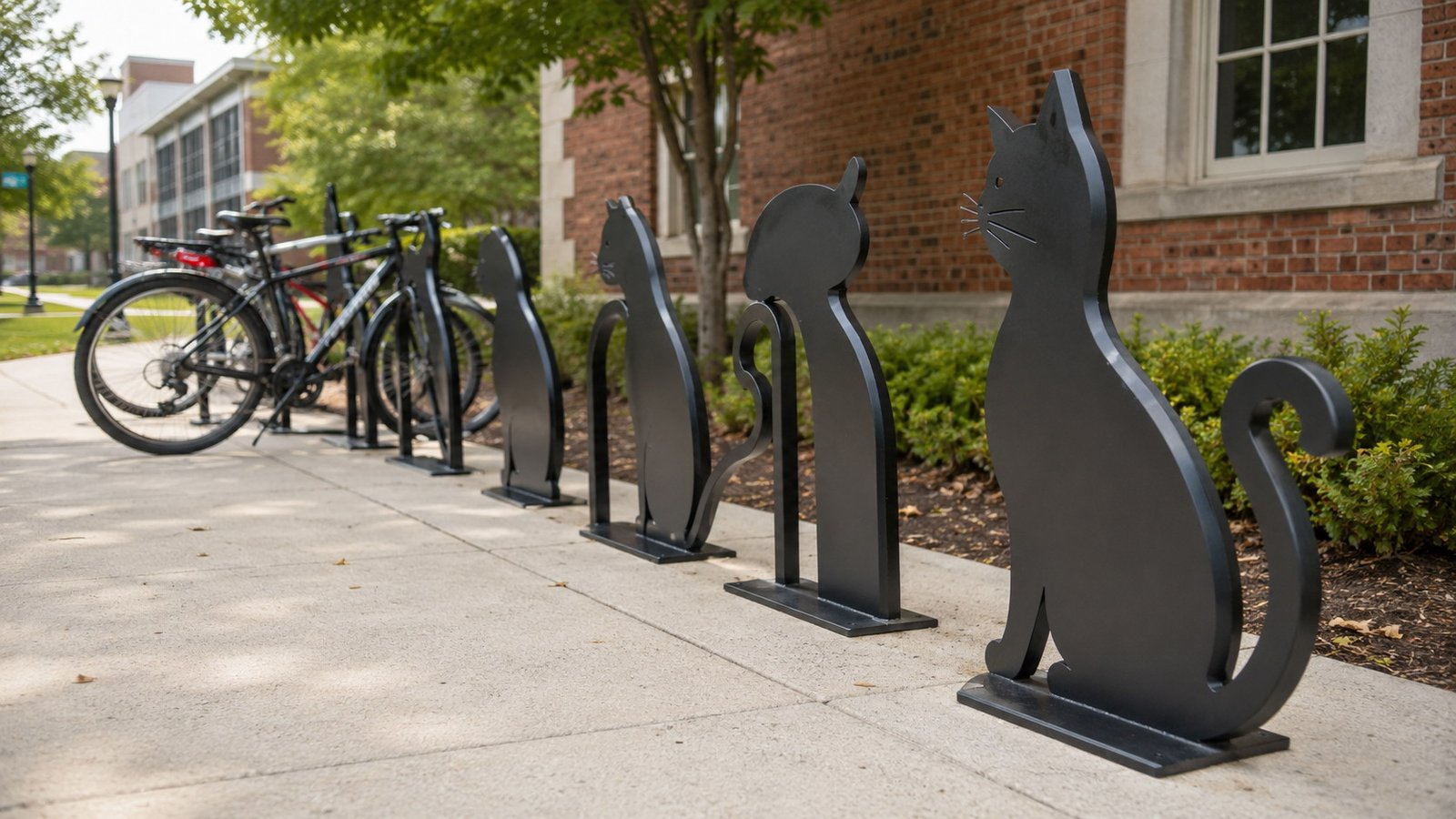
Campus bike racks with dog and cat designs are decorative bicycle parking systems shaped like pets or featuring animal-inspired art. Schools, colleges, parks, and public campuses use them to combine secure bike parking with playful, welcoming design.
These racks do more than hold bicycles. They improve campus identity, encourage cycling, create memorable gathering spots, and make outdoor spaces feel more engaging for students and visitors.
Animal-themed bike racks have become increasingly popular in educational environments because they balance functionality with public art. A simple bike rack can become a mascot, photo spot, or conversation starter while still serving its practical purpose.
This guide explains how campus bike racks with design dogs cats work, why institutions install them, what materials and layouts perform best, and how to choose the right style for a school or campus project.
In This Article
What Are Campus Bike Racks With Dog and Cat Designs?
Campus bike racks with design dogs cats are bicycle parking fixtures that incorporate animal shapes, silhouettes, or artistic themes into the rack structure.
Some are fully sculptural, shaped like standing dogs or curled-up cats. Others use laser-cut panels, paw-print motifs, or cartoon-inspired designs integrated into traditional bike rack frames.
These racks are commonly installed at:
- Universities
- Elementary schools
- High schools
- Libraries
- Student centers
- Parks near campuses
- Veterinary schools
- Animal science departments
- Pet-friendly campuses
The goal is to make bicycle infrastructure visually attractive instead of purely utilitarian.
Why Campuses Use Animal-Themed Bike Racks
They Make Campuses More Welcoming
Traditional metal bike racks are functional but visually forgettable. Dog and cat designs add personality to outdoor spaces and make campuses feel more approachable.
For younger students especially, playful designs can reduce the institutional feel of a school environment.
They Encourage Cycling
Visible and attractive bicycle parking encourages students to ride bikes more often.
A creatively designed rack:
- Draws attention
- Signals bike-friendly infrastructure
- Creates a sense of care for cyclists
- Makes parking areas easier to notice
When bike parking feels intentional rather than an afterthought, students are more likely to use it.
They Support Campus Branding
Many campuses use themed infrastructure to reinforce identity.
Examples include:
- A veterinary college using cat-shaped racks
- A school mascot integrated into bike parking
- Animal welfare campuses using rescue-themed art
- Pet-friendly universities incorporating playful outdoor furniture
These installations help create memorable spaces that reflect campus culture.
They Double as Public Art
Modern campuses increasingly blend architecture, landscape design, and public art.
Dog and cat bike racks can serve as:
- Sculptures
- Photo opportunities
- Wayfinding markers
- Social gathering points
This adds value beyond bicycle storage alone.
Common Types of Dog and Cat Bike Rack Designs
Silhouette Bike Racks
These use flat steel cut into the outline of a dog or cat.
Popular examples include:
- Sitting cat silhouettes
- Running dogs
- Paw-shaped frames
- Minimalist animal outlines
Benefits:
- Cost-effective
- Durable
- Easy to manufacture
- Recognizable from a distance
Sculptural Animal Racks
These are three-dimensional racks shaped like animals.
Examples:
- A curled cat forming the locking loop
- A dog with integrated wheel supports
- Abstract animal sculptures functioning as parking anchors
Benefits:
- Highly artistic
- Strong visual impact
- Ideal for signature campus spaces
Drawbacks:
- Higher cost
- More complex installation
- Sometimes lower parking density
Custom Mascot-Inspired Racks
Some campuses commission custom racks based on school mascots.
Examples include:
- Bulldogs
- Wildcats
- Huskies
- Tigers
- Panthers
These create strong school identity and often become iconic campus landmarks.
Modular Decorative Panels
Instead of reshaping the entire rack, decorative dog or cat panels are attached to standard bike parking systems.
Advantages:
- Lower cost
- Easier maintenance
- ADA-friendly layouts
- Higher bike capacity
This approach balances aesthetics with practicality.
How Campus Bike Racks Actually Work
Even artistic racks must function as secure bicycle parking systems.
A good campus bike rack should allow:
- Frame locking
- Wheel stabilization
- Multiple bike support points
- Easy user access
The best animal-themed racks combine artistic appearance with proven bicycle parking standards.
Key Functional Requirements
| Feature | Why It Matters |
| Frame support | Prevents bikes from tipping |
| U-lock compatibility | Improves theft prevention |
| Adequate spacing | Avoids handlebar collisions |
| Weather resistance | Extends lifespan |
| Visibility | Improves safety |
| Anchored installation | Prevents rack theft |
Poorly designed artistic racks sometimes prioritize appearance over usability, which frustrates cyclists.
Best Materials for Outdoor Campus Bike Racks
Outdoor educational environments require durable materials capable of handling:
- Rain
- Humidity
- UV exposure
- Heavy daily use
- Vandalism
- Temperature changes
Powder-Coated Steel
This is the most common material.
Benefits:
- Strong
- Affordable
- Available in many colors
- Rust resistant when properly finished
Powder coating allows campuses to match school colors or create playful animal themes.
Stainless Steel
Stainless steel offers:
- Excellent corrosion resistance
- Minimal maintenance
- Modern appearance
It works especially well in coastal or humid climates.
The downside is higher cost.
Recycled Metal
Sustainability-focused campuses sometimes choose recycled steel or aluminum.
This supports:
- Green building initiatives
- Environmental branding
- Sustainability goals
Cast Iron Elements
Decorative or historic campuses may use cast iron details for artistic racks.
These can look impressive but are:
- Heavier
- More expensive
- Harder to repair
Ideal Locations for Animal-Themed Campus Bike Racks
Placement affects both usability and visibility.
Near Student Centers
High-traffic areas maximize exposure and encourage cycling culture.
Outside Libraries
Creative racks work well near quiet outdoor study areas where students gather.
Residence Halls
Dorm bike parking benefits from:
- Clear visibility
- Fun aesthetics
- Convenient access
Veterinary or Animal Science Buildings
Dog and cat designs naturally fit these departments.
Elementary School Entrances
Animal-shaped racks help younger children identify bicycle parking zones quickly.
Design Considerations Before Installation
Bike Capacity
A visually impressive rack is not useful if it only holds one or two bicycles.
Campuses should balance:
- Artistic impact
- Daily parking demand
- Available space
Accessibility
Bike parking areas should remain accessible for all users.
Important considerations include:
- Adequate walkway clearance
- ADA-compliant pathways
- Easy bike maneuvering space
Security
Racks should be:
- Well-lit
- Visible from pedestrian traffic
- Near active campus zones
Hidden decorative racks can unintentionally increase theft risk.
Weather Exposure
Covered bike parking extends the lifespan of both bicycles and racks.
Campuses in rainy climates often combine:
- Decorative racks
- Shade structures
- Drainage planning
Benefits of Creative Bike Rack Design on Campus
Increased Student Engagement
Students are more likely to interact with spaces that feel thoughtfully designed.
Creative infrastructure:
- Improves campus atmosphere
- Encourages outdoor activity
- Supports social interaction
Better Social Media Visibility
Unique bike racks often appear in:
- Student photos
- Campus marketing
- Visitor content
- School tours
This provides indirect branding benefits.
Supports Sustainability Goals
Bike-friendly infrastructure encourages lower-carbon transportation.
Campuses seeking sustainability certifications often improve:
- Bicycle amenities
- Alternative transportation access
- Outdoor infrastructure quality
Encourages Place-Making
Place-making refers to designing spaces people enjoy using.
Animal-themed bike racks contribute by:
- Adding visual interest
- Creating landmarks
- Humanizing outdoor areas
Common Mistakes Schools Make With Decorative Bike Racks
Choosing Style Over Function
Some artistic racks are difficult to lock bikes to properly.
Cyclists should always be able to secure:
- The frame
- At least one wheel
Installing Too Few Racks
Decorative racks sometimes prioritize sculpture over parking capacity.
High-demand campuses need enough parking to prevent bikes from being chained to trees or railings.
Ignoring Maintenance
Outdoor art installations require periodic upkeep.
Common maintenance tasks include:
- Repainting
- Rust inspection
- Bolt tightening
- Surface cleaning
Poor Rack Spacing
Crowded layouts make bike parking frustrating.
Recommended spacing generally allows:
- Easy handlebars movement
- Safe pedestrian flow
- Comfortable locking access
Best Practices for Campus Bike Rack Projects
Combine Art With Standard Rack Geometry
The most successful designs use familiar rack structures while adding artistic elements.
This preserves usability while improving appearance.
Work With Landscape Architects
Bike racks should fit into broader campus planning.
Landscape architects help coordinate:
- Pathways
- Lighting
- Drainage
- Seating
- Green spaces
Involve Students in the Design Process
Student participation increases engagement and community pride.
Some campuses host:
- Design contests
- Art collaborations
- Mascot-themed projects
Prioritize Long-Term Durability
Cheap decorative racks may deteriorate quickly outdoors.
High-quality finishes and welded construction usually provide better long-term value.
Dog vs Cat Bike Rack Themes
| Design Theme | Typical Style | Best Use Cases |
| Dog-themed racks | Energetic, playful, mascot-oriented | Athletic campuses, elementary schools |
| Cat-themed racks | Artistic, minimalist, modern | Libraries, art schools, quiet courtyards |
| Paw-print motifs | Universal and subtle | Mixed-use campuses |
| Custom animal mascots | Strong branding | Universities and sports campuses |
Sustainability and Green Campus Design
Bike infrastructure is part of sustainable campus planning.
Creative bike racks support sustainability initiatives by:
- Encouraging active transportation
- Reducing car dependence
- Supporting walkable campuses
- Improving outdoor usability
Some institutions integrate bike rack projects into:
- LEED-focused developments
- Green transportation plans
- Student environmental programs
Adding artistic elements also increases the likelihood that infrastructure will be respected and maintained by the campus community.
Are Decorative Bike Racks More Expensive?
Usually, yes.
Costs depend on:
- Material choice
- Custom fabrication
- Size
- Installation complexity
- Quantity ordered
However, decorative racks may provide additional value through:
- Branding
- Public art
- Student engagement
- Visitor experience
Many campuses view them as both infrastructure and placemaking investments.
How to Choose the Right Campus Bike Rack Design
Step 1: Identify User Needs
Determine:
- Daily bike traffic
- Student demographics
- Parking demand
Step 2: Define Design Goals
Ask whether the project prioritizes:
- Functionality
- Art
- Branding
- Sustainability
- Visibility
Step 3: Evaluate Security Standards
Ensure racks support secure locking methods and stable bicycle positioning.
Step 4: Match the Campus Environment
Modern campuses may prefer sleek cat silhouettes, while playful elementary schools may choose colorful dog-shaped racks.
Step 5: Plan for Maintenance
Outdoor installations should include:
- Corrosion-resistant finishes
- Replaceable components
- Easy cleaning access
Quick Summary
Campus bike racks with design dogs cats combine practical bicycle parking with creative public art and campus identity.
The best designs:
- Support secure bicycle locking
- Use durable outdoor materials
- Match campus culture
- Encourage cycling
- Improve outdoor spaces
Animal-themed racks are especially effective in educational environments because they create memorable, welcoming spaces while supporting sustainable transportation goals.
Frequently Asked Questions
Are decorative bike racks secure enough for campuses?
Yes, if properly designed. A good decorative rack should allow cyclists to lock the bike frame and wheel using standard U-locks or chains.
What materials last longest outdoors?
Stainless steel and powder-coated steel are the most common durable options for outdoor campus bike racks.
Do artistic bike racks reduce parking capacity?
Sometimes. Sculptural racks may hold fewer bicycles than traditional grid-style parking systems. Many campuses combine artistic racks with standard high-capacity racks nearby.
Are animal-themed bike racks suitable for universities?
Absolutely. Universities often use mascot-inspired or artistic bike racks to reinforce campus identity and improve outdoor aesthetics.
Can schools commission custom dog or cat bike racks?
Yes. Many fabricators create custom bike racks based on mascots, logos, or original artwork.
What is the best location for campus bike racks?
The best locations are:
- Highly visible
- Well-lit
- Close to entrances
- Near pedestrian traffic
- Protected from excessive weather exposure
Final Thoughts
Campus bike racks with design dogs cats transform ordinary bicycle parking into functional public art. They encourage cycling, improve campus aesthetics, and create spaces students actually remember.
A successful design balances creativity with usability. The rack still needs to support secure locking, withstand weather, and handle daily traffic efficiently.
Whether a campus chooses minimalist cat silhouettes, playful dog sculptures, or mascot-inspired installations, thoughtfully designed bike racks can become small but meaningful parts of a more sustainable and engaging educational environment.